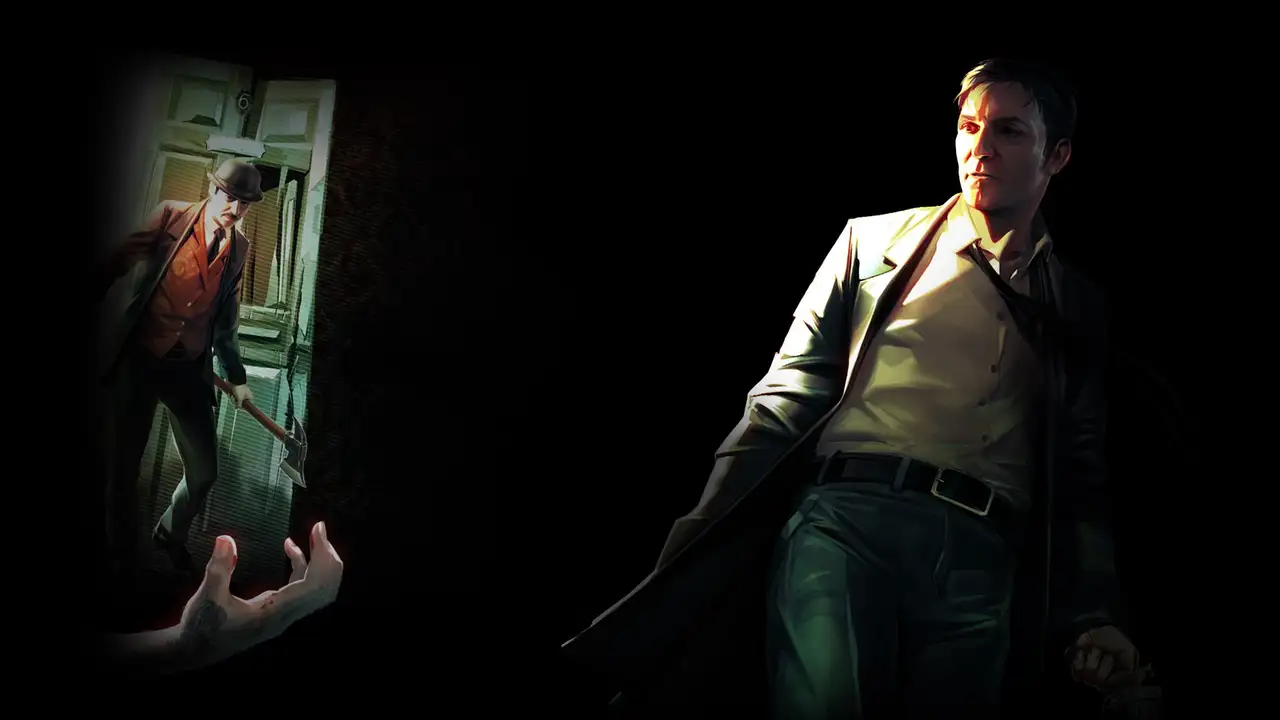
Victorian London earns its keep across six cases that send the investigation from Baker Street to Scotland Yard, a Whitechapel butcher, a Roman bath house, Kew Gardens, a travelling circus and a Secret-service sub-plot run by Mycroft. Each case carries a distinct tone, from domestic tragedy to cult obsession to aristocratic poisoning to anarchist politics, and a recurring Merry Men thread binds the episodic structure into a whole. The presentation holds up remarkably for its PS3-era origins, with facial animation that still ranks among the medium’s best, and the atmosphere of methodical, downstairs-lab investigation never slips. There are no dead spots from start to finish.
The deduction system is the game’s core strength. Clues gathered at crime scenes pair up into deduction boards, where mutually exclusive conclusions compete and one verdict must be chosen, condemned or absolved, and lived with. Multiple coherent solutions may exist, and the design insists there is no single right answer, which makes every case’s close a genuine moral weighing of guilt, motive and mercy rather than a graded exam. Few games make the verdict itself the gameplay.
The murder scenarios rank among the most inventive the genre has produced. An ice knife melts away at the crime scene, a steam-bath killing locks its room from within, and a plant-toxin murder rides ventilation fans to its victim. Reconstruction experiments make the forensics hands-on: harpoon-throwing tests, ice-knife casting and blood analysis all play out in the laboratory rather than a menu. Character profiling deduces backgrounds from clothing, scars and belongings, reading a gardener or a scarred office clerk from appearance alone.
Disguises and outfit customisation charm throughout. Choosing suits, hair, facial hair and accents to infiltrate restricted locations is a recurring delight, and the seasonal minigames round out the variety: safecracking, lock-picking tumblers, a Home Alone-style booby-trap sequence and an arm-wrestling contest. The arm wrestling underperforms badly, its tells poorly explained and its logic confusing even after repeated attempts. Player archetypes such as the Justice Seeker feed a two-path epilogue, and the finale of each case offers its own additional choice, from exposing the Merry Men with water or a powder trail to condemning or absolving named suspects.
Friction appears where the boards block logic. A single unfound node can refuse a clue combination, leaving the deduction stranded between a wrong theory and missing evidence with no way to tell which, and the Kew Gardens case demonstrates the problem at its worst before a timeline reconstruction vindicates the suspicion. Occasional awkward movement and companion AI, with Watson standing motionless or drifting in slow motion, raise eyebrows without derailing anything. Unexplained exclamation marks on character portraits and initially confusing clue pairings add minor early bumps before the tutorial lands.
Callbacks to earlier entries in the series, including the Jack the Ripper case, reward longtime familiarity, though the six cases stand entirely on their own for newcomers. Roughly eleven hours cover the campaign, a length the pacing justifies with constant variety rather than padding. Voice acting carries the interrogations with the right period weight, and the dialogue recaps between scenes keep the investigative chain legible.
Overall, Sherlock Holmes: Crimes & Punishments is a clever, atmospheric and consistently engaging detective adventure whose moral verdict system and inventive murders set it apart from standard adventure fare. An occasionally opaque clue board and a baffling arm-wrestling minigame are honest costs, and the whole is good enough to provoke regret at not having been played sooner.