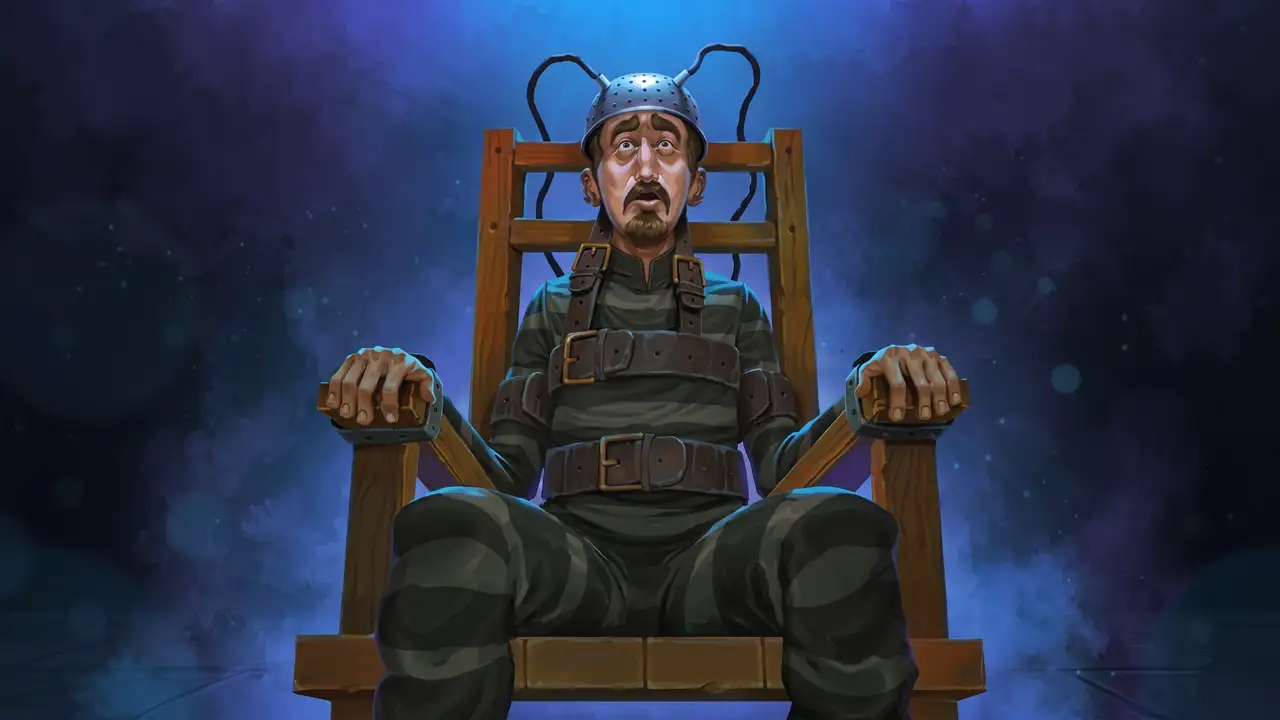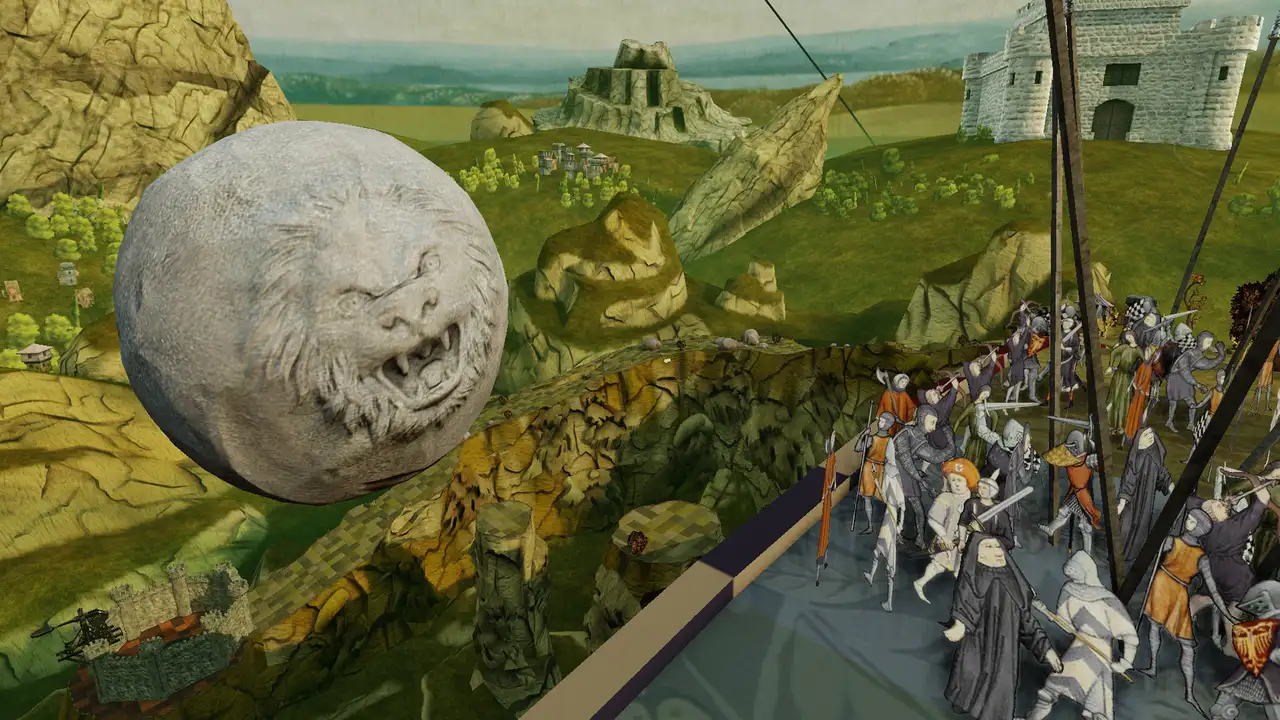
A hacker wakes inside a domed cyberpunk city called Providence, investigating the murders of his own research team while drifting between dream planes, memory recordings and the virtual enclaves citizens inhabit. An artificial intelligence rules the city, outer gods haunt the periphery of the lore, and body-hopping ritual lets the protagonist occupy other bodies across realities. The tone borrows from Weird fiction and surveillance-thriller aesthetics in equal measure. Layered-reality storytelling of this ambition is rare at any budget.
Two embedded retro chapters are the signature flourish, and both are far more than novelty. One recreates the tank-control mansion formula of classic survival horror, complete with a safe combination and a body-position poem puzzle; the other is a station infiltration with respawning robots and genuine gunplay, unmistakably an homage to a certain 1994 cyberpunk immersive sim. Both chapters play as complete mini-games inside the adventure structure. Few mystery adventures attempt anything this audacious, and fewer pull it off twice.
The detective-scan mechanics add a satisfying investigative layer, with bodies, environments and blood trails scanned for clues. A blood-type match discovered at one crime scene turns the investigation inward on the investigator himself, a genuinely unsettling beat delivered through pure mechanics. Hacking mini-mechanics extend the puzzle variety, from a root-fault password grid to timed manual-hacking nodes patrolled by security turrets. The potion-mixing ritual preparation, with herb recipes for perception-heightening and transmigration mixtures, deepens the occult texture.
The neon-drenched cyber-enclave sections are the campaign’s visual high point, vibrant and detailed where the dream planes turn sparse and alien. Lore arrives almost entirely through collectible documents, including diaries, occult books and lab reports, building a genuinely layered mystery for anyone willing to dig. The density is admirable even when the execution falters, because the world-building never relies on exposition dumps. Atmosphere, here, is assembled rather than asserted.
The prose is frequently impenetrable word soup, with a scholastic tone that obscures rather than directs, and the occult letters in particular say nothing parseable. Interaction points and puzzle elements are often nearly invisible, and the hall-of-records lever becomes the emblem of the problem: every wall examined, nothing found, progress stalled on occlusion rather than thought. Pixel-hunt moments like it stall the pacing repeatedly. The heruristic scan, meanwhile, is a slow progress bar with nothing to do but wait.
The Lovecraftian branding is more marketing than substance. Nothing about the campaign is scary, and the cosmic-horror borrowings never shape the gameplay, which makes the label feel like a genre costume rather than a design commitment. A closer comparison is the dream-logic surveillance mystery tradition, where dread comes from unreality rather than threat. One random stuck-freeze interrupts an otherwise stable single-session run. Judged as what it actually is, rather than what its marketing claims, the experience coheres considerably better.
Overall, this is an ambitious genre hybrid best appreciated as a cerebral dream-logic mystery wearing cyberpunk clothes, and the two retro homage chapters alone justify the trip. Neon visuals, investigative scans and layered lore carry the campaign, while invisible interaction points, overwrought prose and mislabelled horror branding leave visible scuffs. What the design attempts, it largely lands, and the recommendation stands on the strength of its best ideas.