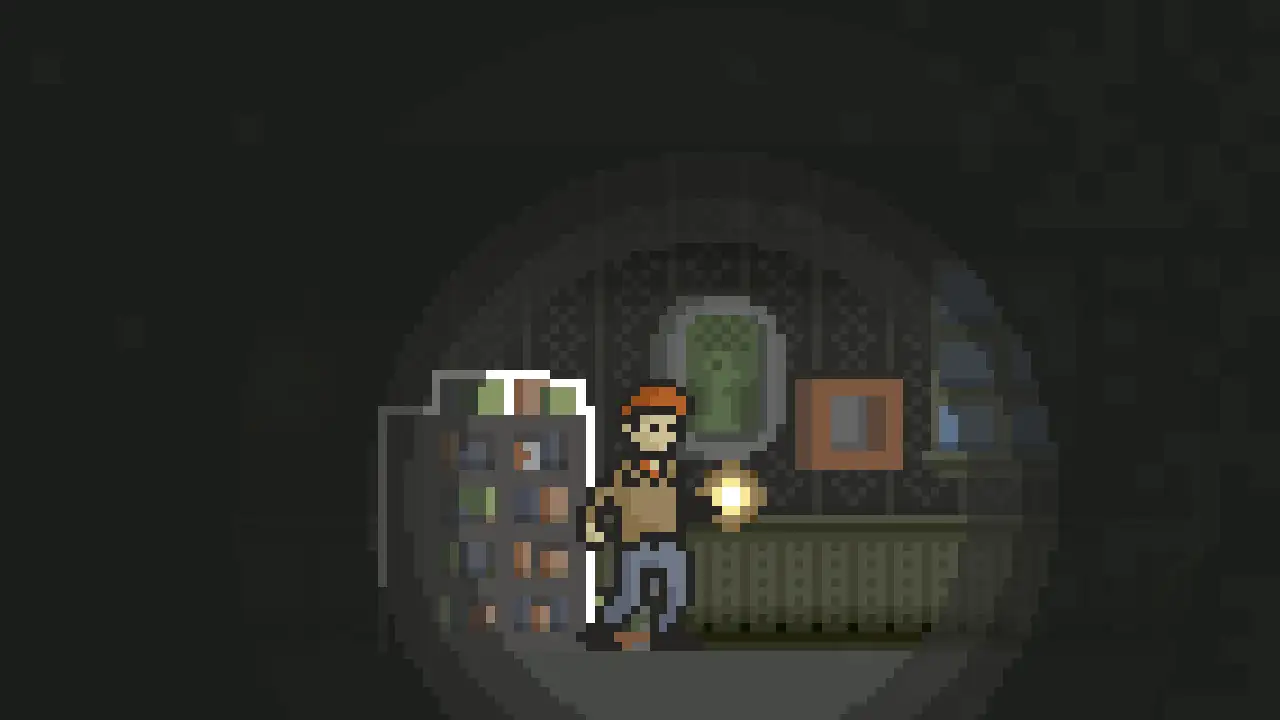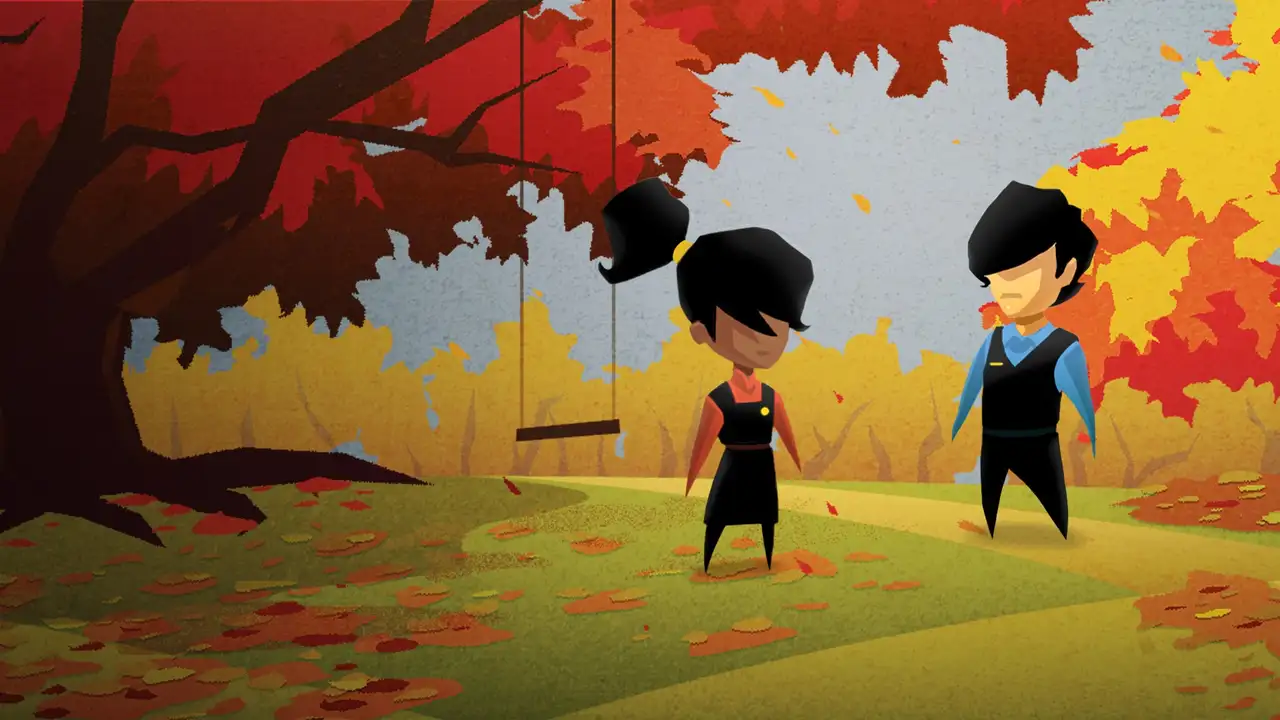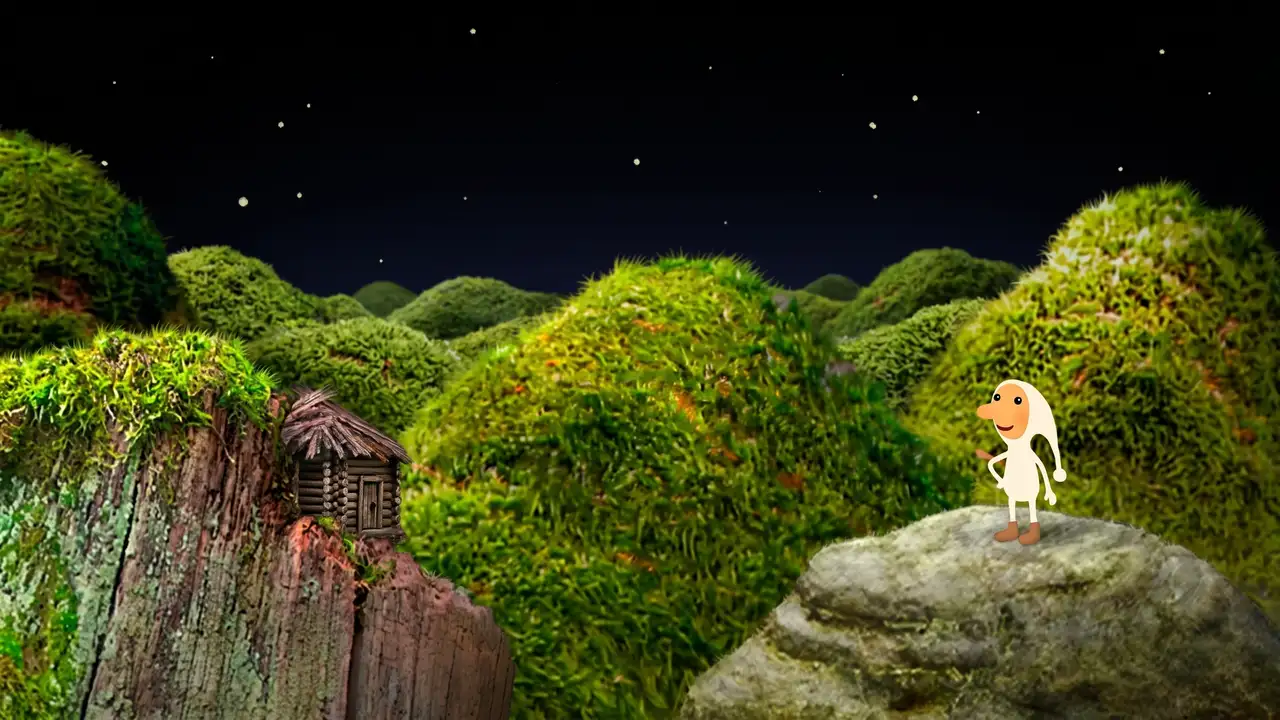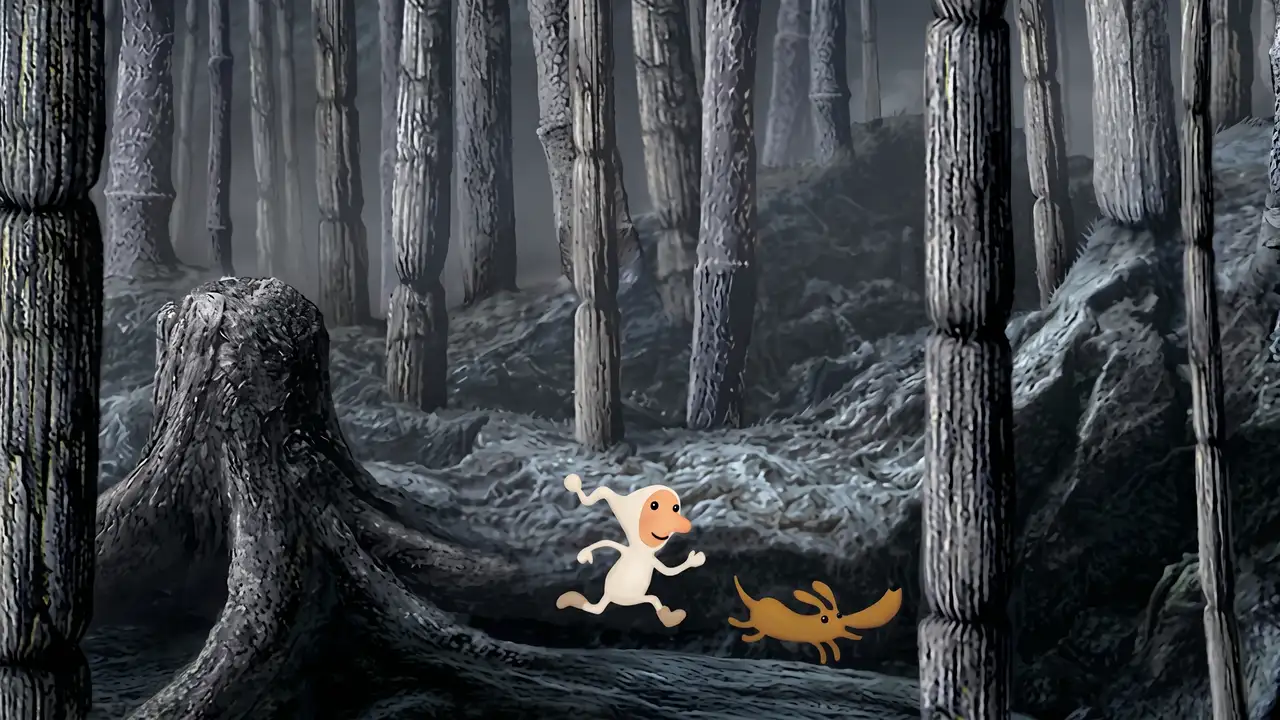
A space gnome discovers an ancient book telling of a monk whose flute summoned a space octopus that devoured a world, and of the knights and robot built to fight it. The response is to build a spaceship from junk (bottle, bathtub, stool) and set out across a meteor, several planets and a volcanic world to recover the scattered flute. No dialogue appears anywhere; the whole cosmic fairytale is conveyed through music, animation and environmental storytelling, and the widescreen presentation alone marks the technical leap over the series’ earlier chapters. The tone keeps surprising edges too: singing monsters burning a field, a grieving octopus-faced descendant, an evil monk’s volcanic lair, whimsy with teeth.
The magic flute is the signature idea, and it earns the billing. Used to listen to and communicate with the world, it doubles as detective tool and dialogue substitute, revealing hidden pathways and letting music do the work that other adventures hand to conversation trees. Almost no other game uses the concept, and it gives every planet a consistent investigative rhythm: point the flute, hear what answers, act on what is heard.
Scale transforms the structure into a genuine adventure rather than a trifle. An asteroid with a combination lock leads to a planet of hide-and-seek and fruit-colour puzzles, a meteor where two creatures fight over a bulb, a monastic world of singing totems and a 2048-style metal-dome puzzle, and finally the volcanic lair of organ pipes and repeated item thefts. Collectible interaction points and a hidden cave system reward exploration, and hopping between distinct planets gives the journey real momentum. The orchestral-flavoured score and rich biomes carry the atmosphere, and the whole thing plays out as the richest presentation of the trilogy.
The lizard-and-geyser pipe sequence is the game’s most stubborn obstacle: every pipe placed correctly, the puzzle still refusing to resolve, until the discovery that the lizards needed waking first. The solution was right all along; the creatures simply were not alive yet. It resolves eventually, but the stretch produces genuine frustration before the click of comprehension arrives.
Other solutions hinge on knowledge the game barely signposts. A showerhead becomes a machine whose code appears without explanation, and a watering can refuses to grow anything until filled, an assumption so basic it hides in plain sight. Backtracking occasionally grinds too, with long walks retraced across screens and a late-game trip all the way back to the ship for a single item. Most puzzles remain satisfying to derive, but the handful that do not stand out sharply against the ones that do.
Minor sprite corruption on specific screens persisted throughout, attributable to Proton rather than the game itself, and it never rose past an oddity. The ending sequence deserves playing out in full: the flutes reclaimed, the villain’s fall, the galaxy tidied, all landing with a register the tiny originals could only gesture toward.
Overall, this is the trilogy’s peak, a widescreen, planet-hopping wordless adventure whose flute mechanic, art and sound design fulfil the promise of the earlier chapters and then some. Neither predecessor is bad; this is simply better, and it feels more like a full game in every dimension that matters. The unsignposted solutions, the tedious backtracking and the minor glitches are real blemishes, but none of them dim a beautiful, genuinely adventurous point-and-click that stands among the best of its kind.