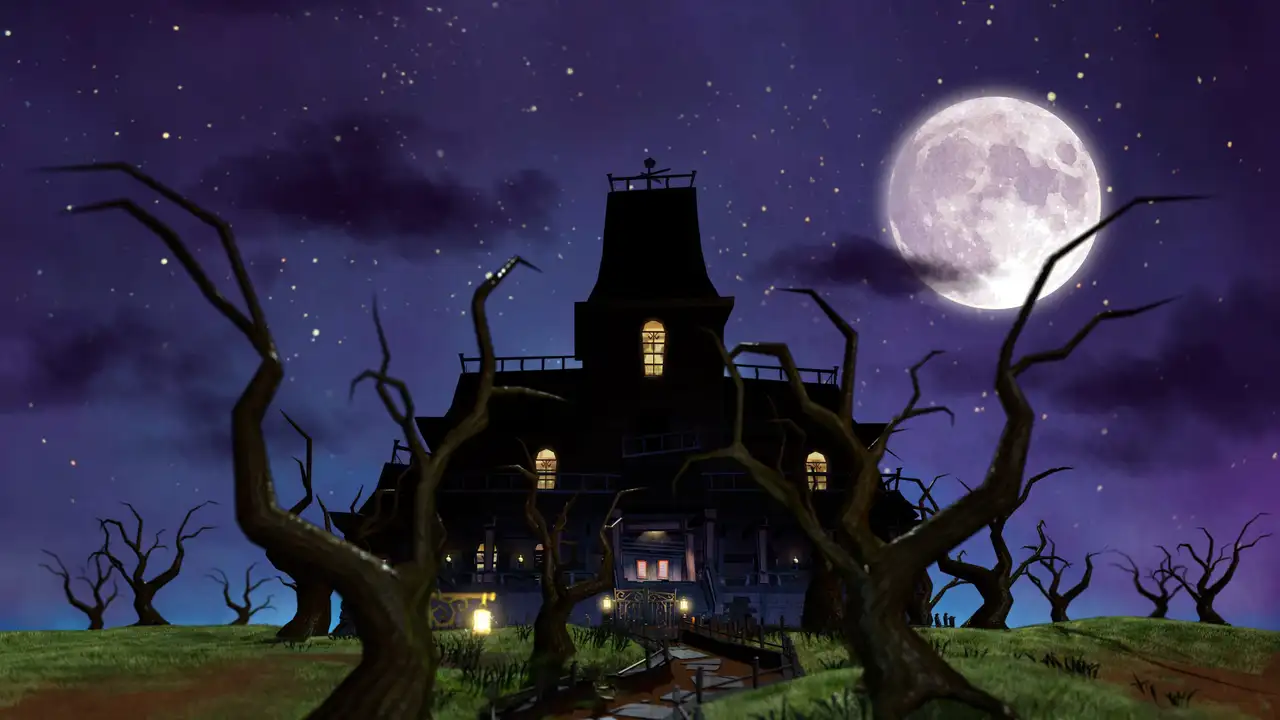
A plumber wins a mansion in a contest he never entered, and the prize turns out to be overrun with ghosts, his brother trapped somewhere inside. Luigi’s Mansion inverts the haunted house: the visitor is the monster, armed with a vacuum, and every room is a puzzle about how to startle a ghost’s heart loose. Guided by a professor who converts captured spirits back into portraits, the hunt moves floor by floor through a mansion of lit-room reveals and hidden rooms. The horror-comedy register lands from the intro onward, and the GameCube’s most endearingly janky animation becomes part of the charm rather than a flaw.
The ghost-catching vacuum loop is the core, and it stays fun across the entire hunt. Stun with the flashlight, then wrestle the Poltergust against the creature’s pull, a tug-of-war that plays like Ghostbusters with combat music. The loop never wears out because each portrait ghost demands a different gimmick first: Neville’s books, Lydia’s mirror, baby Chauncey’s toys, Melody’s piano sonata, Bogmire’s shadows, Nana’s scarf, the twins’ hide-and-seek and Biff Atlas’s punching bag all require discovery before the heart can be vacuumed. Each solved ghost gets pressed into a painting back at the lab, and the gallery grows satisfyingly.
The mansion is a delight to explore. Lit rooms reveal themselves one doorway at a time, hidden rooms reward curiosity, and elemental medallions unlock fire, water and ice combat against matching ghost types. Toads serve as save points that light rooms, and the Boo radar layers a collectible meta-objective over the floor progression. Fifty Boos hide across the mansion, each with a pun name worth the capture alone, and the hunt gives the campaign a second wind once the portrait ghosts stop escalating.
The Boo hunt curdles late. The third-floor and basement ghosts carry far too much health and run constantly, and the final sweep across every room becomes a tedious scavenger chase where thoroughness is its own punishment. The collectible layer is genuinely fun early and a chore by the end, and the payoff for catching all fifty amounts to a treasure rank that buys a quaint little cottage, a stingy reward for the effort. The hunt is worth doing once; the design does not respect the completion it invites.
The Bowser-suit finale is the campaign’s one resented stretch. An awkward camera fights the arena, spike balls damage on contact unless walked into deliberately, and the vacuum-and-move skill check is unforgiving in a way nothing else in the game is. The fight is fairly simple in the grand scheme, but its controls feel unfair rather than challenging, and it sours an otherwise well-paced ending. King Boo’s gloat before the fight lands fine; the fight itself does not.
The inverted C-stick vacuum controls never click. When the hero faces the screen, pressing right turns him left, and the mapping fights the player for most of the campaign. The portrait-ghost puzzles compensate with consistent logic, and Madame Clairvoya’s consultations over the scattered belongings add a fortune-telling thread that rewards item hunting. The elemental system integrates cleanly with the ghost types, and the room-based puzzle structure keeps the four-to-five-hour hunt varied throughout.
The charm is relentless. A bouncing nose, hump-into-everything animations, pitch-shifted whistling and pun-named Boos carry personality through every room, and the horror-comedy balance never slips into either register too hard. The reverse-haunted-house identity holds as the series’ most distinctive premise, and the presentation, jank included, is precisely why it endures as a classic.
Overall, this is an endearingly janky, charming classic whose ghost-hunting loop and personality hold up even when its final boss does not. The Bowser fight, the late Boo sweep and the inverted stick are real flaws, but the portrait-ghost gimmicks, the pun-named collectibles and the sheer charm make it a very good game and an easy recommendation for its craftsmanship.