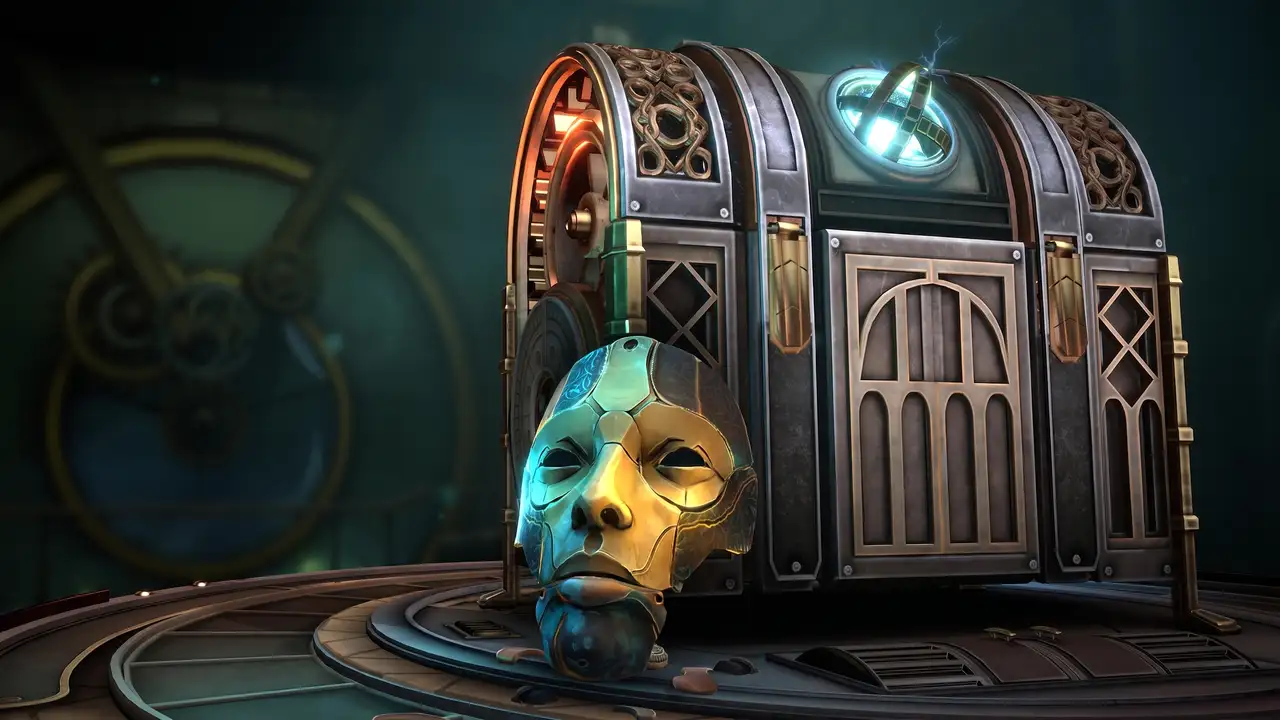
Inside a breathing tower whose heart pumps the dreams of a sleeping girl, a small escapee wakes in her tube and climbs toward an exit the defences are determined to deny her. The premise is dreamlike and gently unsettling, carried by an art style of shattered silver machinery and a heartbeat motif that never stops pulsing beneath the soundtrack. Along the way she meets imprisoned spirits Joker and Thief, whose bars may keep danger out as much as in, and the dying architect Marion, each encounter folding melancholy into what first looks like a gentle platforming tour.
The puzzles are the reason to stay, and their fairness is almost disarming. Progression runs through the dungeon, the Courtyard of Effigies, the Arboretum of Goliaths and the Factory, and every real difficulty spike comes from overcomplicating solutions that were plainly signposted all along. Climbing, box-pushing and light environmental logic do the work, and the checkpoint-rich design keeps experimentation costless. Nothing here punishes; the whole structure invites unhurried thought, and even the flumie junkyard beat rewards poking at machinery for no mechanical reward at all.
Priestess invocations grant two spirit powers that define the second half: Energy, which collects orbs to insert into machines, power the flumie and burn black walls, and Movement, which enlarges or shrinks platforms and shifts objects across rooms. The energy-orb interactions are the friction point: pickups regularly fail to register, carry rules feel inconsistent between areas, and one physics solve lands by accident rather than design. A dropped box even bugs into permanent un-pick-up-ability, an exploit worth admitting into the toolkit precisely because the game never fights back.
Memory stones restore names and pasts to the tower’s minor characters, and the vignettes resonate more than collectibles have any right to: a violin recital, a street-lit confession, a life measured in small kindnesses. One missable stone (the Thief’s memories) vanishes permanently after an early drop, a sharp-edged rule in an otherwise forgiving game, and the only collectible in the set that cannot be recovered on a later pass. The design would be kinder for one second chance.
The Shadowk boss fight closes the tower, solved not by combat but by switching off three terminal blocks under pursuit, a fitting capstone for a game with no combat at all. The ending carries real emotional cost, closing on a storm-and-whisper dream monologue that recontextualises the escape and leaves the tower’s fate hanging on the choice, a resolution the heartbeat motif has been quietly foreshadowing since the first frame. Hymn-adjacent music does heavy lifting throughout, ethereal enough that rooms without puzzles still reward the ear.
Tone is the product’s identity: calm, melancholy and quietly sorrowful, a palette-cleanser whose brevity is a structural fact rather than a criticism, and whose gentle difficulty suits unwinding rather than conquering. The writing deserves particular credit; short as each arc is, Joker and Marion both land as people rather than plot devices, and the closing regret is earned honestly. Few puzzle games this size manage an ending with actual weight.
Overall, a calm, quietly sorrowful puzzle-platformer whose fair puzzles, ethereal hymn-adjacent soundtrack and emotionally weighted finale outweigh finicky energy-orb pickups, inconsistent carry rules and one permanently missable memory stone. The broken-machinery art style and never-ending heartbeat give the tower a personality of its own, and the whole amounts to an evening of gentle, melancholy craft worth slowing down for.