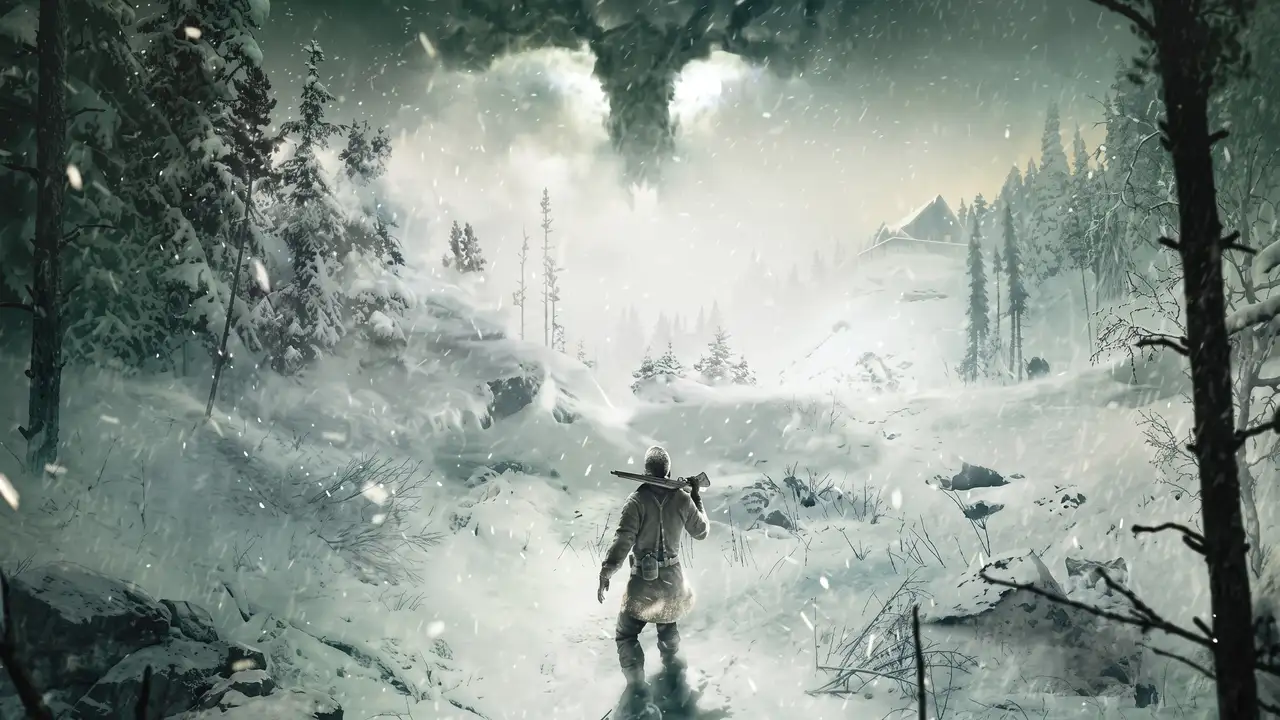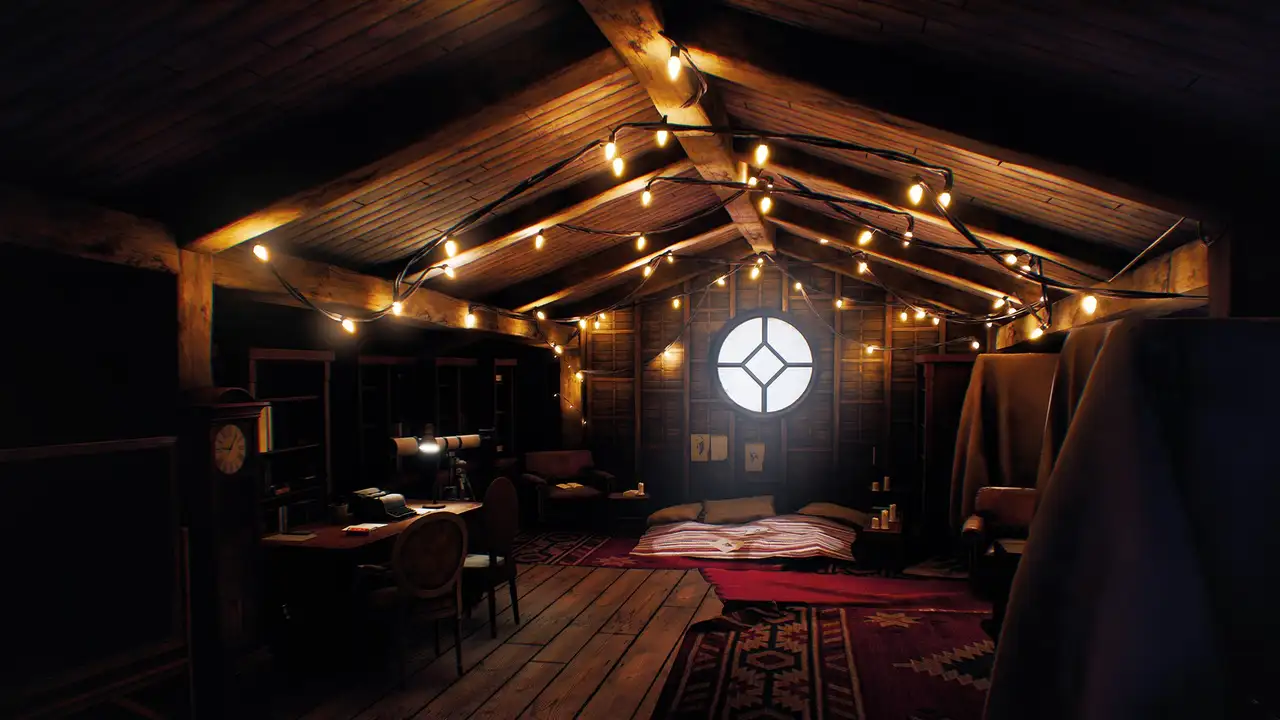
In 1993, a young woman returns to her family’s abandoned, snowbound Montana hotel to sell it after her father’s death, and what should be a procedural errand curdles into something far darker. The Suicide Of Rachel Foster is a linear, story-driven walking narrative in the vein of What Remains of Edith Finch and Firewatch, unfolding across nine in-game days of exploration, inspection and phone-driven objectives. The atmosphere is the foundation: blizzard isolation, creaking corridors, mannequin tableaux and an underground replica of a dead girl’s bedroom keep the hotel feeling wrong in all the right ways. There is barely any gameplay beyond observation and following a riddle to a hidden room, and the game is honest about that. What it offers instead is mystery, dread and a genuinely unsettling story about a family’s buried crime.
The radio-voice dynamic with Irving is the spine of the experience, witty and awkward before turning plot-critical, and the voice acting carries it convincingly. The dynamic is openly reminiscent of Firewatch, but the relationship here has a sharper agenda underneath its banter. Escalating details drive the middle act with real skill: dead phone lines ringing in an empty building, a fresh lipstick from a decade-old brand, the father’s notes describing a girl he claimed was dead. Each discovery tightens the grip rather than loosening it. The creepier things become, the more the mystery demands solving.
The hotel itself earns its billing as a character. It is labyrinthine and rendered with enough environmental detail that every drawer, noticeboard and corridor rewards inspection, and the mannequin mezzanine and replica bedroom stand out as genuinely disturbing set pieces. One mid-game scare, something breathing directly into the ear in complete darkness, is more effective than the bulk of bigger-budget horror, precisely because the game has earned the quiet that it shatters. The snowbound setting never becomes mere scenery. Isolation is the mechanism by which every reveal lands harder.
The finale’s forced choice is the game’s most serious flaw: the ending railroads its protagonist toward a self-destructive act dressed up as a decision, with no actual alternative offered. The illusion is so thin that it invites mockery rather than tension, and a story this relentless deserved either an honest choice or an honest cutscene. The arc also devolves from intriguing mystery into unremitting bleakness with no catharsis, which lands as heavy rather than poignant. Bleakness alone is a defensible artistic position, but the closing stretch offers no register change to justify it. The coda’s quiet pivot, choosing to stay and restore the hotel, helps but arrives too late to fully recalibrate.
The prologue undercuts its own strong opening with a handwritten letter that is genuinely difficult to read, with no option to enlarge it in a separate box. On a television the dense handwriting becomes an early hurdle the game did not need. Movement compounds the friction: the protagonist walks at a glacial pace, the hotel is maze-like at the worst moments, and the map does not show position, which guarantees some aimless wandering. None of these is serious alone. Together they add an afternoon’s worth of small annoyances to a three-hour story.
The twist itself lands, reframing everything that came before: the staged suicide was murder, and the friendly radio voice was orchestrating the exposure of the truth all along. It is a well-seeded reveal, with clues distributed fairly across the hotel, and it recontextualises the phone calls and the replica room with satisfying precision. The horror throughout is psychological rather than supernatural, which keeps the family-tragedy core intact. As a hybrid of companion-narrative walking sim and haunted-hotel mystery, the identity is coherent from first frame to last.
Overall, this is a bleak but gripping psychological mystery that hooks from the funeral opening and never loosens, powered by strong voice acting, an evocatively decaying hotel and one truly startling scare. The forced finale and joyless final act leave a deliberately sour taste, and the small ergonomic irritations add up. Weigh the story against the stumbles and it remains well worth one evening.