Fragmentary radio reports of fathers murdering families and a chanting-numbers neighbour build dread inside a looping hallway frozen at 11:59. The corridor shifts toward midnight through red bleeds, green tints and backwards distortion while crying, whispers and breathing press close. Lisa stalks the loop as a vengeful close-behind presence, carrying more menace than any staged shock. Tone stays claustrophobic and sound-driven, with exposition confined to broadcasts and environmental marks. Expectation looms large here, since reputation frames the teaser as the scariest ever made, though the actual register lands as spooky and detailed rather than overwhelming.
Walking the corridor and triggering Lisa events forms the core loop, with each pass adding new scares and puzzles rather than repeating. Collecting picture fragments tied to Gouge it out and Forgive me Lisa structures progression through environmental assembly. Chasing the recurring 204863 phone code gates advancement behind numeric deduction. Finding the hello wall message unlocks the hanging-fridge sequence, where missed writing stalls momentum badly. Surviving the bleeding-fridge red loop tests nerve under saturated colour and constricted space.
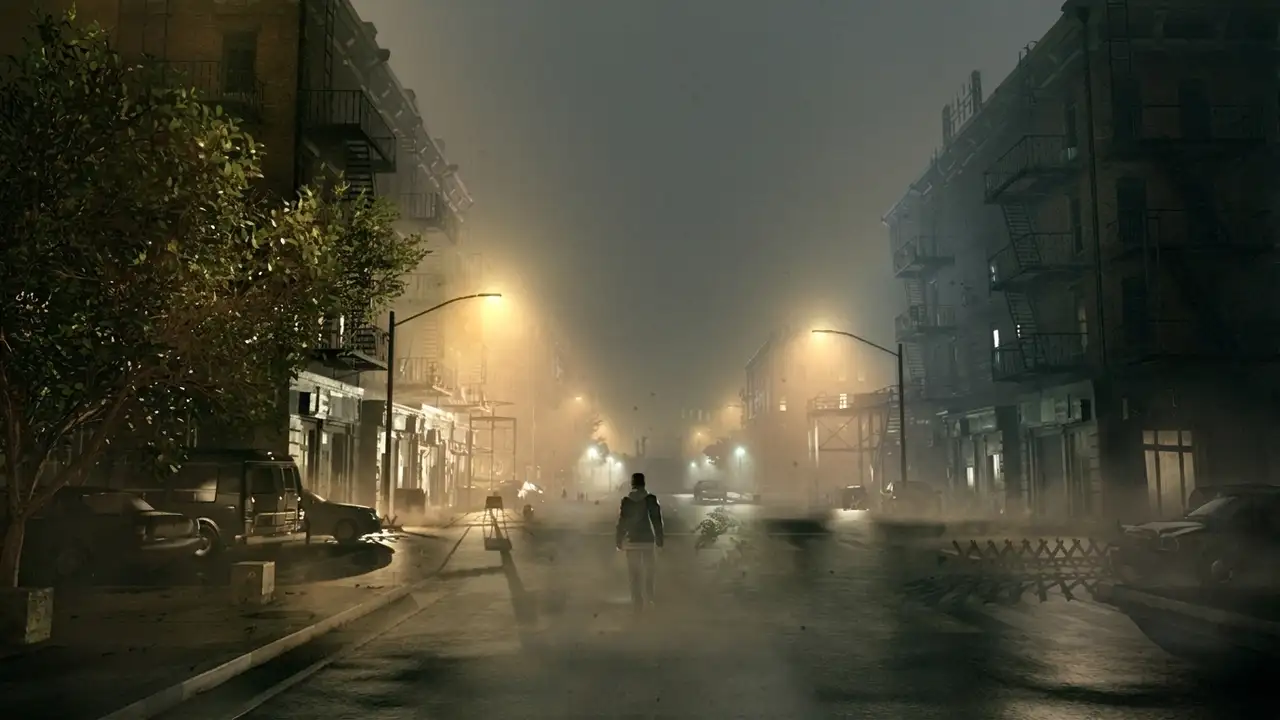
Peephole checks and bathroom checks punctuate the corridor with small investigative beats. Flashlight exploration lights dim corners where detail hides in shadow. A trippy backwards walk inverts movement and orientation late in the sequence. A fake-crash reboot breaks the frame with meta misdirection before control returns. Seeing a double walk ahead doubles the corridor occupant without explanation. An explorable street taken from the closing cutscene extends the ending as a PC-port bonus, rendered with flat 2D buildings up close.
Corridor loops anchor everything, dense with changing pictures, sounds and triggers across roughly seven passes. Bleeding-fridge surroundings saturate one loop in red and confine movement around hanging forms. Bathroom interiors offer tiled close quarters where sound feels nearest. The explorable bonus street opens outward after so much enclosure, though flat facades reveal its cutscene origins. Red, green and backwards treatments keep familiar geometry strange from pass to pass.
Lisa encounters define the horror through proximity rather than pursuit. Constant close-behind presence sustains pressure between puzzle beats. Close whispers, crying and breathing in the ears carry dread more effectively than staged shocks. Correctly anticipating a sudden dart toward the viewpoint demonstrates how well telegraphed the menace becomes. Sound design thus functions as the primary threat system, with vision secondary.
Oppressive darkness hurts readability throughout, forcing a brightness increase to parse detail. Repeated complaints gather around dim stretches where navigation slows. Cryptic puzzle signalling causes the sharpest stalls, notably the ten-minute block on the hanging-fridge loop from missing wall writing. Picture-piece assembly and the 204863 code frustrate through obscure placement rather than complexity. Microphone mapping to LT and RT on the PC port adds an unusual input wrinkle without clarifying its necessity.
Hype slightly outruns the actual fear, since legendary scariest-ever status promises more than spooky detail delivers. Density compensates where raw terror does not, with each loop adding fresh material. Detail rewards attention, from radio fragments to shifting wall marks. The cancelled Silent Hills context lends historical weight, framing the teaser as a horror landmark from one hallway. Meta tricks like fake crashes restore wonder whenever puzzles stall.
Overall, the corridor loop succeeds through dense variation, Lisa proximity dread and close-quarters sound craft, which together sustain tension across shifting walls and obtuse puzzles. Darkness and cryptic signalling blunt momentum at points, but the teaser remains a cool, detailed landmark whose reputation largely endures contact.