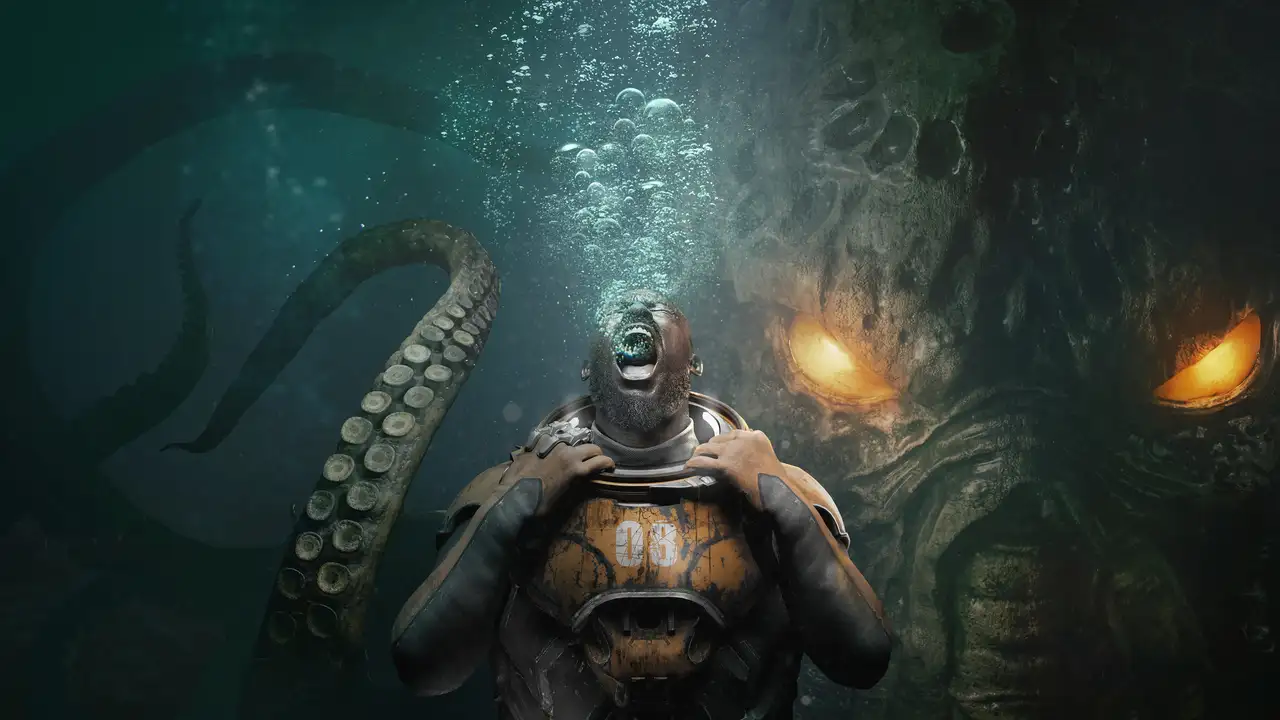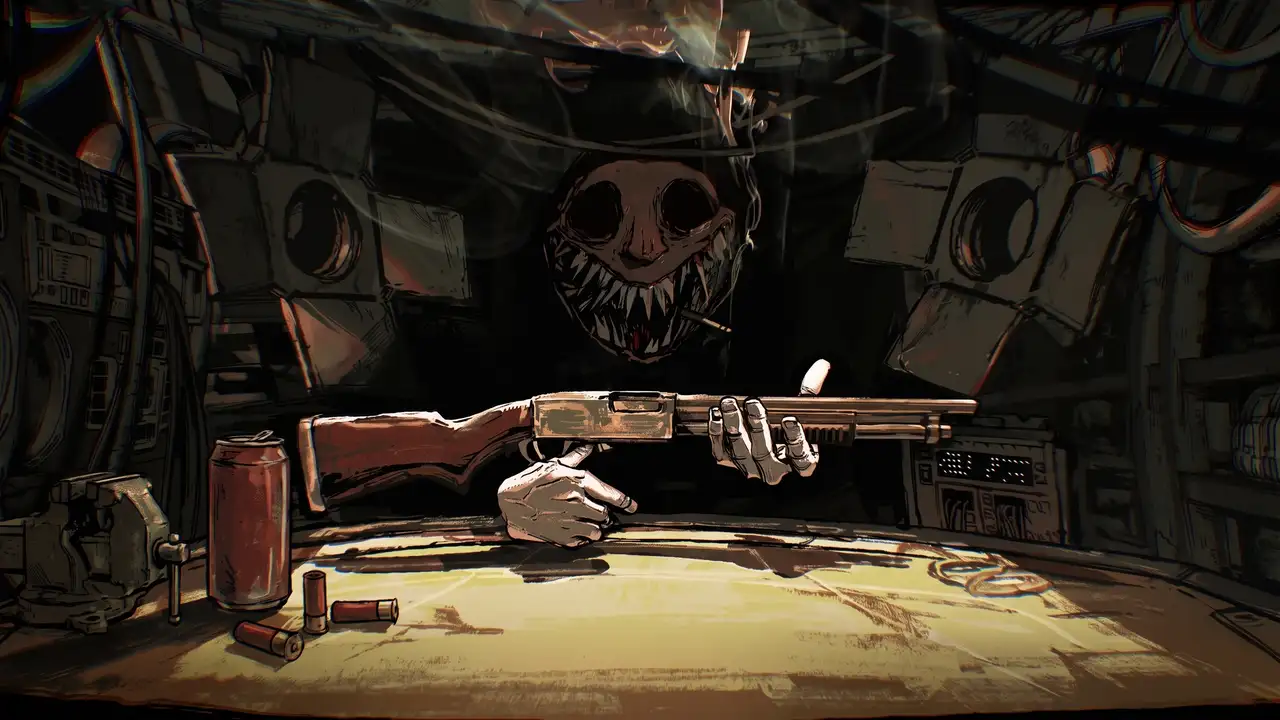
An occult invitation lures an archivist into the woods, and the woods do not let him leave unchanged. Benedict West arrives in a region shaped by a vanished village, a lake-borne horror, and a government-black-flagged factory, all told through one continuous night of escalating dread. The world assembles itself almost entirely through documents: witness reports, medical files, work logs, and cult scripture, each fragment pulling the mystery further from rural mystery toward something far older and colder.
Environmental storytelling is the game’s spine. The drained lake hides a prehuman necropolis of obelisks, a Lovecraftian research bureau sits behind the factory’s cover story, and notes from doomed workers and soldiers chart the collapse in their own words. The Tome of the Watcher and the abyssal priest society extend the mythology past the immediate plot, and the supernatural dread builds without a single combat mechanic to break the mood.
Art direction makes the alien material strange in the right way. The biomechanical creature design and the pulsing organic-metal architecture of the ship interiors feel genuinely other rather than repainted caves, and the obelisk fields of the necropolis deliver spectacle through silence and scale. Consistency of tone holds from the period-detail opening hardware through to the final regions.
Audio design does the horror’s fair work. The stalker creature announces itself: a scream on detection, audible footsteps tracking movement through the dark. Stalking something that always telegraphs its approach reads as honest design, closer to fair than to cheap, and it lets tension come from positioning rather than from jumps the player cannot answer.
Fetch-and-evasion gameplay structures the night. Keys, codes, a magnetic card, a ritual plate, and energy cylinders gate progress, and light diegetic puzzles line up crystals, power consoles, and open passages with the right orb. Unlimited sprint stamina is generous but deliberately balanced: even spotted, the creature cannot simply be outrun, and scripted chase sections close each act.
The creature’s detection is the most visible flaw. It sometimes spots through pure darkness at range while crouched, then elsewhere walks straight past or into a hiding position. The despawn and respawn behaviour compounds it, at one point materialising the stalker directly in front of the player before a checkpoint, an instant death that reads as bad luck rather than fair play.
Navigation is the weakest loop. No map, no marker, no objective list, and the house, lake path, and black-out factory all invite circling. Unmarked dead ends pile on: chained-off fences, boarded windows, and locked doors that look interactable but are not, sending route-finding back into guesswork. The final act compounds both problems with long treks back and forth through previously cleared tunnels and the drained-lake region, and the backtracking drags momentum noticeably.
Optional secrets, hidden collectible spots, glowing orbs, and unlockable sealed briefcases offer a modest bonus layer, and the entire production comes from a single developer, a fact the scope and polish make genuinely hard to credit. Overall, this is a confident, atmospheric solo effort whose document-driven cosmic mystery and audio-fair stalker outweigh inconsistent detection and navigation friction, and the payoff lands with real originality.