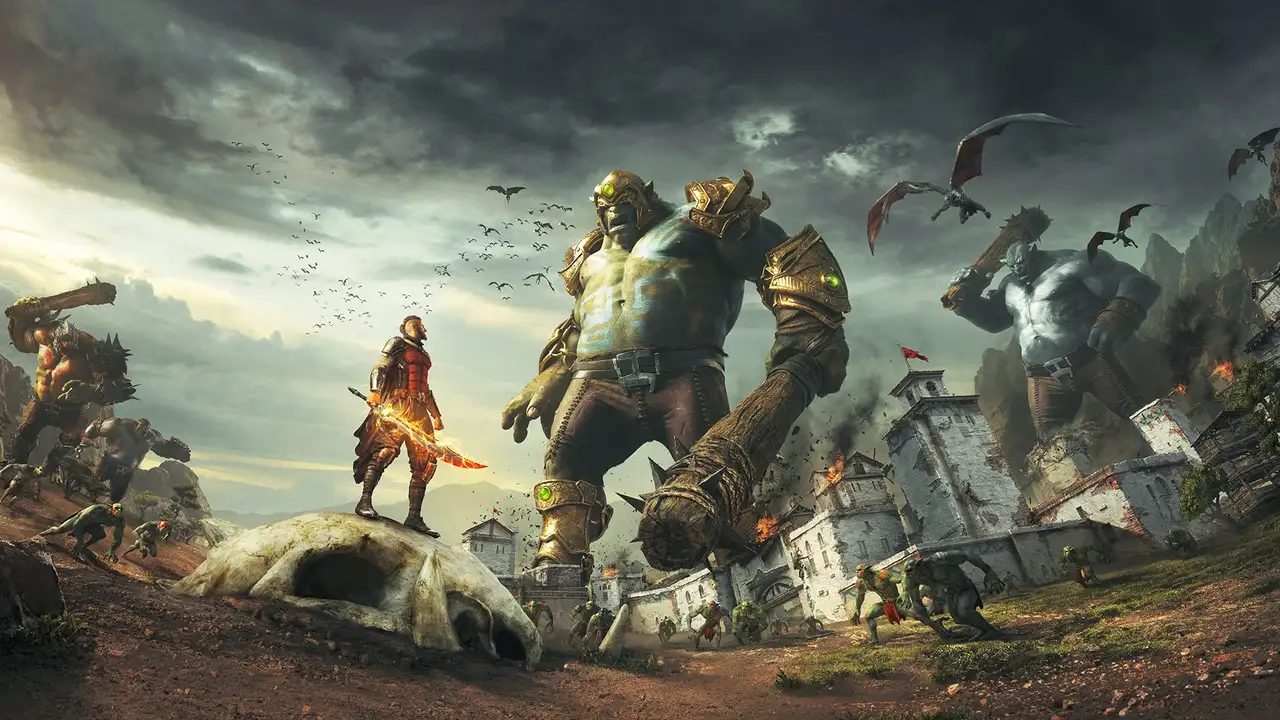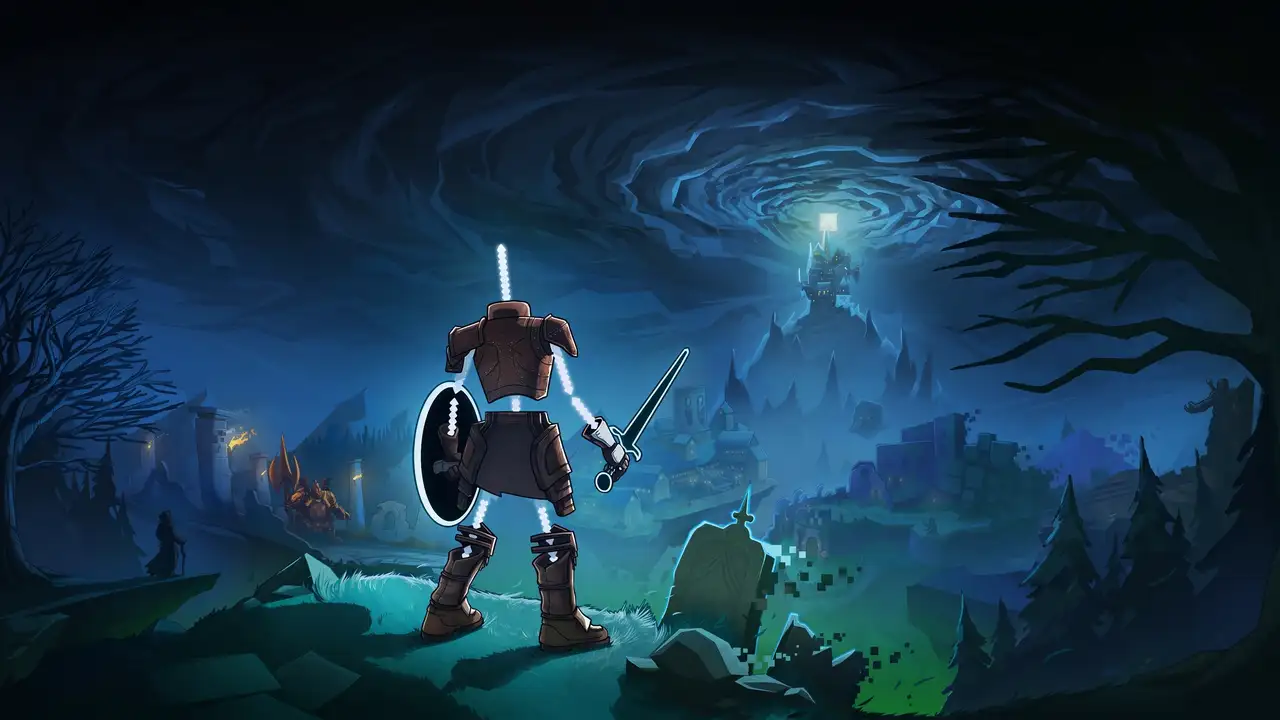
A world of stories is decaying into pixelation because its heroes refuse to be forgotten, and reversing that decay is both the plot and the mechanic. The Last Hero of Nostalgaia commits harder to its premise than any Souls-like before it: every item and piece of gear appears as a low-detail 2D relic, and only by returning it to its lore-significant location and “remembering” it does the object become fully 3D. Degradation into retro decay is the story, remembering objects is progression and storytelling at once, and a smarmy fourth-wall narrator guides and eventually opposes the quest to unburden four Great Ones. No other game in the genre blends aesthetics and narrative this tightly.
The remembering system rewards item-lore hunting with permanent Insight bonuses, and the pixel-to-poly transitions stay satisfying across the whole campaign. Going flat lets the hero traverse 2D walls, a traversal trick the level design anticipates, and the equip-load thresholds, stat screens, anvil upgrades and infusion complete a faithful Souls-like framework. Beacons serve as bonfires and the tether/warp system keeps backtracking painless. The structure respects the genre it plays with while the aesthetic does something none of its peers attempt.
The world is tightly interconnected with abundant, generous shortcuts. Lifts are snappy, routes loop back on themselves with Dark Souls-style elegance, and the level design earns repeated praise as the campaign’s structural spine. Two DLC areas, one a dungeon-crawl homage and one a blocky sandbox parody, extend the world without diluting it, and the reference web is the densest per square inch in the genre: a Keyblade here, a Tetris shield there, a Blue Shell, Sonic’s rings, Master Chef’s armour and Dark Souls message memes scattered throughout. Everything in the world is a reference, and the wit never curdles into lazy name-dropping.
Combat carries real jank. Attacks go through enemies without connecting, vertical running attacks whiff on flat ground, and inputs occasionally go unread at critical moments. Scattered bugs compound the friction: duplicated dialogue triggers, floating enemies, and a resting prompt that soft-locks until a death clears it. None of it breaks the campaign, but all of it accumulates, and the tutorials never explain sprinting at all, leaving a basic movement option undiscovered for hours. A character creator whose most memorable slider is its most juvenile sets the comedy register early.
The humble shovel is the build’s absurd MVP. A strength/farmer build carries the spade through most of the campaign before the game reveals an item literally called the irrelevant appendage as the stronger weapon, and the shovel’s dominance becomes a running discovery. Boss fights span the spinach creature, the Grinder, Nom, Wonder Schoenberg, the pothead gauntlet, the narrator and the Vengeance/Mercutio pairing, each with distinct gimmicks and fair challenge. The narrator fight earns its place as the story’s mechanical climax.
The DLC-induced soft-lock is the campaign’s bitter end. The old man needed for the true ending simply would not spawn after the DLC installed, blocking the credits entirely, and the finale’s sacrifice-at-the-heart sequence remained unreachable. The bug is blamed squarely on the DLC, and the loss stings precisely because everything before it worked. A world this well built deserves a guaranteed ending, and denying one to a completionist run is the campaign’s most costly flaw.
Fifteen to twenty hours across the main game and both DLC areas deliver a complete Souls-like loop with genuine novelty. The maiden Crone and the dungeon-staple old man play their genre roles with self-awareness, and the reservoir of pain earns its name. The identity here is entirely its own: pixel-to-poly decay as plot, remembering as progression, and references as worldbuilding.
Overall, this is a clever, referential Souls-like whose remembering mechanic and tightly interconnected world make it stand entirely alone in its genre, with generous shortcuts, a dense reference web and boss variety carrying a campaign that mostly respects the player. Input jank, scattered bugs and the DLC-induced ending soft-lock are real costs, and the finish-line failure stings, but the invention outweighs the rough edges.