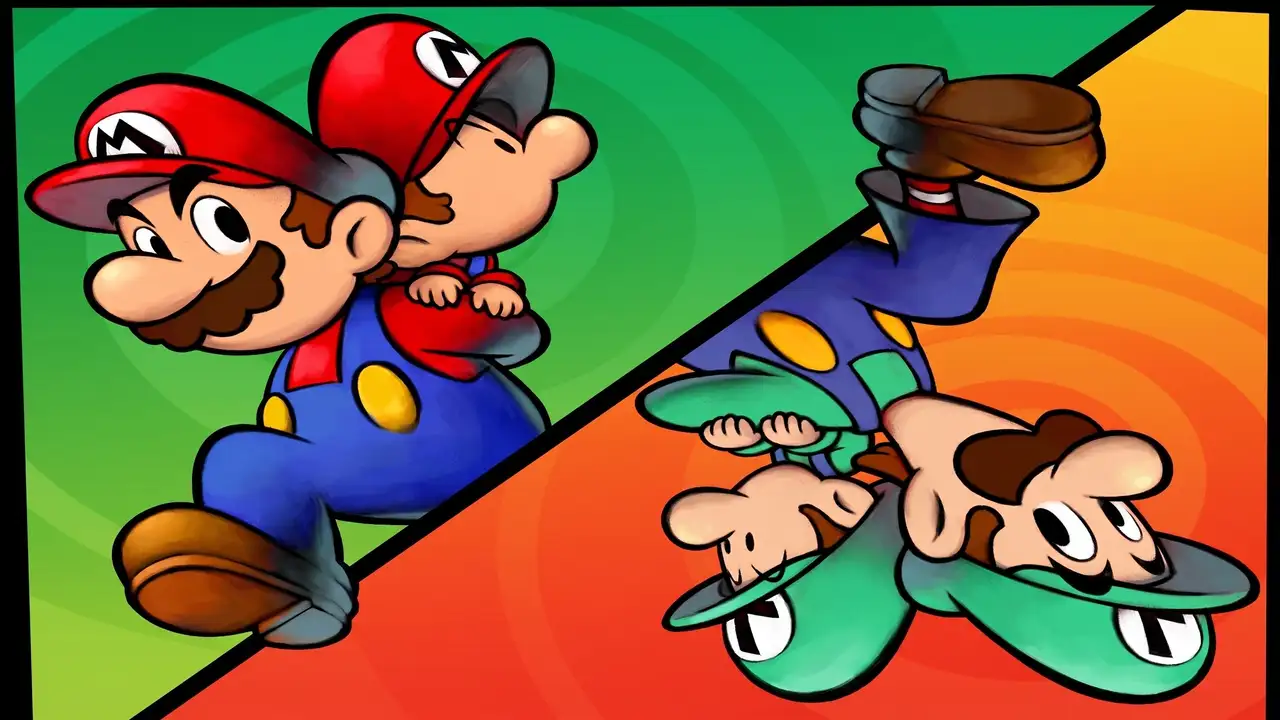
A comedic quest through the Bean Bean Kingdom to recover a stolen royal voice, and the founding entry of a series built on dual-button timing. Two brothers share the field and the battle menu, each answering attacks with their own button, and the whole game is tuned around that two-handed rhythm. The script is the funniest the franchise has produced, and the music is relentlessly cheery even in boss fights. Two decades on, the design has aged better than the hardware it ran on.
Enemy attack tells are the design’s high-water mark: every enemy has two attack variants, and each one is signalled by something subtle but entirely fair once recognised. A raised eyebrow, a shuffle of position, a tell that reads as decoration until it doesn’t. Learning those signals turns battles from reaction tests into pattern reading, and few entries in the series have matched the consistency of the signalling here. It remains the best argument for the game’s combat even after all these years.
Bros. Attacks upgrade into advanced forms, and the endless hammer-throw chains stand as the best attacks in the game, rewarding timing windows that stretch across multiple impacts. Thunderhand and Firebrand split elemental duties between the brothers, badge-driven stats let equipment shape the pair’s balance, and an XP-double badge accelerates levelling dramatically. Chuckle Beans trade at cafés for drinks, and a fast-travel pipe network knits the kingdom together once unlocked. The systems layer cleanly, each one feeding the same timing-first combat core.
Chuckle Hook Woods introduces a no-spin platforming gauntlet that punishes input precision harshly enough to break momentum entirely, and it arrives before the player has any of the tools that make later traversal comfortable. Hidden blocks conceal 42 Who Beans across the kingdom, several tucked behind genuinely obscure solutions, and separate-screens puzzles split the brothers across two displays with brutal coordination demands. A bean gambling den resists even determined attempts to profit from it. These friction points are concentrated early and mid-game, and they stand out precisely because the combat surrounding them is so fair.
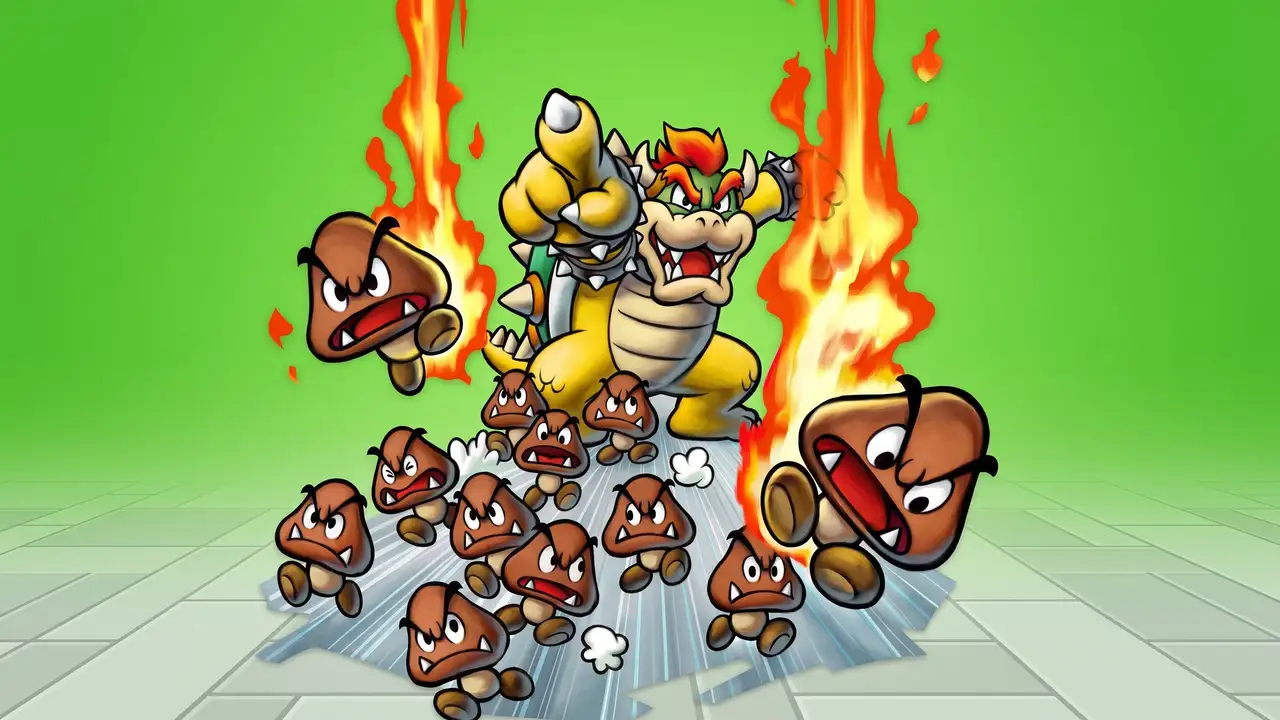
Bowser’s castle packs ten bosses into a single gauntlet, an escalating parade that tests every learned tell in sequence. The finale splits into two phases, and the second gives the enemy generous move variety but pairs it with an enormous health pool and relentless multi-attack turns that crowd out the player’s own opportunities. One brother attack between three or four enemy actions makes the closing fight a war of attrition rather than a showcase of the timing skills the rest of the game teaches. It is the one real design misstep in an otherwise tightly paced campaign.
The writing survives replay intact, and Fawful’s victory-speech word salad remains the comedic peak, with supporting turns from a mafioso crocodile, a thousand-year soda gag, a prince with his own fanfare and an existential-crisis palace guard. The massage scene plays very differently to an adult audience than to a childhood one, and the adult reading only adds to the joke. Item drops are generous, saves are instant enough, and the campaign runs dense across roughly thirteen hours. Fighting everything rather than skipping battles leaves the party noticeably better prepared, a balance choice that rewards engagement.
Redundancy creeps in at the tutorial layer: learning Luigi’s elemental power and then Mario’s repeats the same lesson twice, and a single checking point would have covered both. GBA-era quality of life shows its age elsewhere, with saves that take long enough to feel like writing a diary, no XP-to-next-level indicator, and no fast travel on the opening mountain. Hammer Bros. first strikes carry awful hitboxes that punish a fair-looking warning. The peppers, one-ups and golden mushroom can go entirely unused, which says something about how optional the item layer is.
Overall, the subtle-but-fair enemy tells, the dual-bro action commands and a script that still lands two decades on make this the series’ founding statement and one of its best entries. The Cackletta second phase bloats the finale, and the platforming and hidden-block friction predates the series’ later polish, but neither dents the core. The timing combat remains best-in-series, and the recommendation holds without reservation.