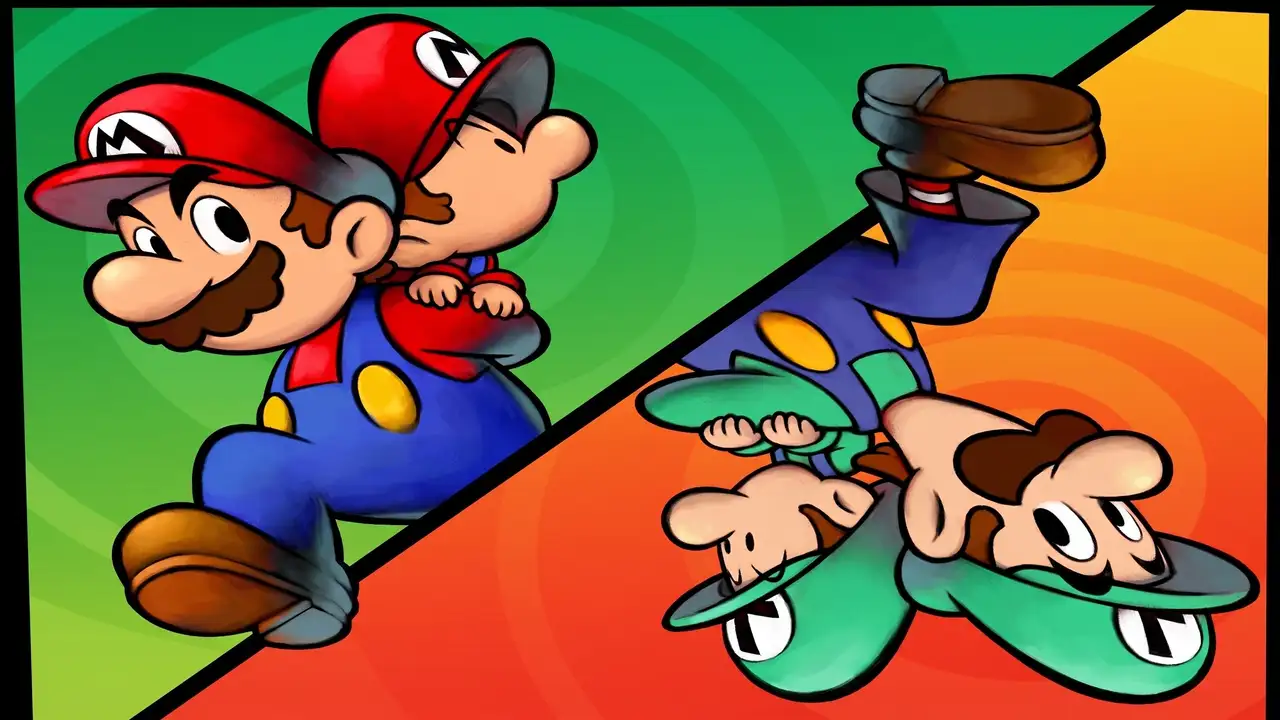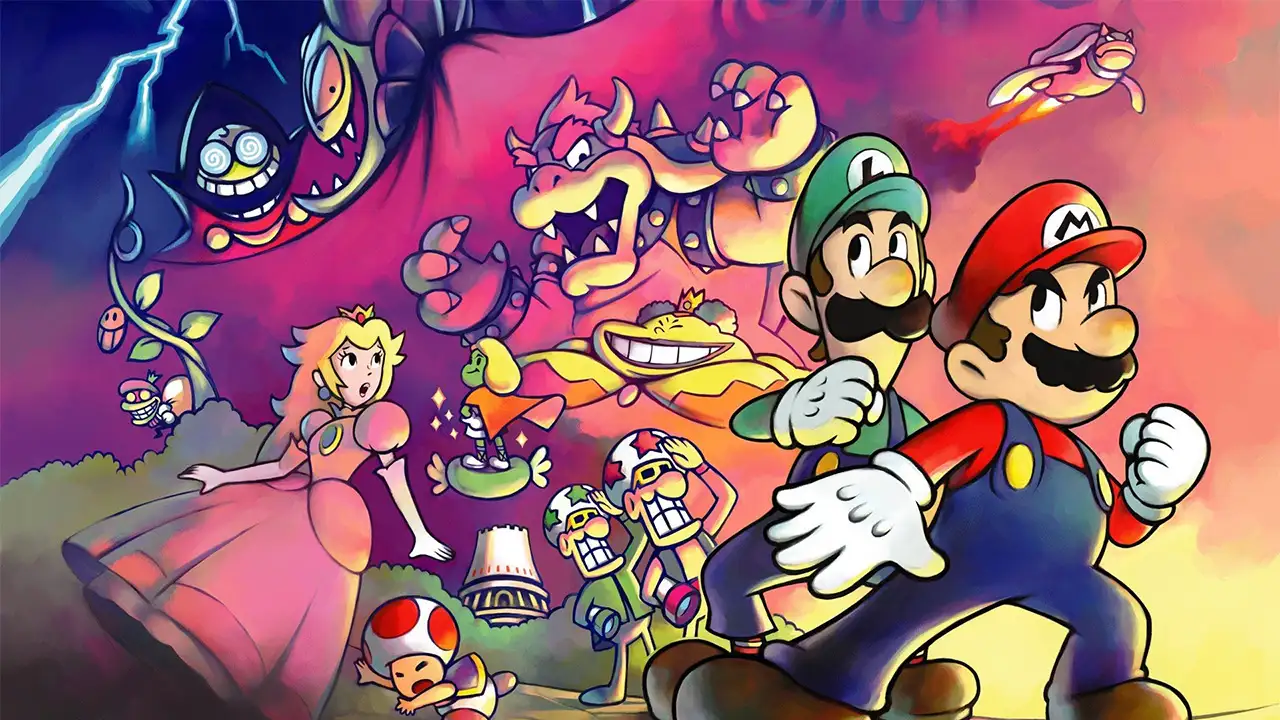
Fawful sells Bowser a lucky mushroom, the Koopa King inhales Peach’s Castle along with two plumber brothers, and the Mushroom Kingdom’s fate splits across two fronts. A plague of Blobs spreads while Fawful manoeuvres to unseal the Dark Star, and the rescue effort runs both outside Bowser and inside him, with Mario and Luigi navigating his body through pipe mazes while he storms about the overworld unaware. The premise alone would carry a lesser game; here it feeds a structure that never stops paying on the inversion.
Playing as Bowser anchors the entire design. He is an overpowered powerhouse whose walk simply flattens the small enemies that demand full battles from the brothers, and the power dynamic between the two sides of the screen gives every section its own texture. Few role-playing games hand the villain the lead role and make the hero’s party the supporting act, and the inside/outside loop, with the bros literally powering Bowser up from within, sustains novelty across the whole campaign.
The writing never lets up. Fawful’s mangled idiolect, Midbus’s muscle-bound bravado, a block-collector frog obsessed with blitties, and goombas speaking in surfer cadence keep the dialogue constantly inventive, and Bowser himself gains depth as the story progresses: a late cake scene exposes a caring side beneath the bluster that recontextualises his relationship with his minions. Comedy and plot integration stay tight throughout, including a Fawful-theatre castle takeover staged with proper theatrical relish.
Giant Bowser battles demand the DS rotate into book mode, with fire breathed through the microphone and punches thrown on the touchscreen. The staging is ambitious, the scale shift lands, and the battles deliver spectacle the rest of the genre rarely attempts. Bowser’s XP economy is hilariously generous, producing a cascade of level-ups that turns the power fantasy up another notch, and Broggy the dog joins his roster alongside goomba and shy-guy minions in solo combat.
Bros attacks abandon the consumable-item model of Partners in Time and return to mana-based special powers, a course-correction that restores sensible resource strategy. Timed action commands grade hits as great or excellent, and lucky hits reward precision. The three star-cure sages supply the puzzle variety: a rune cipher, a sliding-tile challenge, and pose puzzles, while the bros unlock body abilities that grant Bowser flame, vacuum, giant mode, body slam, and spike ball overworld powers.
Touchscreen and microphone gimmicks remain the defining DS compromise. Most interactions work fine, but the pollen-sneezing sequence and the memory-jigsaw drag, and microphone hotkey friction surfaces when the hardware’s controls get remapped on emulator. These sections are the game’s clearest generational artefact, frequent enough to register even when individual moments succeed.
Bowser-revival sections before each giant battle blast adrenaline on repeat and turn tedious quickly, the worst recurring chore in the campaign. Map sizes surprise in the other direction: per-area overworlds run smaller than the GBA predecessor’s, corridor-like rather than interconnected. The level-up bonus system weakens the strategy of deliberately neglecting stats for large bonuses since a one never disappears, and loading screens for the bros run oddly long compared to Bowser’s near-instant transitions.
Overall, the dual-protagonist structure, comedy writing, and generous power fantasy make this the series high point, and the DS-era friction costs little against it. Touchscreen stumbles, small maps, and revival busywork are real but survivable. A confident, inventive RPG whose villain-led premise never runs out of ways to amuse.