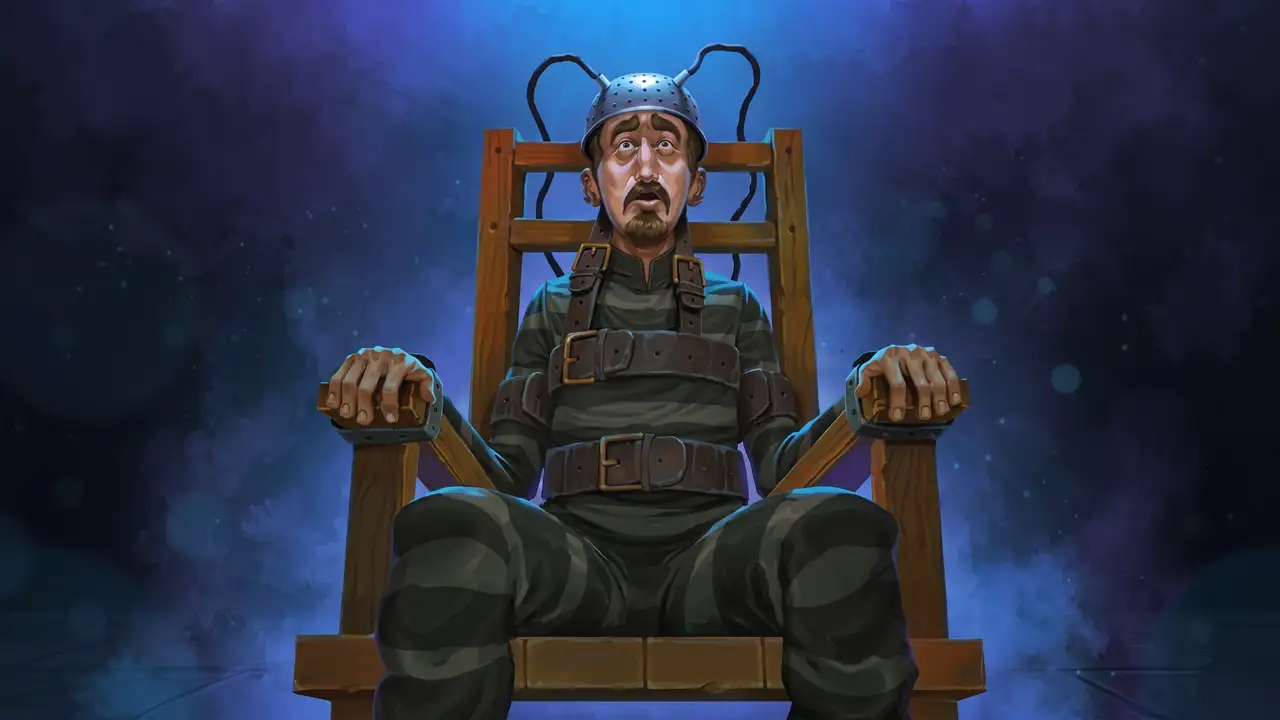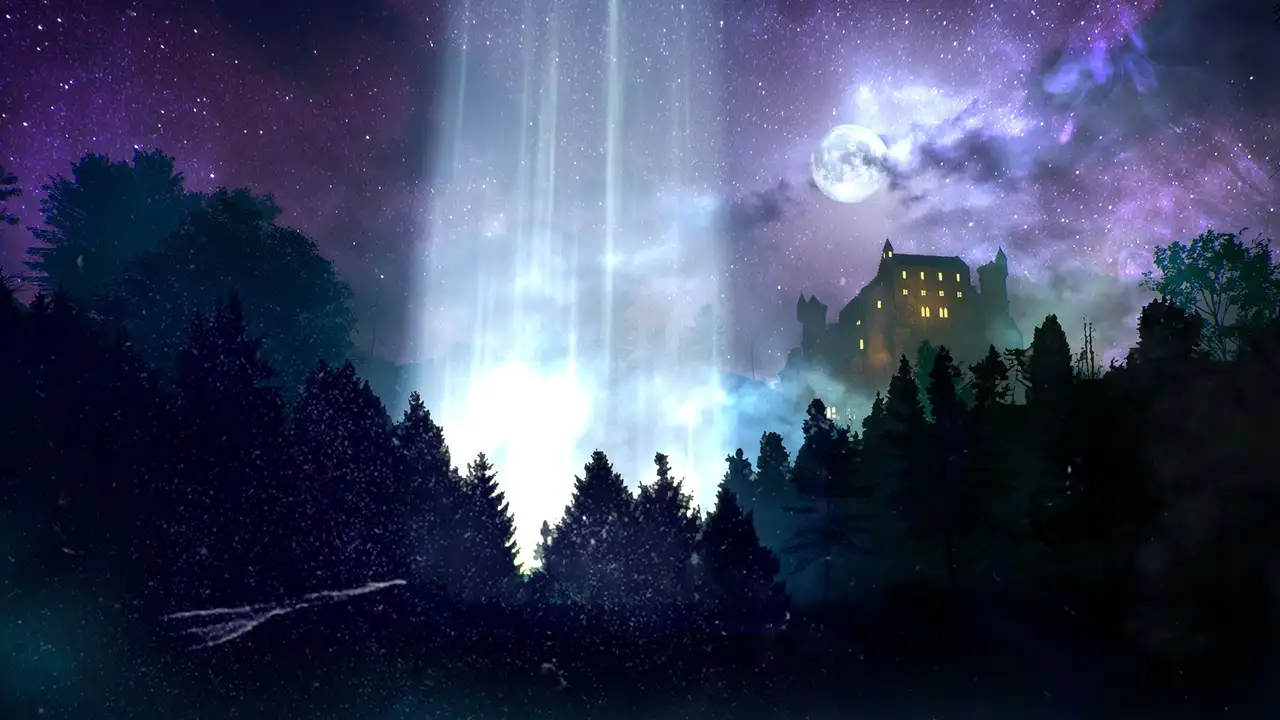
A time-travel Halloween adventure where a mad dentist (not a mad scientist, a distinction the game itself jokes about) erases the holiday from history, stranding the heroes in a gated dental dystopia. The Tooth Academy’s brainwashing school, its propaganda class and Principal Bo Jim all land as comedy rather than menace, and the dystopian future is genuinely funny. The Bayou, French Quarter and future city give each act a distinct visual identity. Trick-or-treat-as-RPG remains the series’ unique trick: candy as currency and healing, costumes as party classes, Halloween versus dental hygiene as the war. The time-travel loop of planting a clock in the past and investing in the villain’s childhood is genuinely clever.
The writing is the sequel’s clear strength, with the Tooth Academy’s deadpan indoctrination, the blob sidekick and Datonian’s movie-riddle subplot delivering constant laughs. Delivery and errand chains (Blob, the Grubbin elder, the billboard negotiation) pad the middle with backtracking through multi-level rooftop maps whose layout confuses more than it guides. The ending epilogue, wandering a restored block party and talking to the whole returning cast, closes warmly. Side-quest comedy repeatedly rescues stretches where the mechanics drag. Few RPGs of this scale are this consistently funny.
Combat has been homogenised into a clear downgrade: every attack now falls to the same timing press, where the original mixed button-mashing, timing and left-stick motions across its mini-games. The variety was the point, and its loss flattens every encounter into one rhythm. Creepy treat cards replace battle stamps and cost a turn merely to activate, where stamps were the turn itself; some cards are genuinely useful, and the whole set is worth buying, but late-game they go almost entirely unused. Poison stacks and the absence of a full heal between battles deepen the friction. The mechanical core took a step back while everything around it improved.
Quality-of-life fixes are real and appreciated: player-paced text, sprinting and better maps address the predecessor’s worst habits. Costume upgrades carry across timelines, and the strength-weakness triangle of tech, monster and magic gives costume choice some tactical bite. The Candy Corn costume is a running joke of uselessness, leaving one party member contributing nothing through the early battles, and a second starting costume would have solved the resentment entirely. Opaque collectible tracking obscures what the secrets actually are. The systems are friendlier; the balance between them is not.
The XP curve balloons absurdly, from 1,500 to 25,000 and then 85,000 per level, and unhealable gauntlets between save points punish the lack of between-battle recovery. Poison stacks compound the problem, lingering between fights with no full restore, and the combination turns the back half into a resource-management exercise the breezy first half never signalled. Candy as healing helps, but the economics only stretch so far when the requirements climb fifteen-fold in two levels. The curve is the single biggest reason the campaign’s back half feels heavier than its front.
The giant beanstalk climb in the finale outstays its welcome by a wide margin, stretching an otherwise brisk climax into a slog. Roughly five to six hours covers one sitting with most side content done, and nearly every secret, card and costume unlocks along the way. The pacing sag is concentrated at the very end. Until then, the campaign moves well.
Overall, the comedy, the quality-of-life fixes and the clever time-travel loop make this a charming, funnier sequel worth playing, even as homogenised timing-only combat, turn-costing treat cards, a punishing XP curve and confusing rooftop layouts take mechanical steps back. It is a lighter experience than its predecessor, best approached for the writing and the world rather than the systems. The Halloween dystopia delivers, and the recommendation rests on the laughs.