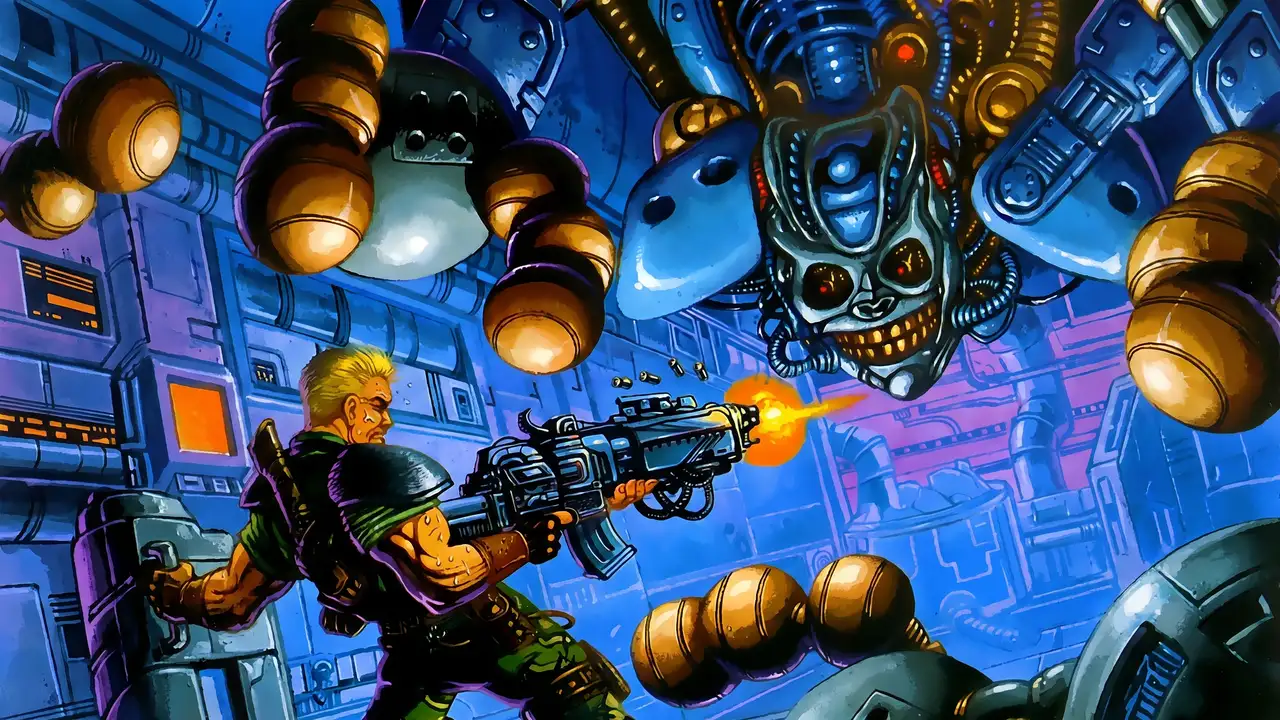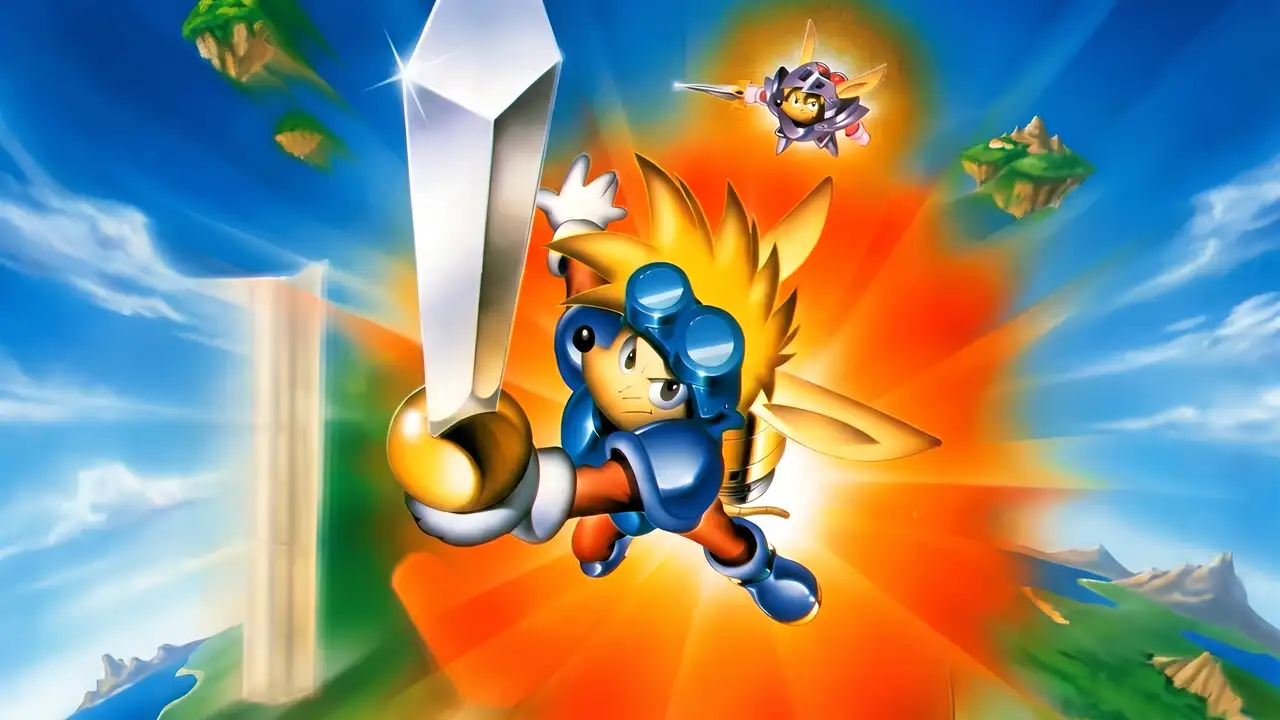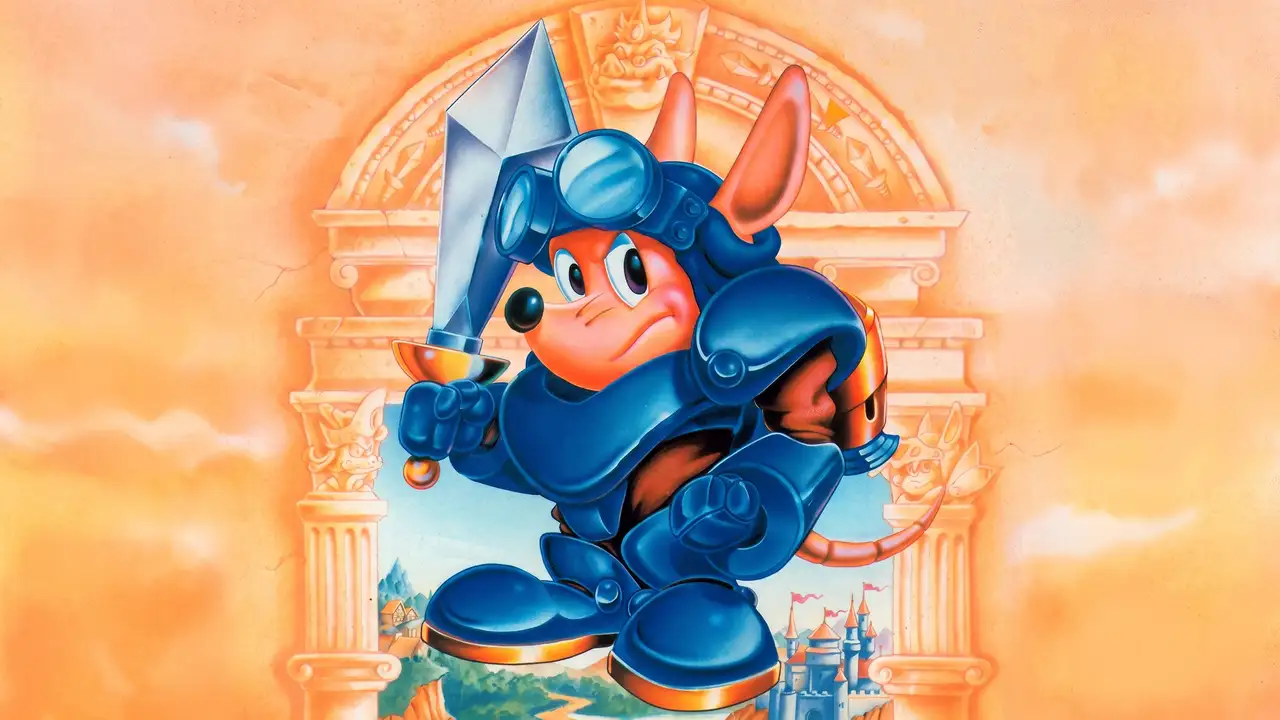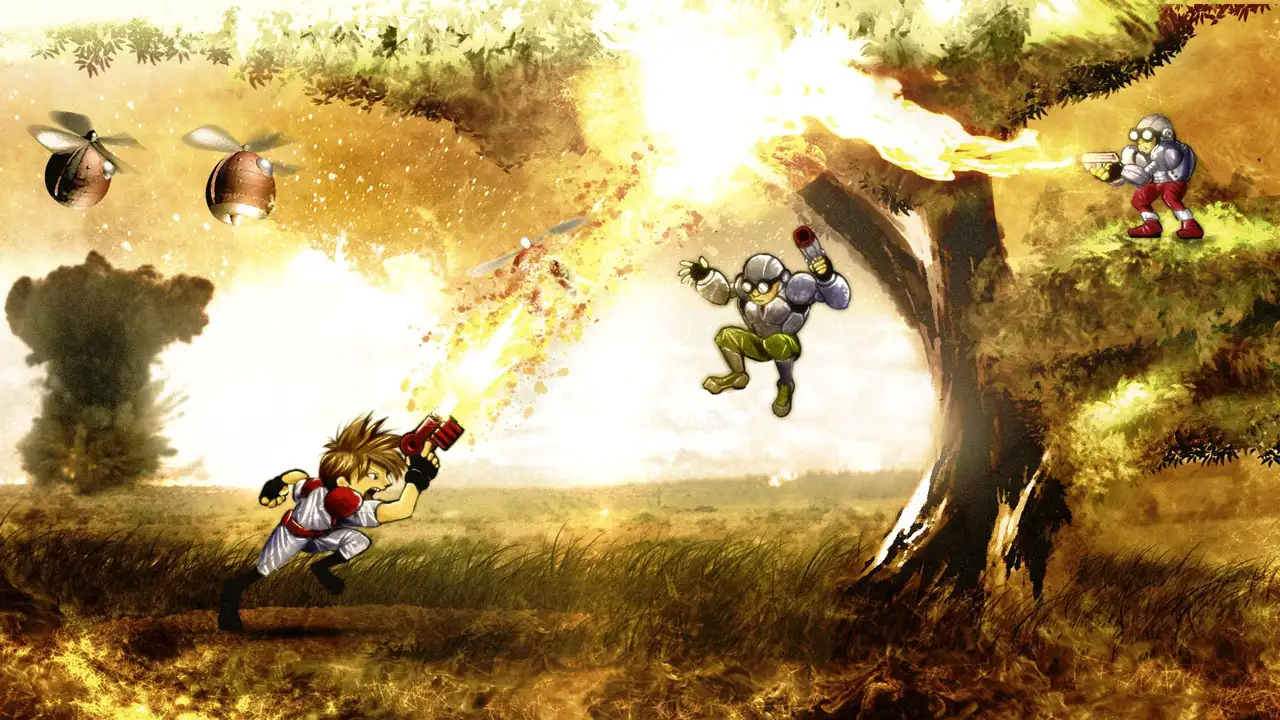
Treasure’s Mega Drive debut opens with colour-coded heroes, a stolen cache of gems, an empire of schemers, and absolutely no interest in slowing down. The plot is thin, and affectionately odd: gems, spells, and shoulder-pad colour as the only character distinction, with separate Western and Japanese storylines and a Japanese canon that extends into a handheld follow-up. None of that matters much once the shooting starts. What matters is that every screen shakes, every boss is a sprite-composite spectacle, and the Mega Drive’s effects are pushed to their limits in ways that still impress three decades later.
The run-and-gun action defines the experience. Enemies swarm, explosions fill the frame, and the pace rarely drops below frantic, exceeding its obvious genre ancestors in sheer density if not precision. Sliding, throwing, and shooting combine into a constant flurry, and the game’s generosity with health and unlimited continues keeps the chaos from ever punishing. Screen shake is constant, sensory overload is the point, and the design commits to spectacle over clarity with total confidence.
Weapon fusion is the mechanical hook. Two weapons combine into hybrids across fire, lightning, and chaser types, with free or fixed shot as the base setting, and the combinations genuinely change how the game plays. The chaser deserves special mention: it seeks targets and removes aiming from the equation entirely, and its dominance only becomes apparent through use. Starting with fire is the classic mistake, since the chaser hybrid reveals itself as arguably the most broken tool in the arsenal, and mastery of it transforms late-game encounters from scrambles into demolition.
The Seven Force boss is the campaign’s centrepiece and its wall. Seven transformations fight in sequence, and the fight’s opacity costs more attempts than everything else combined until the trick reveals itself: jumping between rails and exploiting the double jump, a mobility option hiding in plain sight. Once the rail-switching clicks, the gauntlet flips from impossible to manageable, and the transformation parade becomes a highlight rather than an obstacle. Discovery through trial and error is very much the design’s method throughout.
Set pieces give the four freely-ordered opening stages their identity. A minecart sequence ranks among the best things in the game, wall-jumping arrives as a mid-stage surprise, and a spaceship stage delivers pure spectacle. The dice palace is the odd one out, a board-game interlude whose rolls feel stacked against the player even after conceding it plays fairer than it first appears. The final act locks the order and escalates through multi-phase pyrotechnics toward a golden-silver showdown accompanied, in a genuine bug, by music that drops out entirely mid-fight.
Difficulty balance is friendlier than its genre reputation suggests. Death carries no limited lives, checkpoints are forgiving, and vitality refills appear regularly, but the weapon-reset penalty on dying stings, stripping the carefully fused chaser hybrid exactly when it matters most. Late bosses still cost multiple attempts, and the Seven Force gauntlet in particular demands pattern learning the game never teaches. The result is a campaign that welcomes newcomers while still biting.
Length sits around three to four hours, matching reference estimates almost exactly, a rarity worth noting. The pacing never lingers: four stages of the player’s choosing, then a fixed gauntlet of escalating bosses, with no filler between. Treasure’s maximalist sprite work (composite bosses assembled from dozens of pieces, effects chains that bordered on showing off) carries the visual identity, and the soundtrack holds up apart from the finale’s dropout.
Overall, this is a frantic, generous Mega Drive classic whose weapon-fusion depth, escalating boss design, and unapologetic sensory overload explain its enduring reputation. The Seven Force gauntlet’s opacity, the dice stage’s luck, weapon resets on death, and a silent final boss are small costs in a package this confident. It earns its place among the greats of its era.