A kidnap-and-chase premise in Saturday-morning-cartoon colours opens with the hero walking backwards into an auto-scroll, a life lost within seconds of the title screen. The abruptness sets the tone: logic rarely explains why stages follow one another, and ship interiors or mech sections arrive without introduction. Charming absurdity and structural nonsense share the frame throughout. Whether the trade delights or grates depends entirely on tolerance for 16-bit cruelty.
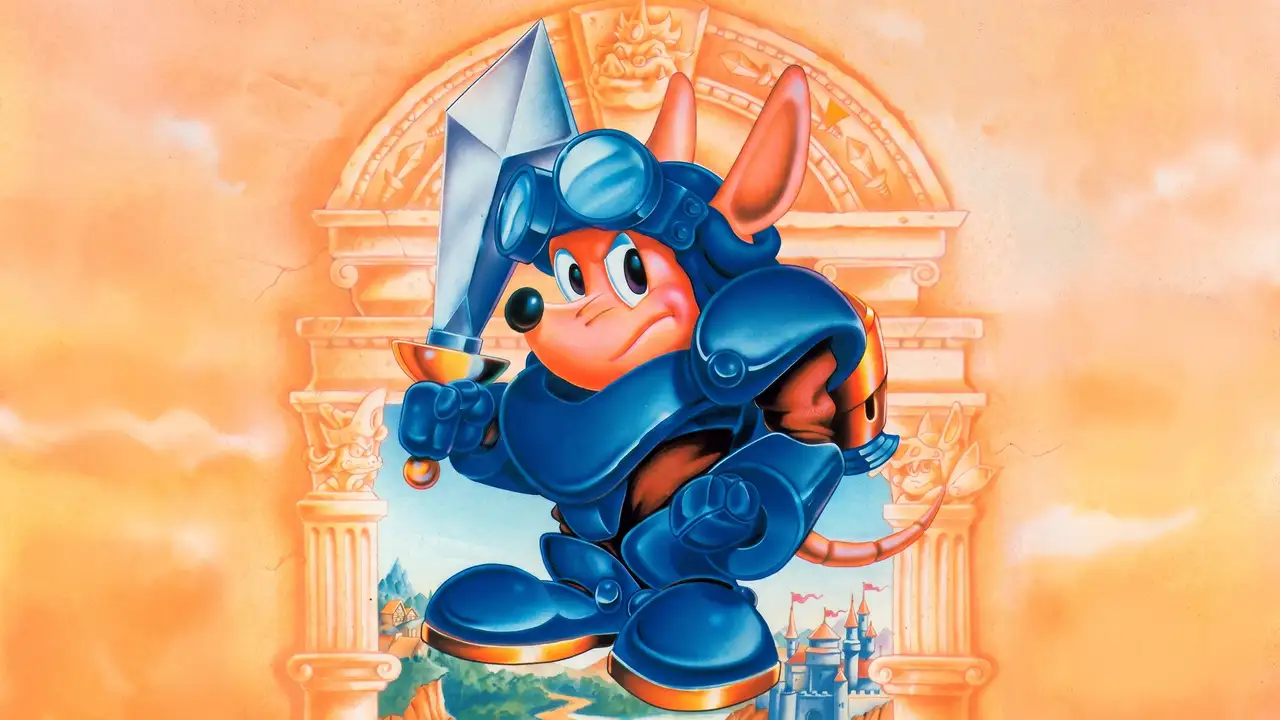
The rocket pack gives the game its identity. Directional dashes, jetpack bursts and spinning-drill attacks create a power fantasy few era platformers replicated, and the maze-like mechanical stages are built around the kit. Coin pickups trigger the rolling roulette, the charged screw attack demands a flashing, full-health bar, and apples and meat restore the pool between ambushes. When the charge rules click, the good stages sing.
The rolling roulette deserves specific attention. It activates only on money pickups rather than rolling constantly, a rule the game never advertises, and discovering it reshapes how routes get played. Combined with directional dashes, it turns ordinary corridors into momentum puzzles. Interludes break the rhythm further: a minecart sequence and a shooting-gallery diversion both trade the jetpack for different verbs. Variety is never the problem.
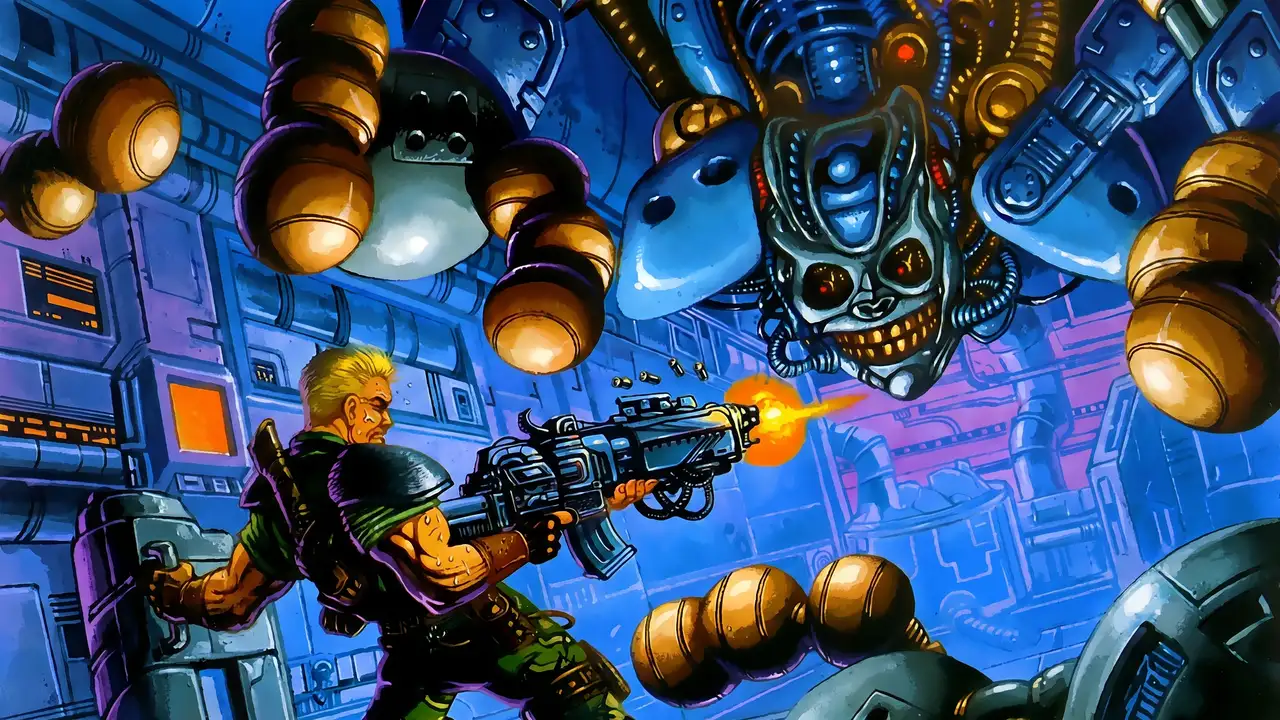
The mech fight is the campaign’s low point. The enemy does nothing but retreat, dragging the encounter across an absurd number of hits while the player’s attack connects on a fraction of them. It plays as a chore rather than a duel, an exercise in patience with no readable pattern to master. Nothing else in the cartridge wastes its ideas so thoroughly.
Boss difficulty spikes hardest where it matters most. Mid-game encounters like the split-phase monster and a boss resembling a certain cat-and-mouse cartoon offer unclear solutions with near-impossible health margins, and the dragon final boss crowns the cruelty with ten hits of shared health across three consecutive fights under a five-life, four-continue cap. Bounce timing cannot be controlled, patterns resist learning, and the economy of damage borders on impossible on the game’s own terms.
Hitboxes undermine everything. Enemies clip the hero unfairly while the hero’s attacks whiff on contact, an asymmetry that turns fair-looking situations into losses. It is a recurring, systemic complaint rather than an isolated stumble, and it shares DNA with the era’s shonkiest conversions. Precision platforming suffers most; the generous difficulty settings soften but never fix it.
Four difficulty levels from easy to very hard offer some control over the pain, and the presentation never falters regardless of setting. The music is kickass chiptune of the highest era standard, sprite work is expressive throughout, and the dragon final boss at least arrives as spectacle even as it resists fairness. The Mega Drive build also diverges from its SNES sibling, fielding lizard-dinosaur enemies where the other console fields wolves, a quirk worth knowing before choosing a version. Between versions the core experience holds: same rocket-knight fantasy, same score, different menagerie. The absurdity of the stage logic reads as intentional flavour rather than accident in this light.
Overall, the presentation and the rocket-pack mechanics earn real affection, and most stages deliver era-classic platforming with genuine flair. Unfair hitboxes, opaque boss solutions and a final act whose damage economy defies the game’s own rules hold the recommendation at arm’s length. A charming, well-crafted package undermined precisely where completion demands it most.