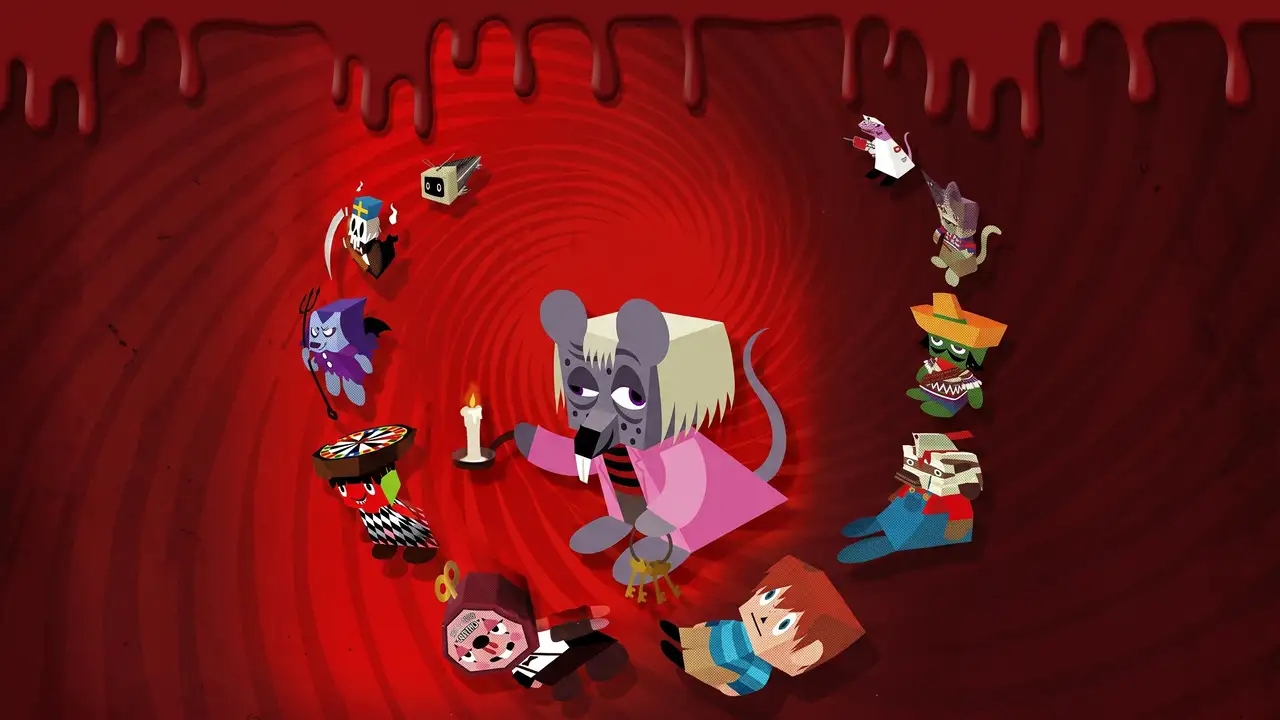
Gregory House is a strange, dreamlike hotel of lost souls, and its guest is a lost traveller tasked by Death himself with reclaiming twelve stolen souls. The premise is pure surreal comedy-horror: keyhole peeks, squeaky floorboards, karate-chopping handshakes, and residents who are creepy rather than scary. The unsettling-yet-comfy tone holds from the intro to the closing moments, and the game’s charm comes from committing fully to its own oddness rather than softening it.
The art style is the defining quality. Bizarre, angular character designs with only three-fingered hands, squeaky sound design on every interaction, and an off-kilter presentation give the hotel an identity no other game of its era shares. Residents are unsettling without ever tipping into genuine horror, and the comedy register sits comfortably alongside the dread. Everything about the presentation is weird in the best way, and it never stops being the game’s strongest asset.
The stealth-schedule system is clever design and the mechanical heart of the experience. Every resident follows a daily routine that can be exploited with keyhole peeks, footsteps and door knocks, and knowing a resident’s permanent schedule is often the key to completing a soul objective. Learning routines, overhearing monologues, stealing souls and surviving the chase that follows gives the five-night structure a satisfying rhythm that rewards observation over reflexes, and the expanding cast keeps each night feeling like a new puzzle to decode.
The mental-gauge health system makes hiding and resting genuine gameplay. Health is literally sanity, draining from stress, horror shows and melancholy, and managing it through the herb inventory (green, red and yellow, in a clear nod to a certain mansion series), item trading with the shop, respawning garden herbs and save frogs rounds out a loop that stays light while remaining engaging. Soul objectives vary wildly across the cast: a multiple-choice quiz, a trivia gauntlet, a full board-game minigame, a soup-poisoning puzzle and a confusion-inducing chase puzzle. Variety keeps each night distinct.
The Clock Master soul segment is the low point. Several hundred catches during a confusion-driven chase puzzle, genuine disorientation about what the objective even required, and a die-then-retry spiral nearly derail the whole run. The eventual solution, letting the pursuer give chase and pickpocketing the stopwatch, resolves it, but the segment’s opacity makes it the sharpest frustration in an otherwise gentle campaign. It is the one place where obtuse design genuinely hurts rather than charms.
The Catherine boss fight brings its own friction, with RNG positioning and shifting aim turning an otherwise easy encounter into an irritation. The confusion status effect, with its inverted controls, is deliberately the worst state in the game and lives up to that billing every time it lands. Neither issue breaks the experience, but both stand out against a campaign whose difficulty curve is otherwise remarkably fair for a game built on trial and error.
The finale lands with genuine weight. Mama’s escalating threats through the diaries and cutscenes build toward an ending that is surprisingly poignant, followed by an epilogue reflecting melancholically on escaping cold harsh reality only to long for a return, and a closing reveal that reframes the whole stay. No crashes or technical issues appear anywhere, and the game runs clean throughout. The tone holds right to the last frame, and the final beat is worth the journey.
Overall, this is a charming, unsettling PS2-era curio whose schedule-based stealth, sanity-as-health design and singular art style make it entirely its own thing, closer to surreal comedy-horror than conventional survival horror and all the better for it. A confusing late soul segment and an RNG-tinged finale are the real costs, and neither outweighs the off-kilter delight of a hotel this strange.