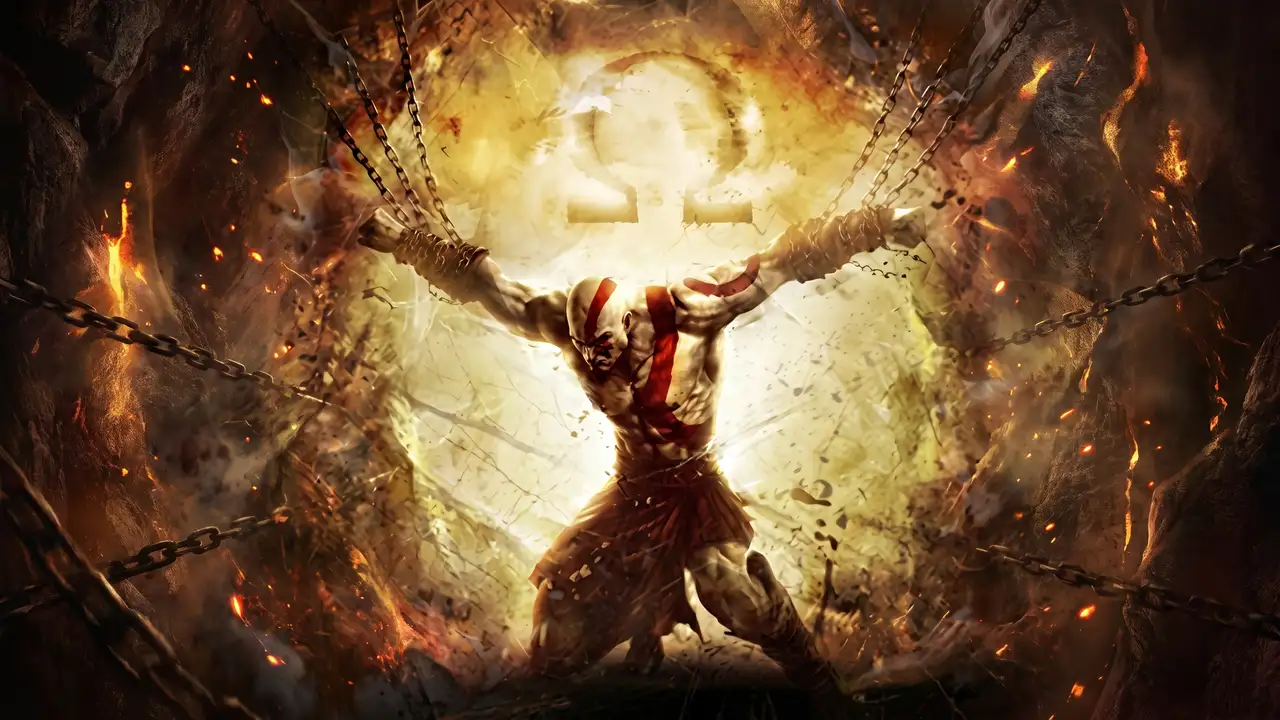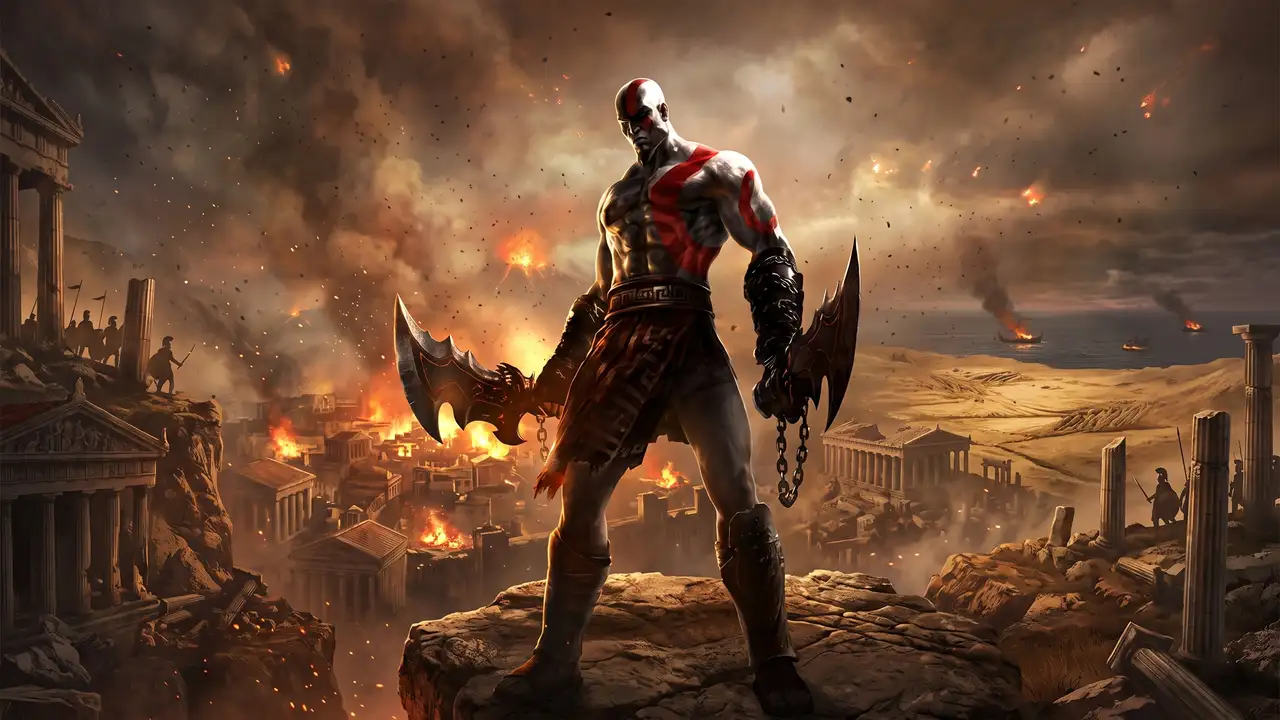
A warrior bound to the gods after a decade of servitude is dispatched to stop a siege on Athens, and the campaign built around that assignment defined a genre’s template for years. The revenge-tragedy structure carries genuine weight, with foreshadowing planted early in a grave-digging encounter that rewards attention, and the barbarian flashback deepening the personal stakes behind the divine errand. Cutscene production values hold up remarkably for the platform, and the story’s connective tissue, from the opening despair to the eventual coronation, closes its own loop with confidence. Greek mythology is mined for spectacle without ever losing the personal tragedy underneath.
Pandora’s Temple is the campaign’s centrepiece and its best argument. The desert of lost souls gives way to three trials, the temple’s layered interior conceals muse-keys and hidden upgrade chests, and the architect’s tomb books weave environmental storytelling into the level design itself. Thorough exploration is genuinely rewarded, with secret houses and slanted-ledge grabs hiding some of the game’s best upgrades, and the Kronos reveal recontextualises the whole location. Few PS2-era levels committed this hard to the idea that the dungeon itself is the story.
Combat builds its loop from chained blades, orb upgrades and environmental puzzles, and the upgrade economy drives exploration throughout. Blades change appearance per level, giving visible progression, and magic shapes crowd control in ways that hold up. The infamous Hades section proves less brutal than its reputation, though its balance beams and darkness still rank it among the game’s roughest stretches. Difficulty is mostly fair overall, with invisible checkpoints discovered mid-run quietly reshaping how much risk any encounter carries.
The combat’s inconsistencies are its real cost. Grabbing is finicky to the point of inconsistency, most punishing on minotaurs where attempts whiff or lock unpredictably, and accidental spin attacks trigger while blocking. Rotating quick-time events are fussy, with small fonts and unclear windows drawing constant irritation, and hidden cracked walls are often too subtle to spot without a guide. Enemies block frequently, padding encounters, and the overall feel never quite matches the precision the spectacle promises. None of it breaks the flow, but all of it is noticed.
The finale is the sharpest spike. The clone family-defence sequence pairs relentless pressure with no health recovery, turning the closing minutes into a wall that the rest of the game’s fairness never prepared for. It is the one section where difficulty tips from challenge into attrition, and the frustration it generates colours the ending’s otherwise strong emotional landing. A consistent emulator crash, eventually traced to cycle rate, added its own toll before the finish.
Visually, the game benefits enormously from community restoration work. Texture packs running on emulator transform presentation well beyond the official HD collections, sharpening environments and character detail to a degree that changes how the whole campaign reads. Font-size and visibility issues on quick-time prompts and hidden walls persist regardless of enhancement, a reminder that some friction is authored rather than technical. The underlying art direction, spectacle scale and execution mini-games all survive the years intact, and the game-feel that set the template for its sequels remains intact underneath the polish.
Overall, this is a foundational character-action spectacle that still plays as the template its successors refined, held together by exploration-rich temple design, a coherent tragedy and game-feel that defined an era. Inconsistent grab targeting, fussy rotating quick-time events and a punishing clone-family finale blunt the edges, and the Hades section earns some of its reputation. The core remains very fun, and the groundwork for everything that followed is visible on every screen.