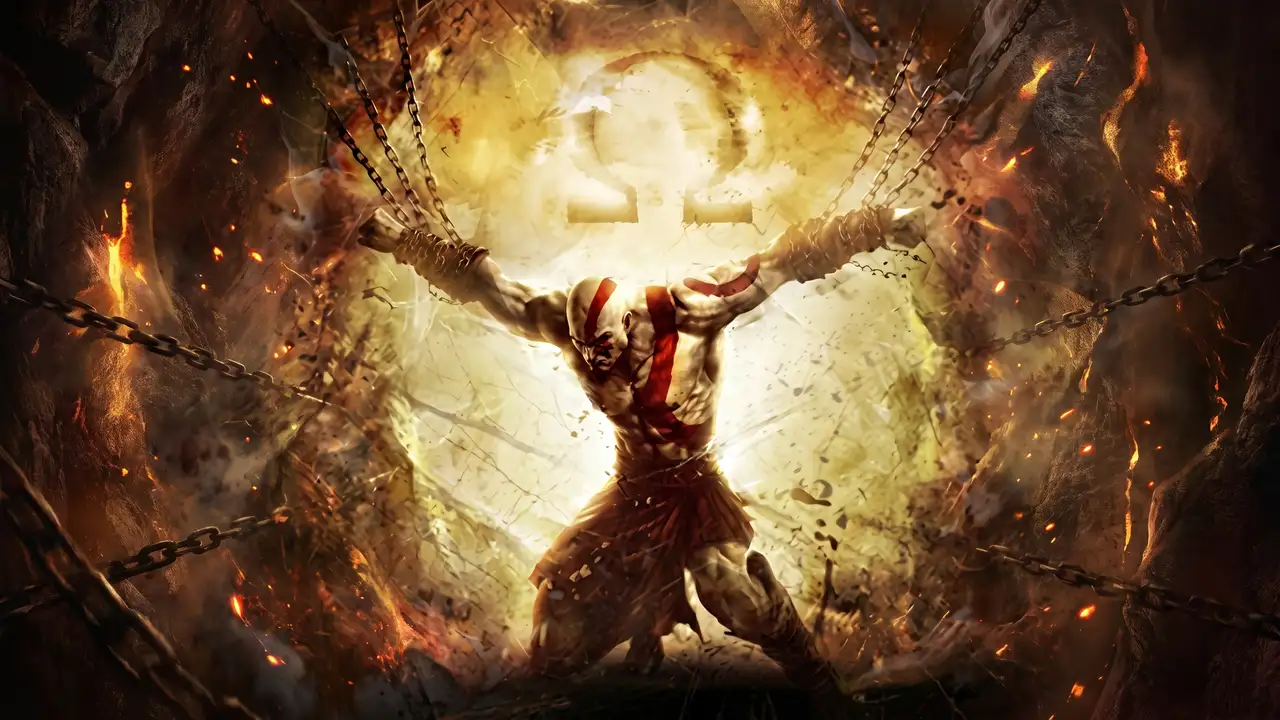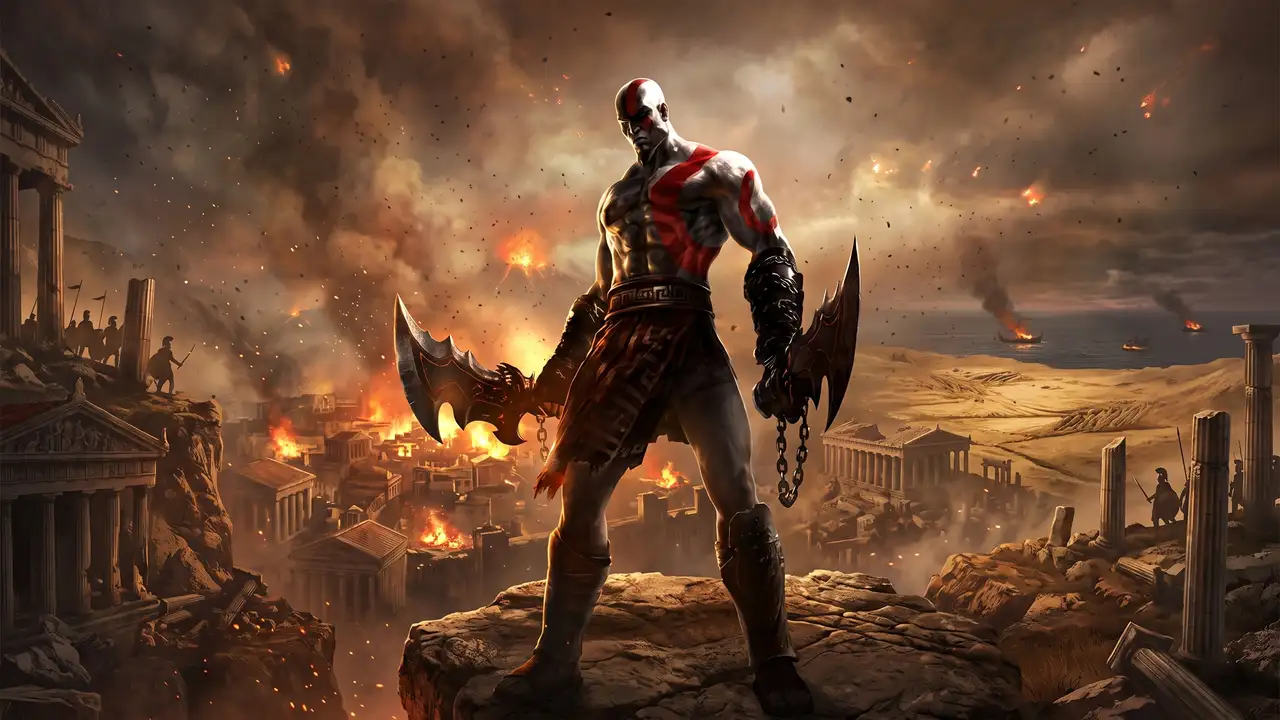
A prequel set ten years before the series’ console debut follows a Spartan warrior from the Persian siege of Attica into the sun chariot of Helios, the caves of Olympus and down through Hades to Tartarus as a black fog swallows the world. For a handheld title it tells a surprisingly full story, and the mythology deep-cuts, the Persephone and Hades lore read aloud and relished, give the short campaign unusual narrative texture. The underworld functions as the protagonist’s recurring holiday destination, a running gag that fits the series’ geography, and the finale carries genuine emotional weight that recontextualises his later fury. Hades itself, with its recurring role, becomes the setting’s signature.
The texture pack runs flawlessly from start to finish, vindicating the modding effort that paid off unevenly on the console entries, and the visuals hold up as the cleanest the handheld entries have looked. Character-model ghosting is a minor emulation quirk, otherwise the presentation is sharp throughout. Combat is the classic blades-and-combo loop, with Hyperion Might and Hermes Rush expanding the toolkit, and the sun shield arriving mid-game unlocks both melee parries and projectile deflections, immediately making defensive play worthwhile. Triton’s Lens handles the underwater sections, effectively Poseidon’s Trident before Poseidon’s Trident, and the armour-breaking Gauntlet of Zeus arrives late but hits hard.
Scale, the series’ signature, translates to the small screen better than expected. Attacking the Persian Basilisk in the opening hour, hauling siege equipment through Attica and riding the sun chariot all register as proper God of War spectacle despite the compressed canvas. The handheld format forces smarter camera discipline than the console entries attempted, and the fixed framing keeps every fight legible on a small display. Even the Hades interludes, brief as they are, carry environmental storytelling that the four-hour runtime never lingers on long enough to waste. What the campaign lacks in variety it recoups in density; almost nothing here is filler.
The Persephone finale is the campaign’s peak: a projectile-reflection duel in the series’ grandest tradition, capped by a punishing six-counter chain that demands genuine mastery. It is one of the best boss encounters the handheld entries produced, and the emotional reveal preceding it gives the fight actual stakes. Puzzles are lighter but present, the three wind-spirit statue cranks and the wind-steed courtyard offering variety without outstaying their welcome.
The downsides are structural. The boss roster is thin and enemy variety limited, the stated biggest downside, with too few encounters to give the four-hour campaign real texture. Red orb chests are comically unrewarding, dispensing pocket change where the console entries paid out meaningfully. The Gauntlet of Zeus arrives too late to be properly enjoyed, a great weapon introduced just as the credits approach. Charon’s first fight is a rigged loss that cannot be won by design, which reads as arbitrary rather than dramatic, and parrying stays locked away until the sun shield arrives, leaving the early hours defensively shallow.
Quick-time events are more demanding than memory suggested, requiring more input variety than the console entries demanded of the same era, and the upgrade economy is sparse: barely two health upgrades exist in the wild, though catch-up chests and a generous supply of Gorgon eyes and Phoenix feathers mean everything maxes out by the end anyway. The sparse economy makes cautious play unnecessary, since the game effectively self-completes its progression. A post-credits scene neatly explains a series continuity detail, closing the prequel’s loop.
Overall, this is a very competent PSP game whose clean visuals, comfortable classic combat and surprisingly heavy story justify its short runtime, dimmed by a thin boss roster, limited enemy variety and a weapon that arrives too late to matter. As the earliest playable chapter of the saga, it holds up remarkably well. Short, confident, and still very good.