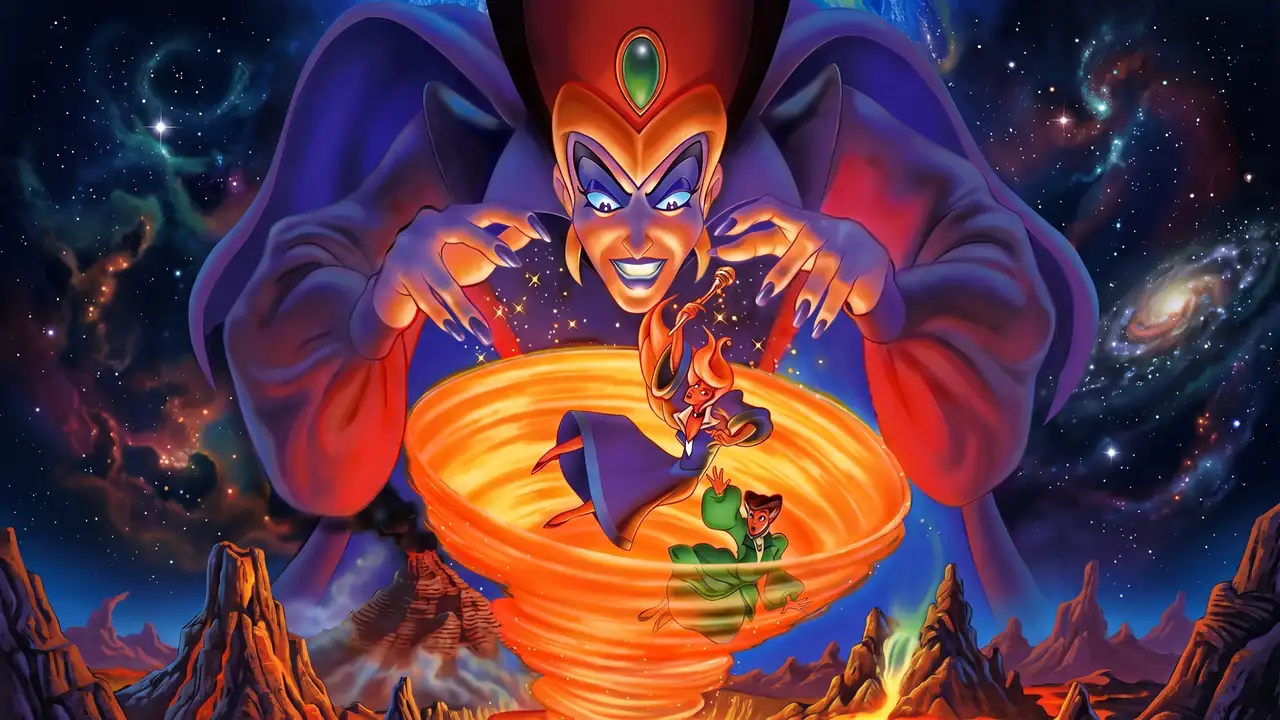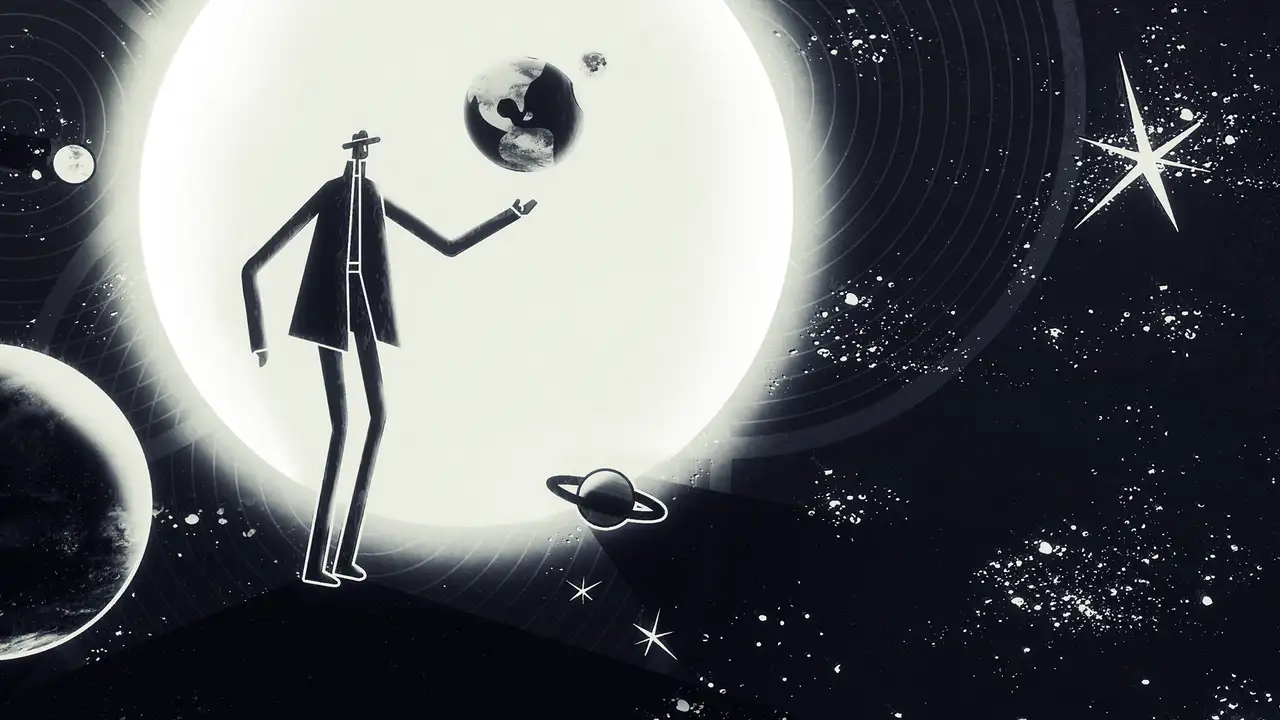
A watch salesman, a jazz singer, and her lover form the triangle of a noir murder mystery stretched across the entire lifespan of the universe. The Big Bang, stellar formation, evolution, and heat death all serve as chapter backdrops, with cosmology delivered through accessible interludes on star formation, abiogenesis, the Kardashev scale, and Hawking radiation. The tone is dreamlike and melancholy, jazz-inflected and constantly visually reinvented. Few games attempt anything this strange; fewer still commit this completely.
Presentation is the defining triumph. Art styles, perspectives, and per-level aesthetics shift from scene to scene, with 2D and 3D viewpoints trading places mid-sequence and every level looking unlike the last. The relentlessness of the visual reinvention never dulls; if anything the game grows more confident as it goes. As pure spectacle, it ranks among the most striking adventure releases of its year.
Each level introduces a genuinely new mechanic. Planting cosmic seeds, conducting a jazz session, dragging a train across the sky, swimming, matching frequencies, and steering a particle accelerator all appear, and the playable music sequences stand out as the campaign’s peak. The variety keeps a point-and-click structure feeling alive, with puzzles functioning less as obstacles than as instruments for the next visual idea.
The bullet-trail hub links the self-contained levels in a stylish spiral, though its own visual language stays opaque: golden items and spirals recur without their significance ever quite landing. Comprehension is hit-and-miss throughout, with several sequences resolved by feel rather than understanding, sometimes charmingly and sometimes through blind luck. Puzzle legibility is the game’s most consistent design weakness, and the frequency-matching and music-memory sequences resist logical solving entirely.
Technical problems undercut the presentation. A cursor bug shrinks, freezes, or stops signalling interactivity, forcing blind guesswork in a late snow sequence where visual feedback matters most. The game’s own photosensitivity warning proves accurate: intro text garbles, and a flicker-heavy screen near the end obscures a key moment. Framing drops whenever text blurbs precede levels, and minor audio-mix oddities and cutscene skips surface occasionally, none game-breaking but all at odds with the polish elsewhere.
The finale lands emotionally. A closing montage retells the story through each character’s perspective, giving the cosmic sprawl a human frame, and two final choices give the ending a fork worth reconsidering after the credits. The near-final stretch of character vignettes runs slightly long, but the payoff justifies the patience. Roughly three and a half hours covers one path, and chasing the alternate route would demand a fresh run rather than a quick reload.
Evidence collection and the cave-hunt sequence give the investigation enough texture to feel like detective work, even when the clues are planets, seeds, and golden spirals rather than fingerprints. The mystery logic bends to the cosmology rather than the other way around, an approach that suits the tone even as it muddies deduction. The interludes deserve separate credit for making genuinely dense science (star formation, abiogenesis, the Kardashev scale, the Big Crunch) feel like atmosphere rather than homework, and they set the register each level then plays against. Surrendering to the weirdness works better than interrogating it.
Overall, this is a gorgeous, bizarre cosmological noir that reinvents its presentation at every step and rewards surrendering to its strangeness, even when its puzzles never explain themselves. A cursor bug, photosensitivity-adjacent glitches, and illegible logic are the costs of admission. The art, the jazz, and the sheer ambition pay the fare many times over.