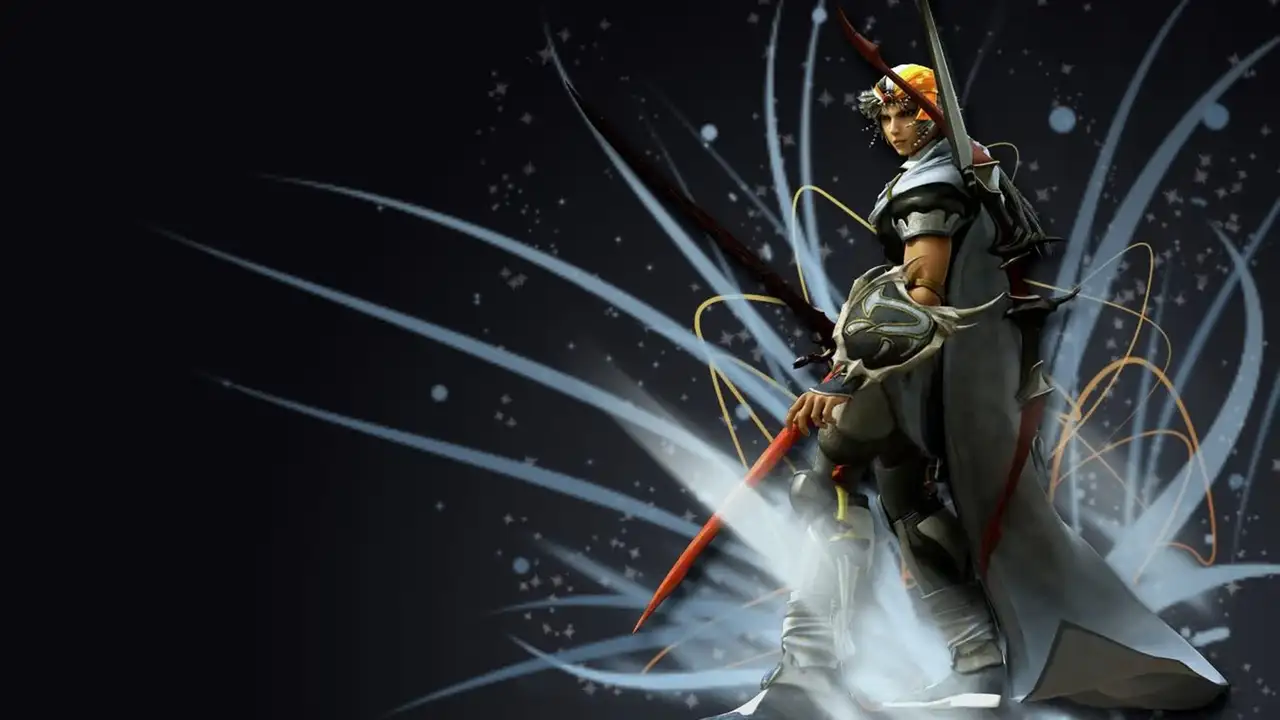
Wartime rebellion sets the stage for one of the most idiosyncratic role-playing games of its era, a title that abandoned experience levels entirely and asked its characters to grow through action rather than accumulation. Swing a sword and sword skill rises. Take a hit and health climbs. Cast a spell repeatedly and that spell strengthens. The structure confused players at launch and still divides opinion today, but the design underneath rewards exactly the kind of systematic tinkering that stat-driven role-playing lives for. Rather than a failed experiment, this reads as the prototype of a lineage that would later power an entire series of offshoot games.
The usage-based progression defines everything. Health rises when characters are damaged, spell ranks climb with each cast, and weapon proficiency accrues swing by swing, which means every encounter doubles as training. Optimising it becomes a game in itself: deliberately attacking allies to farm health, channelling magic at nothing to raise spell levels, and shaping a party around whichever habits the battle system happens to reinforce. Few games from 1988 hand over this much mechanical authorship, and fewer still make the numbers climb so visibly in response.
Evasion and shield training transform the mid-game once discovered. Raising dodge values turns the enemy’s favourite opening move from a run-ender into a shrug, and max-strength builds convert routine fights into one-turn cleanups. The grind here is not separate from play; grinding in this game barely differs from simply playing it, since every action feeds the system directly. Off-screen preparation sessions compress hours of progress into a few deliberate choices, and the payoff arrives as a genuine power fantasy rather than a scoreboard.
The Dreadnought opens the campaign’s harshest stretch, a dungeon where ambushes, blindness, and sleep stack into a gauntlet that punishes untrained parties without mercy. Getting ambushed constantly in its corridors is the single most common complaint this encounter produces, and it lands early enough to sour the experience before the ship’s real threats even appear. Yet the same friction teaches the lesson the system wants learned: evasion training and shield work dissolve the problem entirely, converting an agonising stretch into a case study in the game’s own logic.
Dungeon design leans on repetition of a more questionable sort. Nearly every dungeon contains trap rooms and trapdoors whose purpose never becomes clear, teleport tiles that eject the party back to the entrance, and placement choices that read as spite rather than challenge. Pandemonium concentrates the worst of it, spiking difficulty from nothing to overwhelming almost instantly and standing as the campaign’s one structural black mark. Ethers compound the irritation, restoring a sliver of mana where the costs demand far more, which turns a standard consumable into a running joke.
The Arcane Labyrinth restructures exploration around words rather than corridors. Twenty-one floors deep with no saving inside, it lets keyword combinations determine treasure quality, encounter rates, and which sections open at all, and learning which pairings pay off becomes the real puzzle. Its opacity is the cost: signposting is so poor that the optional super-boss waiting at the bottom, guarding the Ultima Weapon, may as well be invisible until stumbled upon. Weapon accuracy mechanics receive equally little explanation, hiding a fundamental rule behind unintuitive behaviour.
Soul of Rebirth unlocks a second campaign after the credits and opens with the deck heavily stacked against its reduced cast. The early hours punish, then the same learn-by-doing engine takes hold, an Ultima build comes together, and the mode turns from ordeal into the game’s best victory lap. Its structure echoes the main quest while rearranging the roster, and the three-hour arc lands as a genuine epilogue rather than a tacked-on extra.
Presentation quality benefits from the PSP treatment, with quality-of-life touches the original lacked; disembarking the boat anywhere, rather than only at designated docks, fixes one of the most tedious constraints of its predecessor. The wartime story keeps a sombre register, its recurring losses giving the rebellion stakes that the first game never attempted, though the telling remains a creature of 1988 conventions. Sound and battle presentation hold up cleanly for the era.
Overall, this is a strange, content-stuffed classic whose reputation as the black sheep says more about expectations than quality. The learn-by-doing system rewards obsessive mastery with an endgame power fantasy that few retro role-playing games can match. Judge its trap-room dungeons and difficulty spikes as flaws of their time, and what remains is a prototype SaGa still worth playing.