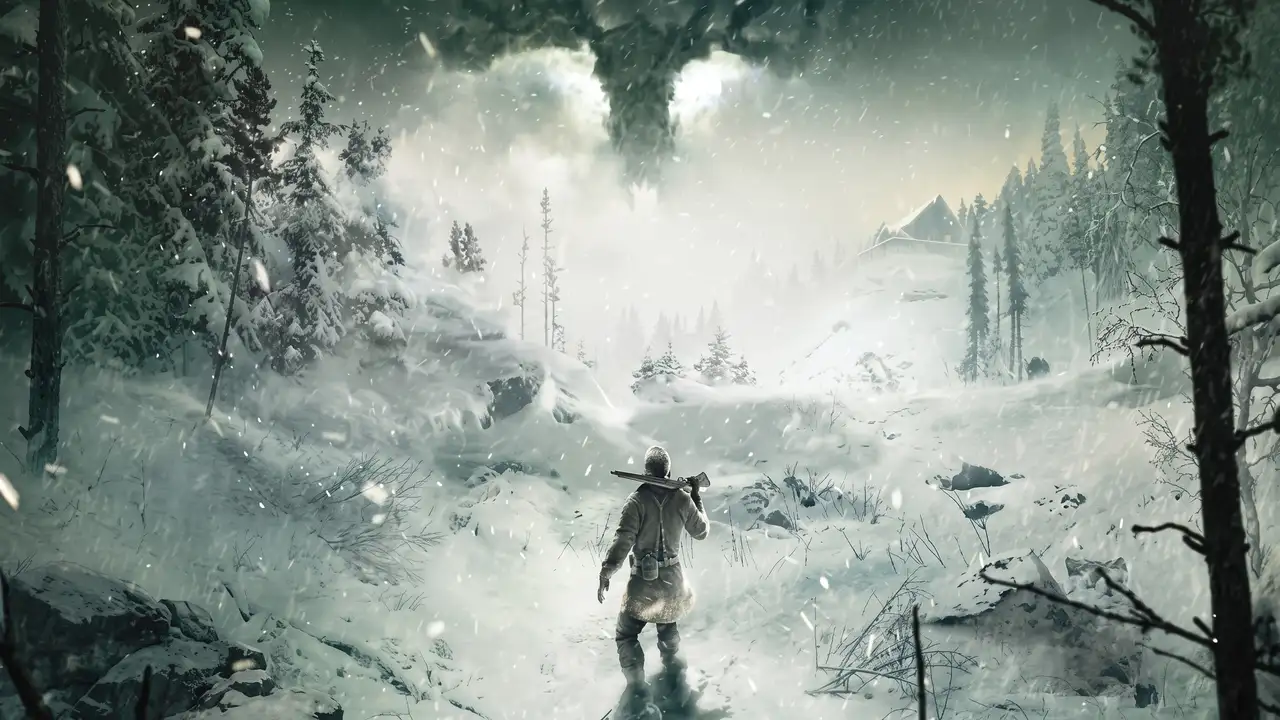
A man returns to a rain-soaked village to bury his estranged father and finds it empty, looping and haunted by afflicted entities, with a radio researcher guiding him toward a long-shut institute that tried to contact the dead using a meteorite artifact. The mystery is coherent and satisfying, the personal twist that recontextualises the protagonist’s childhood lands as genuine thriller craft rather than a shock for shock’s sake, and the persistent quarantined-zone atmosphere of rain, roadblocks and vanished townsfolk holds the whole thing together.
The PS1-style low-poly art style is the defining aesthetic choice, a deliberate throwback that reads as confident rather than cheap, and the credits reveal a genuinely tight-knit indie production with voice work by the developer himself and small personal touches that give the whole package personality. The tone is a thriller rather than horror, unsettling rather than terrifying, and it is honest about that register throughout.
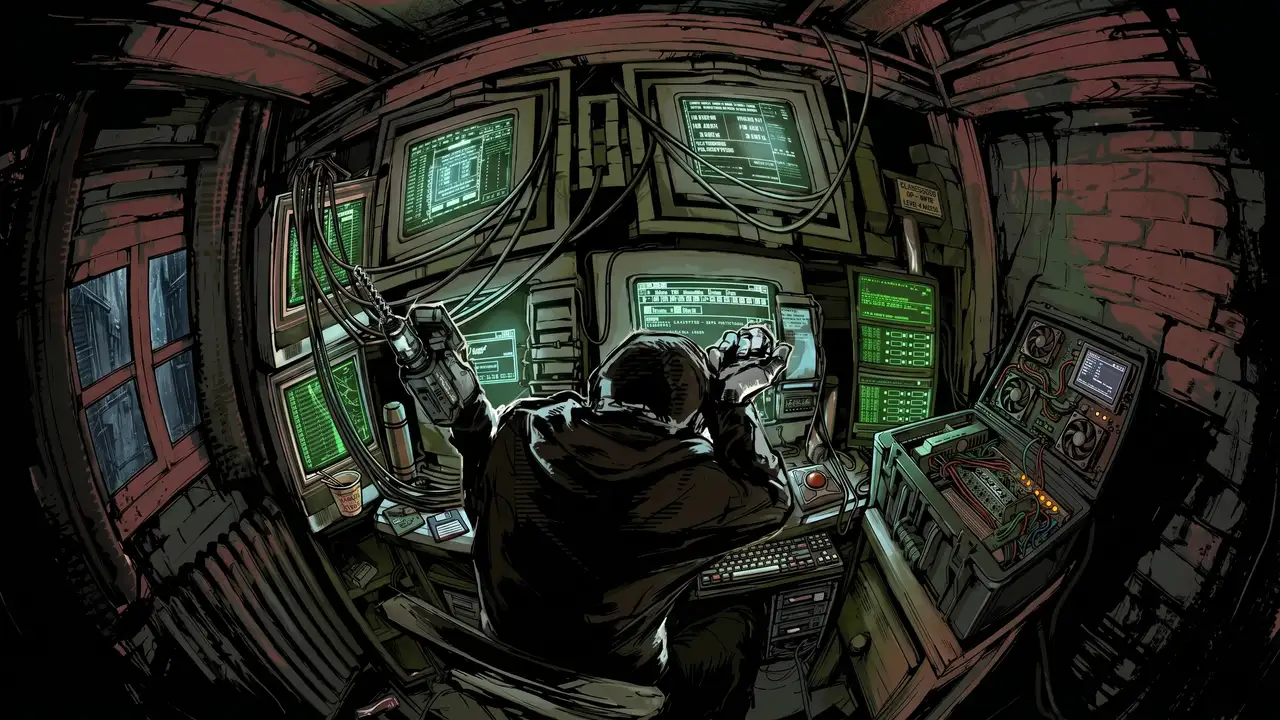
The FDMD frequency-tuning mechanic is the signature system: a handheld detector tracks displaced-frequency echoes, tuning a radio to find audio ghosts of the past, and it doubles as the collectible compass for hidden echoes, notes and objectives. A post-completion UI hint for undiscovered key items in each area is a quietly player-friendly touch, and exploration across the village, hotel and containment sites is compact but dense with things to find.
Item-based puzzles keep the structure moving: fuse repairs, generator refuelling, gate keys, a body-on-duvet circuit-breaker fix and a ten-charge modified loudspeaker that dispatches ghosts aimed at three blue dots. The opening tension comes entirely from the unknown, with the ghosts’ appearance and touch-consequences unexplained, and the first genuine jump, a body-drop reveal near the hotel, lands precisely because it is the only one.
The ghosts’ true nature as blue lights is the scare factor’s undoing: once seen, they become a whole lot less frightening, and the game’s tension dissolves on any second pass. The three ending variants share nearly identical dialogue and cutscene content with only minor scene variations, more the same ending with slight variety than true branches, which undermines the completionist reward for chasing all three. Neither flaw is fatal in a two-and-a-half-hour experience, but both blunt the replay value the ending system implies. The site-a ghost hunt is the tension high-water mark, and the Isaac body-drop reveal near the hotel lands as the one legitimate jump precisely because it is unaccompanied by any other.
Opaque 2000s-style puzzle logic surfaces occasionally, with hidden access cards and fiddly item combinations that hark back to an era of adventure design that trusted players less, and the ambient atmosphere of vanishing trees and figures behind fences sits ambiguously between intentional creep and technical quirk. A one-charge-limited loudspeaker against multiple hauntings in the final site stretches the ten-charge economy thin.
Roughly two to two and a half hours cover 100% completion, every echo, note, ending and achievement, a single-evening span that suits the tight pacing and never pads, and the collectible-rich exploration rewards the completionist instinct generously. The mystery’s resolution is earned by the documents and echoes scattered throughout, and the credits land as a small, warm sign-off.
Overall, a tight, atmospheric PS1-style thriller whose frequency-tuning collectible hunts, rain-soaked village mystery and genuinely personal twist outweigh shallow ending variants and a scare factor that fades once the ghosts’ blue-light truth is seen. It is a confident, compact evening of unsettling thriller craft, worth one very complete sitting.