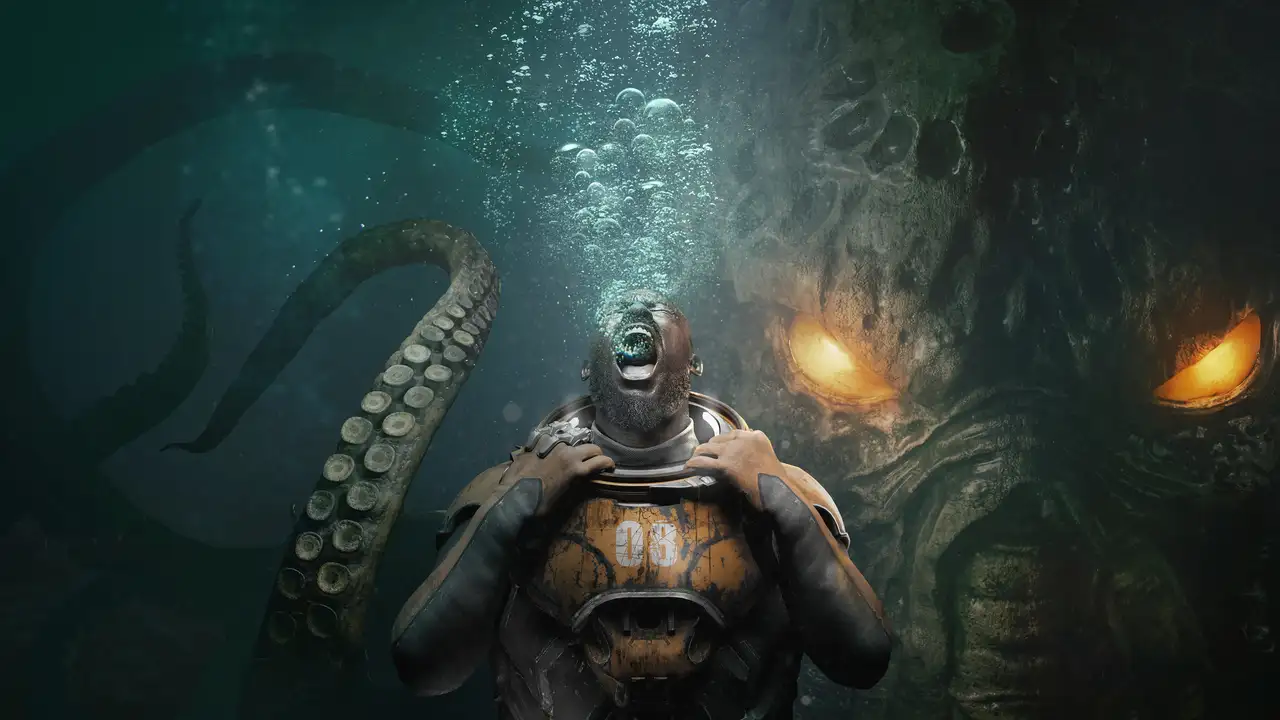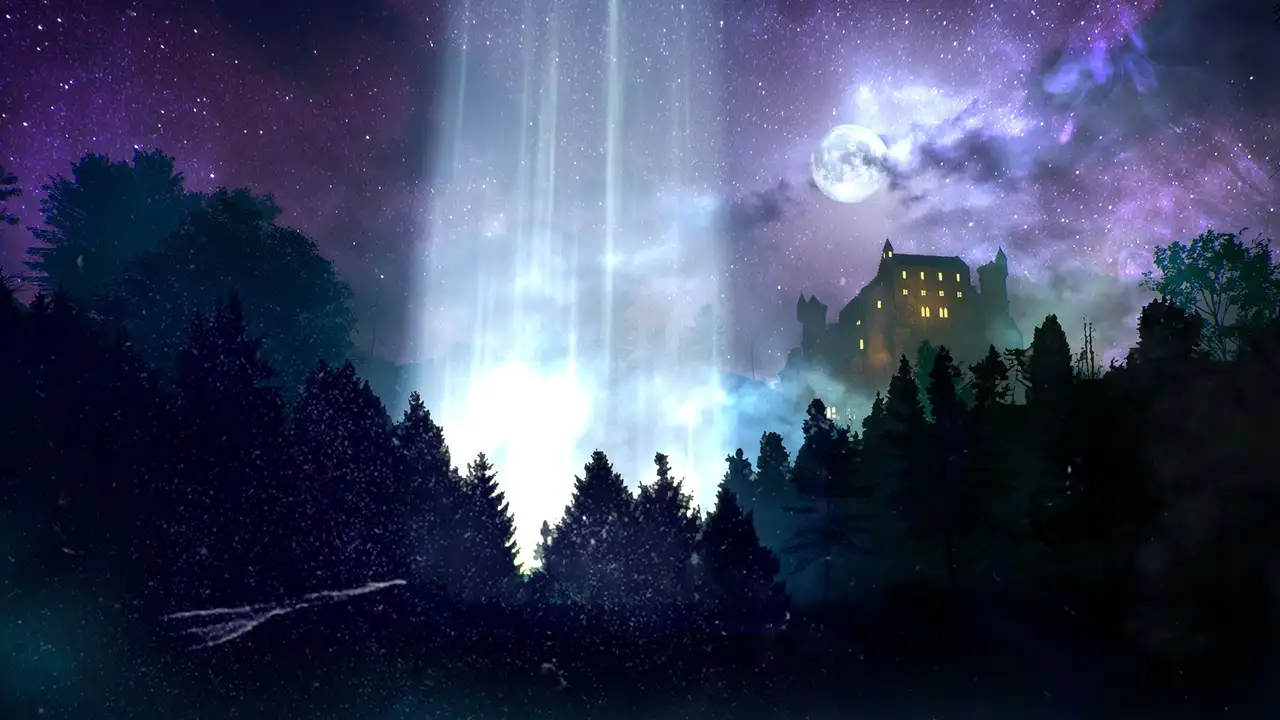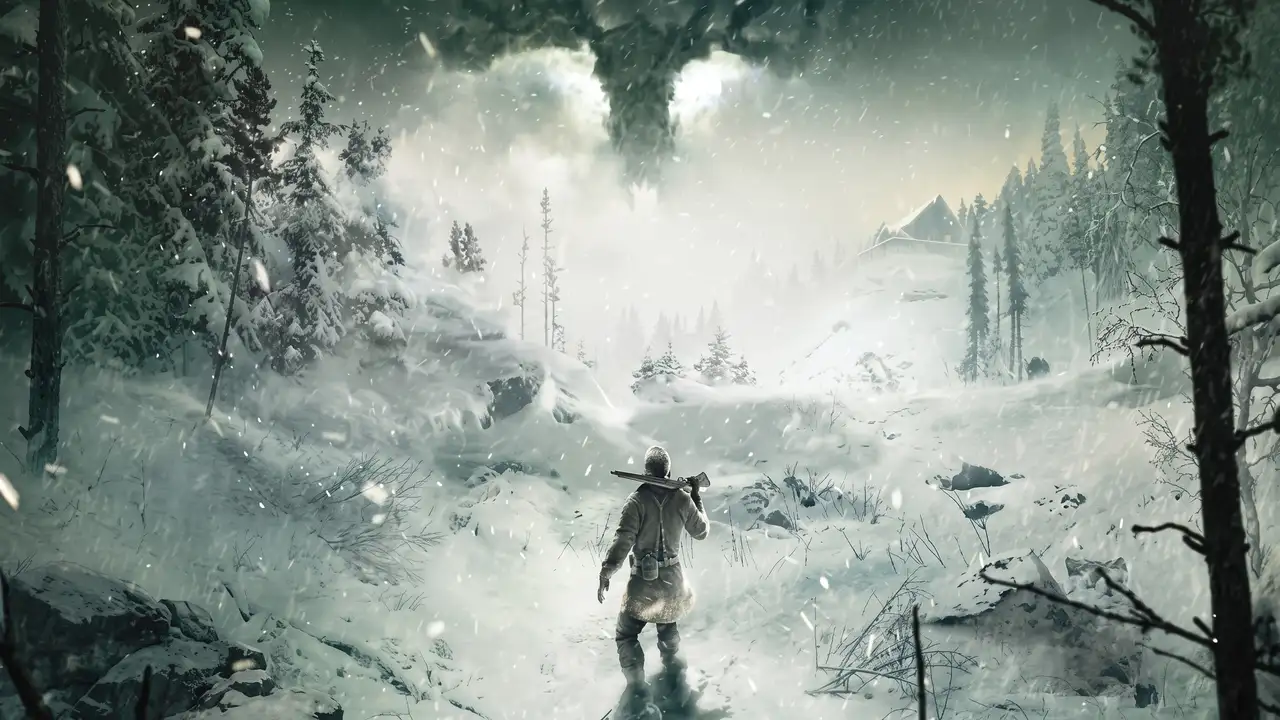
A content warning at boot flags depictions of suicide and infanticide, and the game honours every word of it. A young boy ventures into the Nordic night to find his missing sister, and the cursed wilderness that swallows him is populated by gnomes, trolls, a flesh-dancing water spirit and a child-harvesting midwife. The mountain of the title entombs a king whose witch-burning hunt for a cure consumed his own kingdom, a backstory the storybook pages unspool gradually rather than declare. This is dark fairy-tale craft of the old, unsoftened kind, and its confidence in that register is the whole reason to be here. Few games dare subject a child protagonist to what this one does, and fewer still earn it through atmosphere this carefully built.
The storytelling is entirely wordless: a narrator reads storybook pages between chapters while characters communicate in wordless noises, a device that gives the fairy-tale structure its identity rather than decorating it. Those interludes foreshadow each horror before it arrives, building dread through anticipation instead of jump scares. Oppressive darkness does the rest, and the sound design deserves particular mention: whispering women are mixed to sit right next to the ear in headphones, close enough to raise the hairs on the neck.
Scale is the second pillar. Playing as a small child among giant mushrooms, hulking gnomes and trolls, and finally a mountain-sized King, constantly reinforces the peril, and the world’s proportions do quiet narrative work that dialogue never could. Chapters escalate from hiding-only horror in the gnome forest and troll village toward full boss fights, with a zombie-plague village marking the midpoint turn and the plague lady herself waiting at the far end. Wooden figures and storybook pages pad the exploration without bloating it.
The slingshot arrives as the first tool of agency, used for light environmental puzzles (ritual sigils, potion mixing, music-box cogs) and, unexpectedly, for combat: sword duels and multi-phase boss encounters where none were expected. Combat stays serviceable rather than deep, but its mere presence in this mould of cinematic horror is a surprise that pays off, particularly in the three-phase duel that closes the campaign. Later puzzles add the stone’s light as a second instrument.
Friction concentrates in traversal and camera. Fixed angles hide threats until the last moment, sprint stays absent for much of the early going, and jumps misjudge by inches: a crossing missed by a hair ends in drowning, repeatedly. The bear-trap sections are the worst stretch, blind, fiddly and punishing in ways that test patience rather than skill, and the whisper-lady audio that flatters headphones elsewhere becomes a nuisance when it masks approach cues.
Checkpoint generosity keeps all of this honest. Deaths at traps, rivers and delayed boss swings rarely cost more than a minute of replay, which lets the difficulty stay punishing without turning cruel, and keeps the momentum brisk through a compact chapter structure. The trade is deliberate: the game would rather be brutal than tedious, and the checkpoint design is what makes brutality watchable.
Overall, a beautiful, brutal dark fairy tale in the child-scale horror mould, distinguished by wordless narration-only storytelling, nerve-shredding sound design and a willingness to go further than almost any peer dares. Fixed cameras, inch-missed jumps and the bear-trap gauntlets are honest costs, but the atmosphere, the escalation and the sheer audacity carry the night completely.