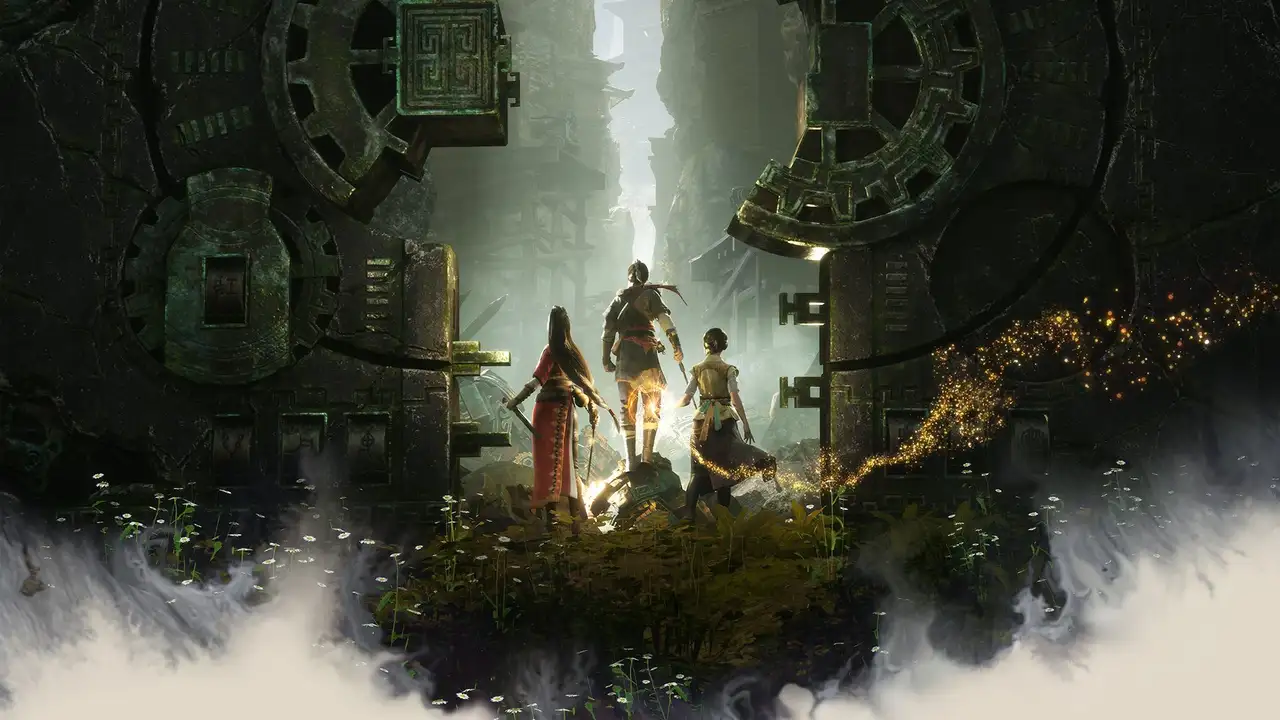
A Han-dynasty fantasy of clockwork Mohists, soul-shaping spells and a corrupting black flame, Xuan-Yuan Sword VII delivers a character-action adventure steeped in ancient-Chinese clockwork-punk that nothing else in the genre matches. The mystical sword’s crack cutting entire areas off from each other is a clever structural device, and the world reads as both myth and machine. Visuals impress from the first minutes to the last, pulling off the kind of technical trickery that defies the studio’s profile, and the early impression of plasticky character models softens considerably with time. Story delivery runs through a sister’s journal vignettes unlocked at campfires, giving the worldbuilding a personal texture big-budget action games rarely attempt. The premise alone sets it apart.
The Zhulu chess minigame is the crown jewel, an Othello-with-a-twist where three-in-a-row takes are powered by special pieces, running as a side quest from the first hour to a finale against the developers themselves. Tracking every opponent, developing tactics and celebrating each win becomes the playthrough’s running obsession, and the minigame is genuinely deep and addicting rather than a token distraction. It grows with the campaign instead of staying static. Few side systems earn this level of devotion. The chess alone justifies the price of admission.
Combat runs on stance-swapping between ox, wolf, bear, tiger, taowu and the update-added hondon, with skill trees unlocked through use and soul-capture feeding a crafting economy. The Tiger stance’s kick attacks carry the whole experience, with kicking everything to death honestly very fun, and companions joining mid-playthrough transform the encounters entirely. Gear upgrading gates behind workshop levels and rare materials (steel, silk, cypress wood), giving progression a satisfying grind-free shape. Execution mapped to right-stick click is awkward, and the absence of any sprint is a strange omission for a game this mobile. The combat’s flashiness earns its place regardless.
The update-added legendary bosses tune for endgame characters despite being unlockable almost immediately. The egg boss crushes early attempts before yielding late to a maxed build, a cathartic peak once the level and gear finally align, while hondon tests everything the stance system teaches. The optional fights work as aspirational challenges rather than design errors, though the game’s failure to communicate their intended level is a genuine misstep. Learning their placement the hard way costs hours. Beating the egg at the right level is among the most satisfying victories available.
Puzzles run opaque or tedious, with the track-and-gear puzzle time-consuming rather than hard, the water and totem puzzles cryptic, and the colour-pillar puzzle lacking a better way of signalling its rules. Lock-on frequently picks the wrong target, and the music randomly cuts out mid-exploration, two blemishes on an otherwise polished presentation. The fusion lamp forces one-at-a-time crafting, the most annoying friction in the menu systems. None of these sink the experience, but together they mark the rough edges of an ambitious package.
The post-game memories quest retreads the entire world map on foot, drawn out far too long when a cutscene would have served the same arc, yet the closure it grants the story’s sacrifice lands emotionally. Madam Wenjin’s 400-year-old construct reveal and the clockwork parrot companion tie the mythology together, and the sister’s journal entries, long enough to satisfy without dragging, read faithfully to the end. Roughly forty hours covers a full clear including the post-game. The ending’s emotional weight justifies the journey’s flaws.
Overall, Xuan-Yuan Sword VII is a clockwork-punk Han-dynasty action RPG whose Zhulu chess obsession, Tiger-stance kicking and journal-driven worldbuilding deliver a very good forty hours, held back by opaque puzzles, wayward lock-on, vanishing music and a drawn-out post-game quest. The Mohist setting and the deep side systems punch well above the game’s profile. A hidden gem worth seeking out for the chess alone.