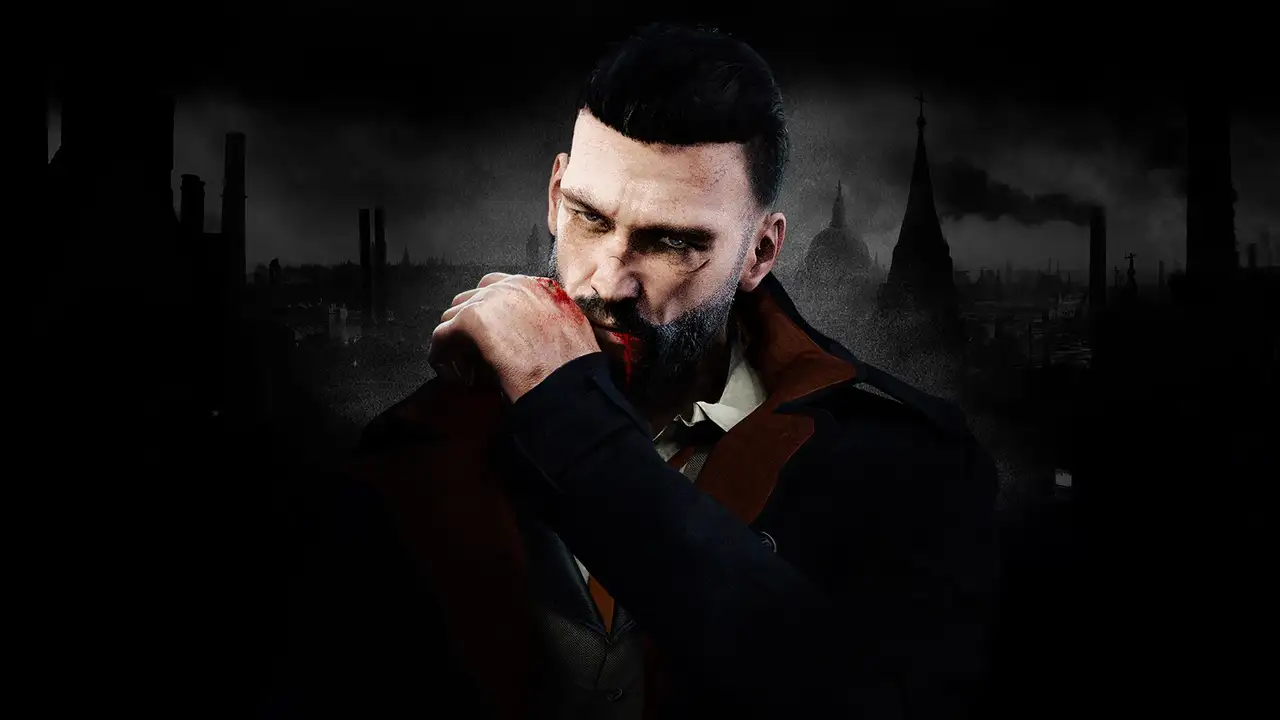
A surgeon turned newborn vampire in 1918 London, under Spanish Flu, becomes administrator of Pembroke Hospital, and Vampyr builds its entire identity around the tension between the oath to heal and the thirst to kill. Every citizen across the city’s districts is a named, scripted life in a social web that visibly degrades when fed upon, and the web is the game’s most fascinating system by a distance. Era-authentic detail earns the setting: accents, posters, quarantine notices and letters reconstruct London’s grimness, and the lore documents layer the Red Queen mythos, the guard of Prywen and the Brotherhood beneath the flu narrative. The atmosphere carries the whole campaign.
The citizen web rewards obsessive attention. Tracking individuals across every district, learning their hints to raise blood quality, curing their illnesses and watching each choice ripple through a district’s health creates a social simulation few big-budget games attempt, with hint chains revealing themselves in genuinely satisfying cascades. Curing the sick is literally a progression resource, XP flowing from healing rather than killing, and the resting night system gates it all: sleeping respawns enemies and lets illness spread, so hoarding XP across whole sessions without rest becomes a deliberate strategy. The Harriet Jones and Doris Fletcher tragedy and the sewer skulls’ quiet dignity stand out among the citizen stories.
Combat flips from chore to highlight once the right weapon surfaces. The slow scythe and weak hatchet early on give way to the mace, whose damage numbers dwarf everything else, and then the club, whose every hit stuns, and the escalation becomes a running joy. Building around claws, the coagulation ultimate and stamina upgrades rounds out a kit that fights level-30 enemies successfully at level 20, and XP-spent-on-abilities progression, unconventional though it is, rewards rebuilding early builds for refunds. Difficulty stays fair throughout, with frustration concentrated in specific enemy types rather than balance.
Traversal is the persistent drag. No fast travel exists anywhere, and the wrong district arrival sends the journey back across the whole map, a friction that optional exploration, genuinely rewarding in its own right, only partially offsets. Stamina drains while sprinting outside combat, an inexplicable irritation, and shortcuts scattered around the city would have solved most of the traversal pain. Hit detection compounds the combat complaints: auto-tracking homing lunges, enemies shooting over a shoulder and somehow connecting, and shadow-prodded deaths across boss fights all rankle, with shadow eikons and their summons the worst offenders.
The Embrace system is the great untapped potential. Feeding on a citizen barely distinguishes one victim from another, with the district’s health taking the hit regardless of who is consumed, and the moral machinery at the game’s heart runs surface-level where it deserved depth. Nobody in the world reacts to the protagonist’s obviously vampiric appearance either, save one senile mother, a cop-out the writing never explains. One-off technical hiccups, dialogue lines failing to play, a level-up menu that never auto-suggests remaining XP, and one late run where every combat sound effect broke until a restart, add minor grit.
Collectibles and investigations reward the thorough, with twenty-nine of thirty collectibles and nearly every investigation falling within a full blind campaign, and the mesmeric charm of piecing together district shortcuts provides its own quiet pleasures. The vampire movement feel, a perfect landing with no stumble, delights from the second session onward. Against the genre’s other famous vampire franchise, the citizen system reads as the more interesting idea even where its execution falls short.
Overall, Vampyr stands among the more interesting vampire games ever made, whose social web of named, curable, killable citizens and authentically rendered 1918 London deliver a campaign that rewards both conscience and cruelty, even as traversal friction, janky lunges and a shallow Embrace system blunt the edges. The ambitious moral machinery deserves a deeper sequel, and what exists here still carried a run worth repeating.