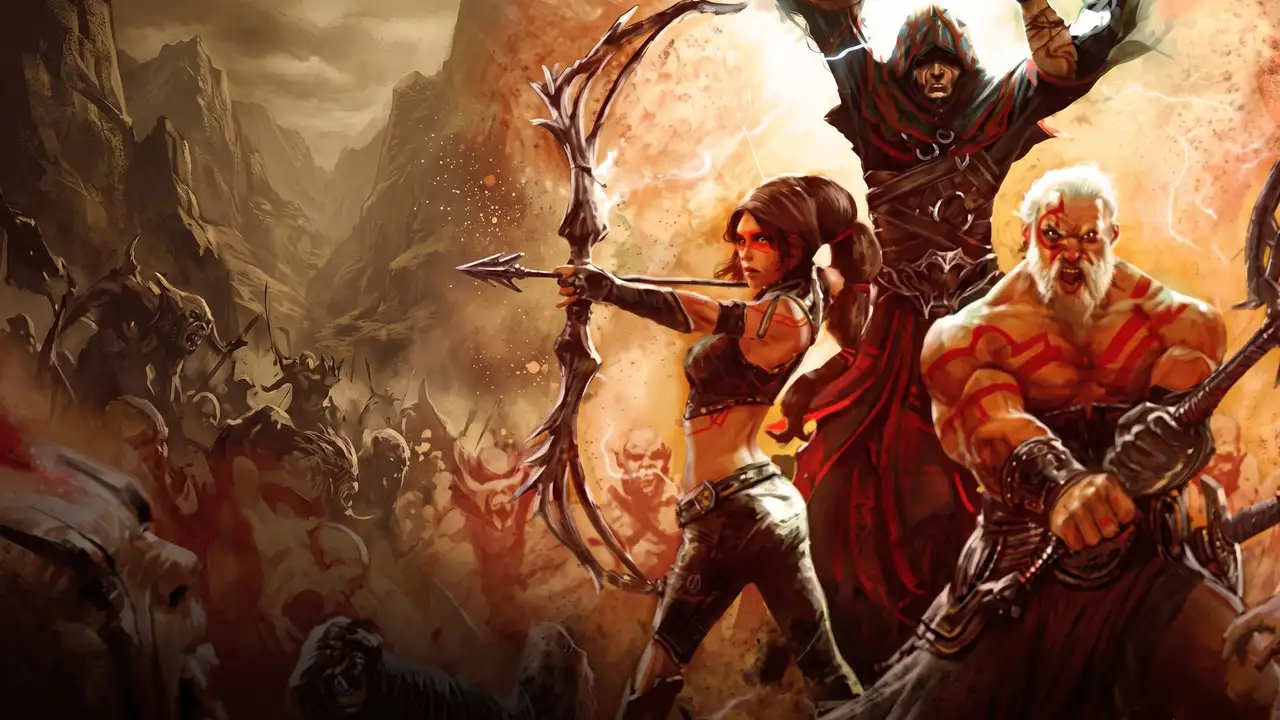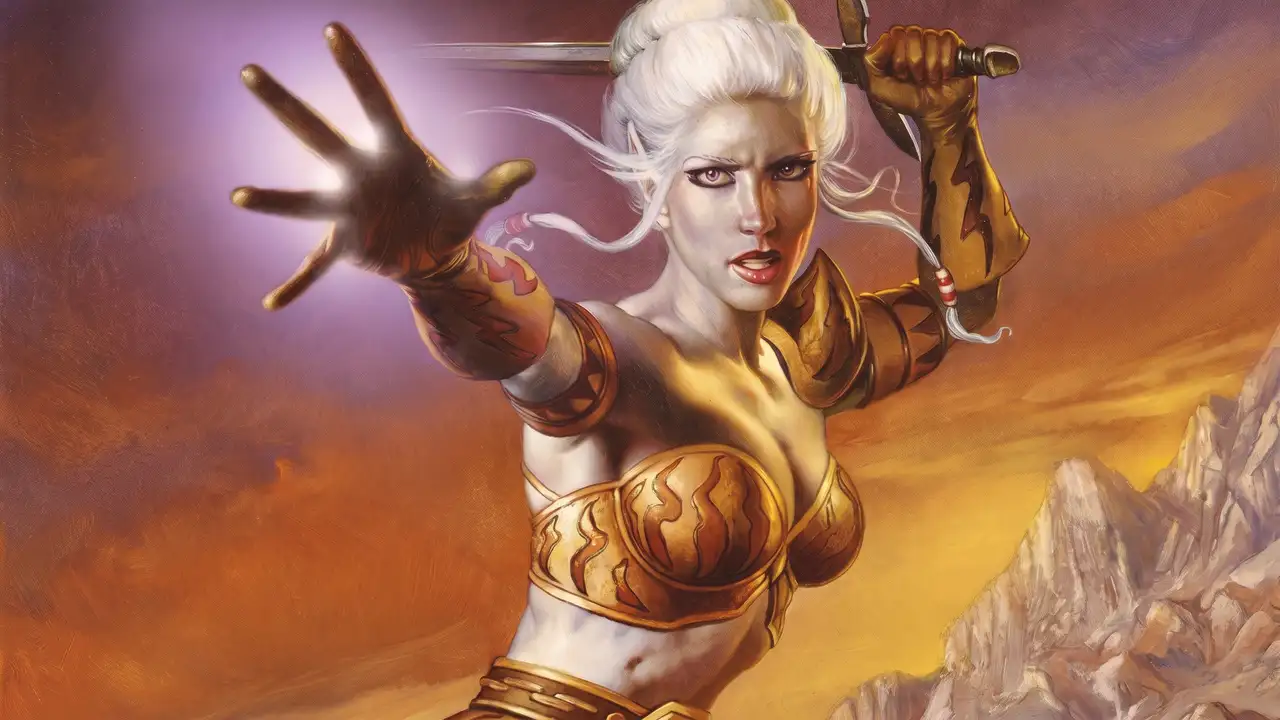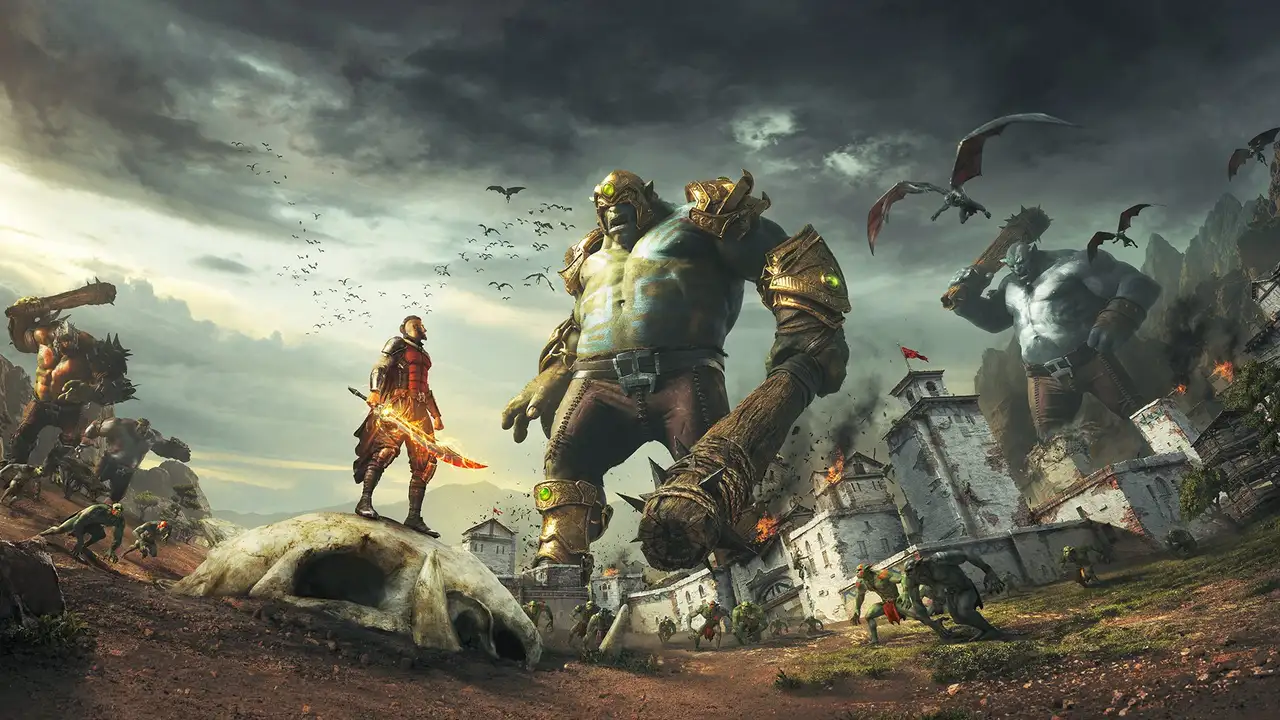
Launch-window portable hardware rarely attracted this kind of ambition, yet this Sony-published action RPG set out to compress the loot-and-level loop of the couch-era dungeon crawler onto a handheld screen. The golden mountain city of Aan anchors the whole structure, an elected crown drawn into a prophecy, a shadow god and the ancient Brotherhood of the Blade. Quests radiate outward from the hub into forests, badlands, tundra and eventually an Infernal Abyss, each dungeon typically running three levels deep before a boss closes it. Four character classes, level-scaling enemies that match progression anywhere in the world, and a co-op multiplayer option give the package more width than most of its handheld contemporaries attempted. Story delivery leans on plentiful NPCs and collectible journals written by a historian and his wildling companion, closing on a lengthy scrolling epilogue.
Dual-wielding forms the backbone of a satisfying build, particularly when paired with the flurry and ravage multi-hit skills and stacks of crit chance. Savage strike carves through boss health bars faster than anything else in the arsenal, rewarding a build that channels everything into burst damage. Manual saving demands deliberate habits, and the core loop of quest, dungeon, boss, then a return to town to sell and restock settles into a rhythm that the hardware handles without complaint. Combat stays fast and readable throughout, an achievement given the crowded arenas the later regions throw out.
Virtue stones become the quiet centre of any competent build. The on-hit healing enchantment patched onto nearly every weapon keeps sustained fights viable without a potion economy, and the flaming skull offers the only real alternative worth socketing. This single broken enchantment shapes the whole progression model; once a weapon carries life-steal, the difficulty curve flattens into a resource loop rather than a survival test. Building around the exploit is not optional so much as the intended way to engage with 2005-era balance.
Free town recall stands out as the design’s smartest convenience, shipping with no consumable item and no cooldown gating the trip back to Aan. Selling loot and restocking potions becomes frictionless, which matters because carry weight punishes hoarding relentlessly and forces constant town trips anyway. The map conceals its own clever trick too: opening and closing the world map flashes the red boss dot, marking exactly where each dungeon’s finale waits. A web of interconnecting dungeons visible on that map gives the world a cohesion most contemporaries lacked.
Loot quality is the running sore. Weapon drops almost never outclass current gear or cross the 100-damage line, side-quest rewards frequently arrive as duplicates, and a relentless flood of two-handed weapons lands on a build wielding a blade in each hand. Skills compound the problem; they feel powerful at unlock, then drop off a cliff in effectiveness until they deal negligible damage in the late game. The combination leaves progression driven almost entirely by the enchantment system rather than by the drops the genre exists to deliver.
Dungeon design carries its own quirks, some charming and some genuinely baffling. Certain layouts regenerate randomly on revisits, producing mazes that never read as recognisable and turning navigation into guesswork. The camera sits extremely zoomed-in with no option to pull back, and a world map that cannot zoom out makes the twisty, sprawling regions genuinely hard to read. Dead ends reward nothing but enemy packs, several bosses resolve as pure stat checks, and the final vault gauntlet runs five levels with no checkpoint. Random freeze, stun and petrify effects land with no discernible trigger, the prologue’s text scroll crawls at NES pace, and the closing boss summons minions that can stun-lock an opponent to death in place.
Overall, this is a charming and flawed piece of launch-window design that still delivers a compulsive loot-and-level loop when built around its exploits. The combat, the town recall and the interconnected map earn genuine affection, while the loot drought, withering skills and hostile navigation hold it back from era-defining status. Judge it as a 2005 handheld game and it holds up remarkably well.