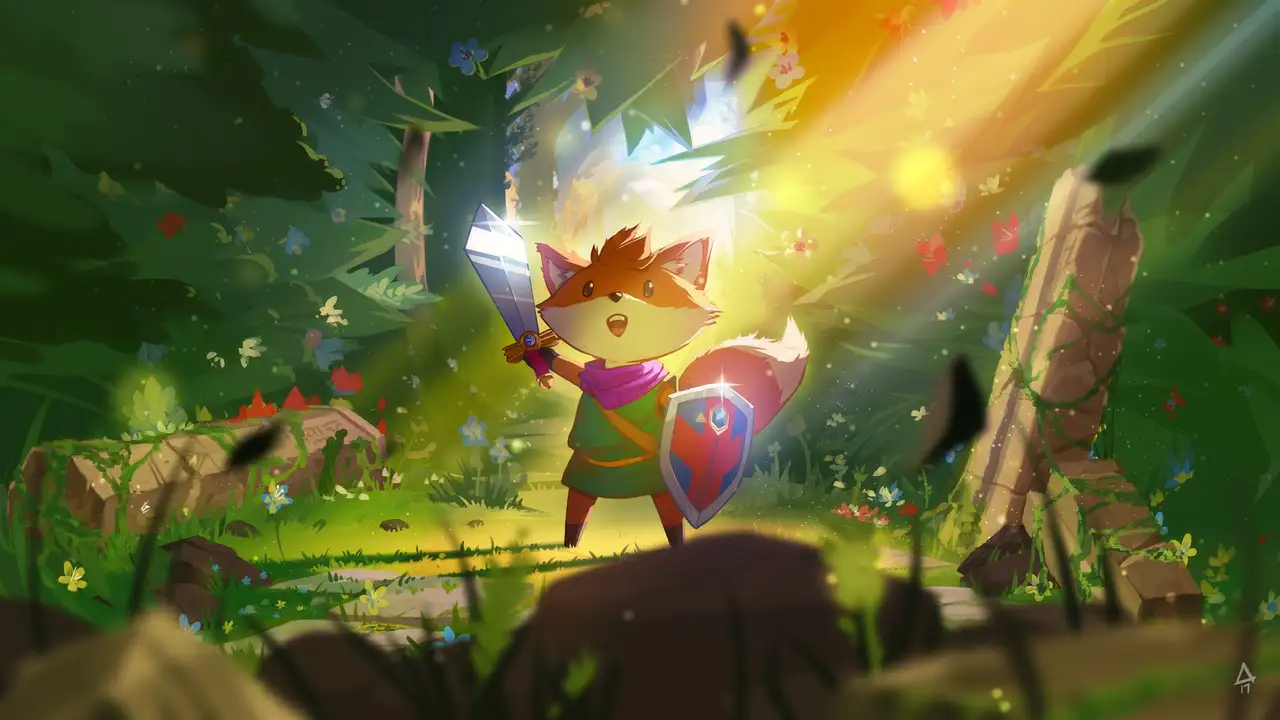
An adorable fox hero awakens on a beach with no instructions, a world of bells, vaults and temples ahead, and an instruction manual written partly in an invented language that the game never translates. That manual is Tunic’s masterstroke: scattered page by page across the island, it maps, hints and misleads in equal measure, and reading it becomes the game’s central activity. The Zelda-inspired top-down structure hides its entire progression in plain sight, with statues that could be prayed at from the first minute and secrets that wait for the knowledge to see them. Very little is explained, and that refusal is the design.
Knowledge is the only true unlock. Nothing gates behind abilities the world withholds; every secret was present from the beginning, waiting for a pattern noticed or a line traced, and the game’s own language turns signage, item descriptions and riddles into puzzles in themselves. D-pad input codes hide in flowers, dots and candles, and early discoveries such as praying at statues land as genuine revelations. Playing a game where nothing is actually known creates a mystery that deepens rather than resolves, and it sustains a full campaign.
The Golden Path mountain-door puzzle is the defining peak. Tracing golden lines across the entire manual, notepad in hand, to assemble a huge input sequence stands among the most satisfying puzzles the medium has produced, and completing it from memory strains belief. The hook shot arrives as a genuine game changer, windmill code inputs recall the best of Fez, and the title-screen save-data trick recontextualises the manual one final time. Each Eureka builds on the last, and the arc from confusion to fluency is the campaign’s real story.
Combat sits in Souls-adjacent territory with stamina-based attacks, blocks and a janky lock-on that earns repeated curses. Shields hold early but bosses arrive whose attacks seem to ignore blocking entirely, and timing windows punish loose play. The multi-phase final boss tips into unfair, dealing extra damage taken through the tincture card’s trade-off and striking straight through raised guards, though honest self-diagnosis spreads the blame between design and loadout. The miasma zones compound the misery, where enemies drain max health on contact and the Quarry and Cathedral stretches turn miserable.
Death holds a surprise of its own. Falling to the final boss wakes the fox as a ghost with stats reset, the world consumed by miasma, and reclaiming the body becomes a quieter second act of restoring the world through sleeping. The peaceful true ending, earned by reading a story to the fox spirit instead of fighting, delights without a single sword swing, and the two-ending structure rewards planning for both. Twelve fairies, every manual page, every ability card and maxed stats round out a completion list that honours the knowledge theme.
The music-note wind-chime puzzle yields only to the game’s own accessibility option, a welcome escape hatch for anyone unmusical, and a couple of coins and translation riddles stump even the endgame. Roughly eleven hours cover a blind run to both endings and a near-complete sweep, with an actual notepad as essential equipment. The friendless difficulty of the mystery is the point, and the game trusts its puzzles completely.
Overall, Tunic is an all-timer of knowledge-driven design whose cryptic manual, invented language and legendary Golden Path puzzle deliver a mystery that deepens to the very last page, with shield-ignoring bosses and health-draining miasma zones as honest costs. Finishing it feels like an achievement because it is one, and the island rewards every hour spent learning to read it.