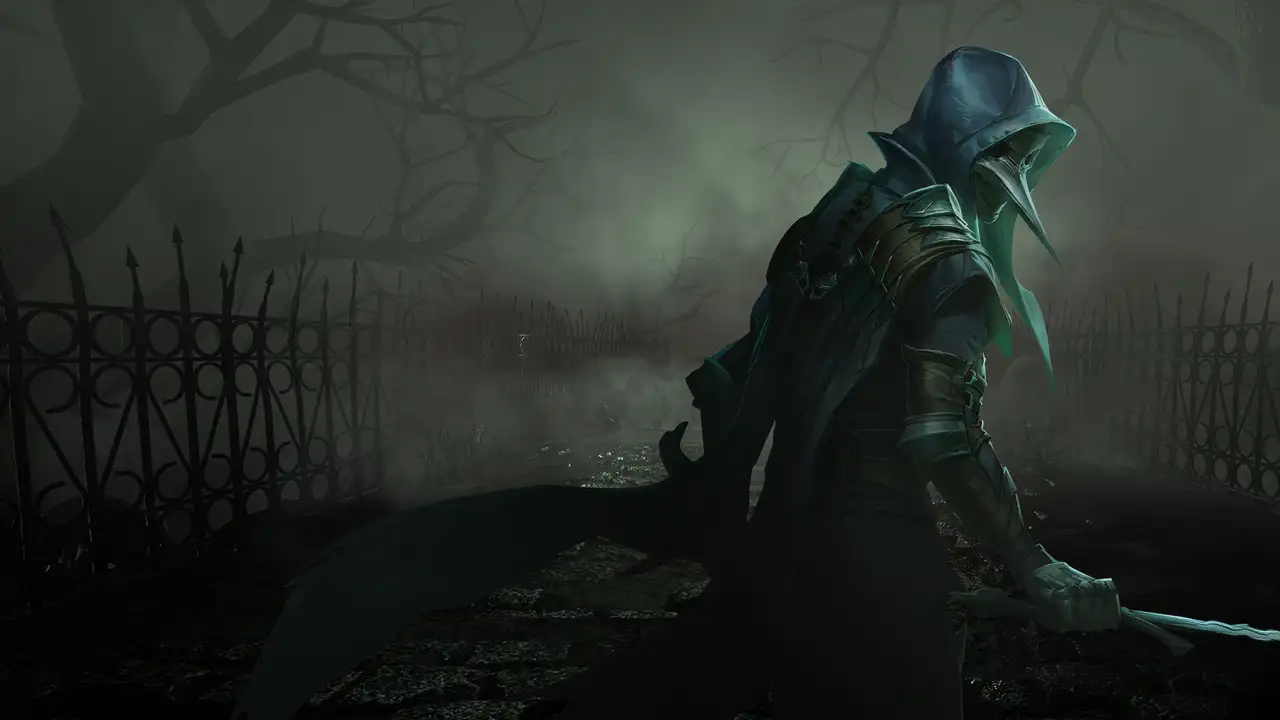
A plague-ravaged kingdom built atop a colossal tree sets the stage, and Thymesia tells its story through lore notes on alchemy, pure and vile blood and the sinister Twilight Circus, read aloud as the amnesiac Corvus pieces his memories back together through boss recollections. The greenhouse experiments and circus mission deliver environmental storytelling with genuine menace, and the compact structure, discrete quest recalls per area rather than one interconnected world, gives the campaign a shape that suits its short runtime. Each area stays cut off until a specific sub-quest completes, a gate that rewards deliberate progression through the kingdom’s districts.
The combat is the reason to visit, deflect-focused and aggression-rewarding in equal measure. The white-bar wound system demands poise be broken before health can fall, a hybrid of deflection rhythm and health-bar depletion that invites affectionate comparison to Sekiro, and pulling off a perfect deflect lands with a satisfaction the genre does consistently well. Saber attacks, short-claw wound damage and feather criticals layer into a kit that promotes pressing forward, and the talents behind it respect experimentation, with free unlimited respec letting builds be rebuilt as often as curiosity demands.
Plague-weapon theft is the system’s smartest twist. Stealing enemy weapons and casting them back, from the short claw’s staggering power to the door saws that shred crystallised enemies’ super armour and nearly wipe their health bars, gives every encounter a looting rhythm, and the sub-quest structure feeds it generously. The alchemy system rounds out the loop with ingredient hunting and folk-remedy mixing, genuinely enjoyable in its own right even where the balance wobbles, and the Forgotten Feather resets attributes freely, keeping experimentation cheap throughout the campaign.
Balance wobbles in specific places. The short claw staggers almost everything, making it the obvious pick over its long-claw sibling, and the lopsided choice flattens loadout variety. The mirror-match final boss uses abilities the protagonist never gains access to, an unfairness that draws the sharpest mechanical criticism of the campaign, and its new attacks arrive with no telegraph whatsoever. Enemies respawn and attack while notes are being read, a recurring irritation, and skill shards demand six kills per boss to fully upgrade a weapon, a grind that borders on ridiculous when ending replays also require re-beating the final boss each time.
Level design satisfies when it clicks and disorients when it does not. Hermes Fortress confuses worst, its layout tangled enough to demand a reset to a beacon, and the Sea of Trees hides a guitar-wielding flying-dagger elite who becomes a personal nemesis, compounded by a long walk of shame after every death. The miasma plague-weapon assignment to the God of Fools feels arbitrary, reading more naturally as a reward for the boss that actually uses miasma. None of the friction is fatal, but the rough edges accumulate across a short campaign.
The whole game finishes in a handful of sittings, with the Sea of Trees and Royal Garden each falling within roughly three hours and full collectible cleanup adding little, and the compact scale is a feature rather than a compromise. Deaths read as fun rather than punitive once the deflect timing settles, and the true ending rewards reading the lore rather than skipping it. As an affectionate budget take on the genre’s best deflection game, the identity is clear and earned.
Overall, Thymesia is a compact, sharply satisfying Souls-like whose deflect-and-wound combat, plague-weapon theft and free-respec experimentation more than carry its rough balance edges, from the unfair final boss to the untelegraphed attacks and the disorienting Hermes Fortress. The short runtime is the invitation, and the combat is the reason to accept it.