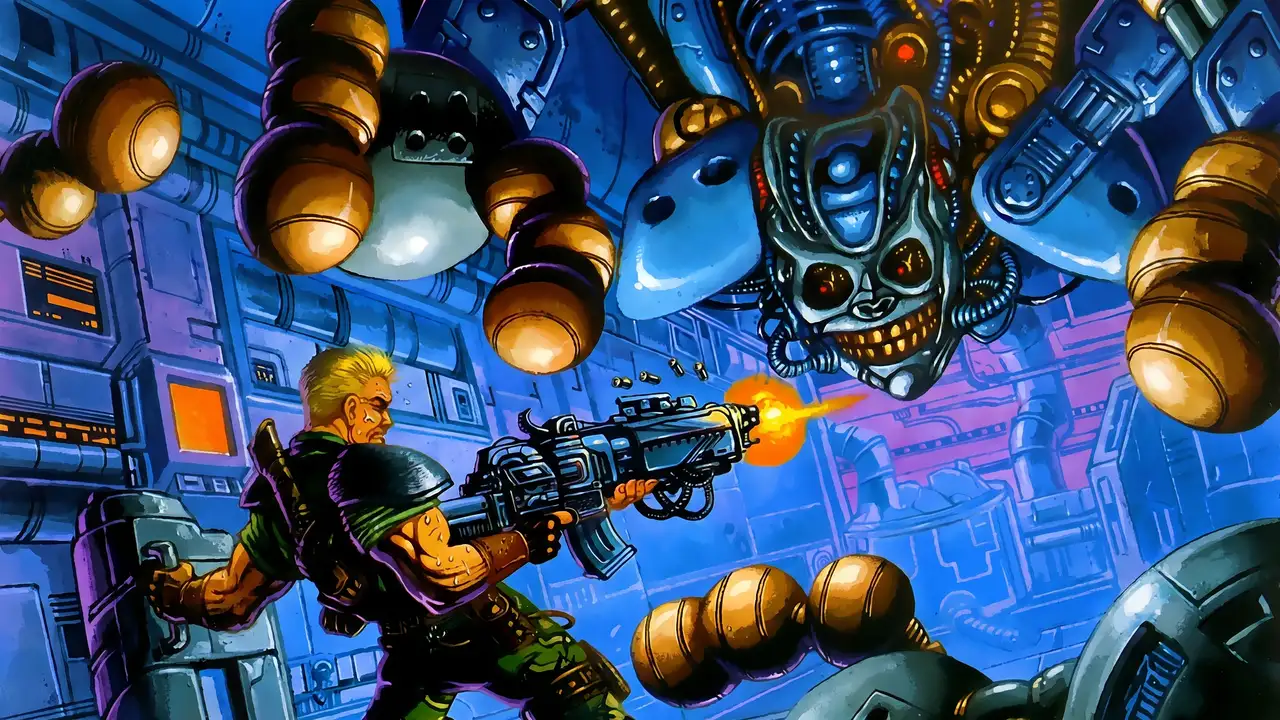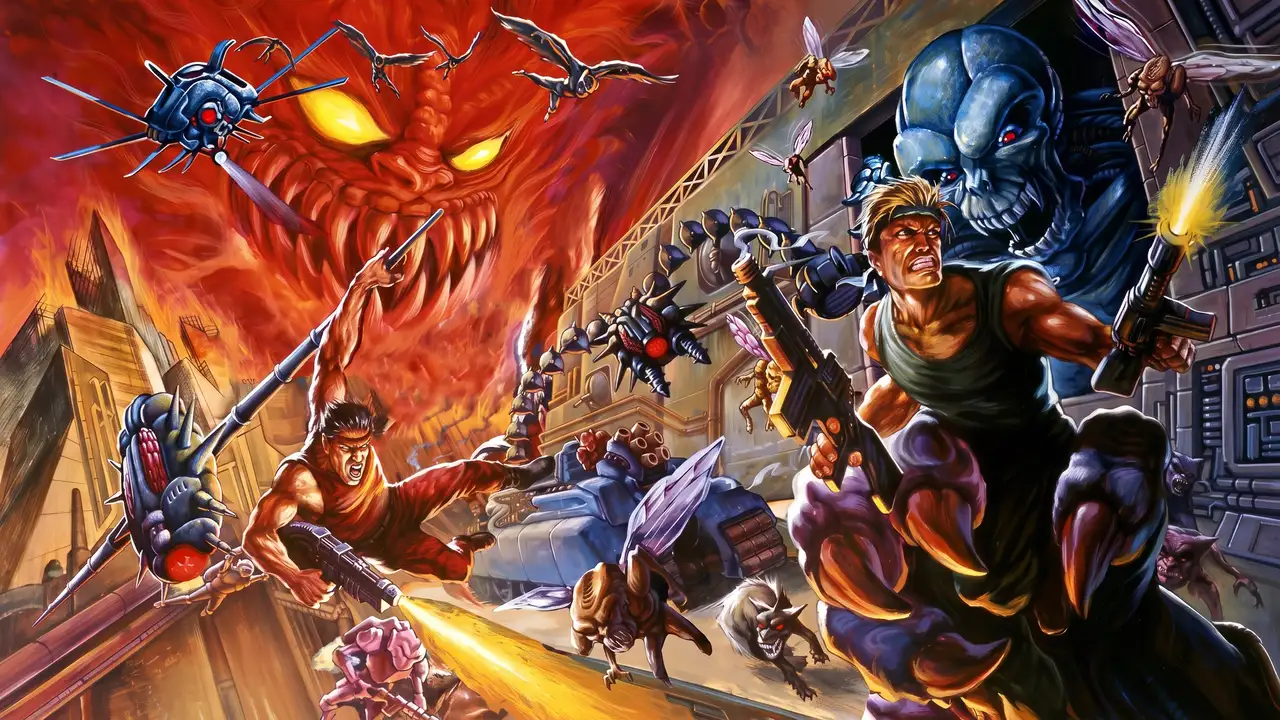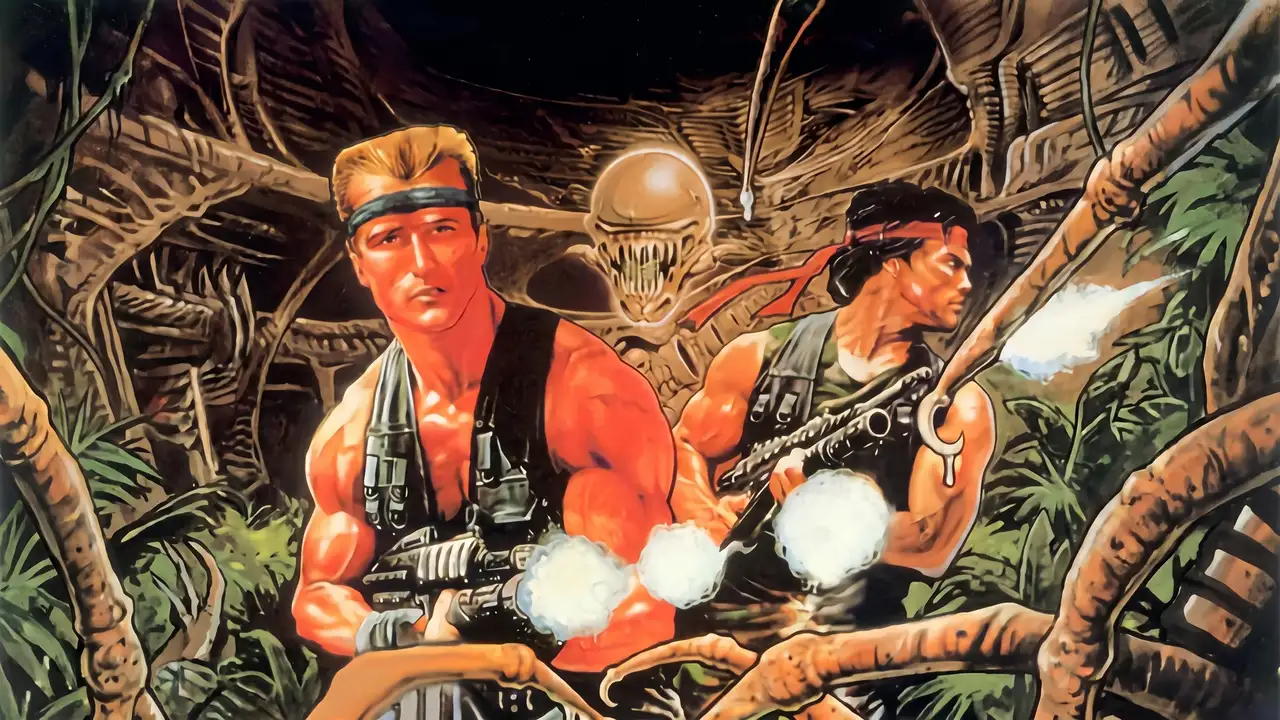
Jungle commando warfare opens this run-and-gun sequel before the perspective flips and the campaign’s true shape emerges. Soldiers give way to skeletal extraterrestrials, face-shooting bosses and aliens nested inside other aliens, all delivered without a word of explanation. The plotlessness is characteristic of the arcade era, and the game wears it without embarrassment. What it actually changes from its predecessor is narrow, deliberate and, on the evidence, correct.
The enlarged bullets are the headline change, and they repair the single worst fairness problem the original suffered. Where the first game’s projectiles were tiny white pixels vanishing against any background, the munitions here read clearly at a glance, which converts cheap deaths into earned ones. One small visual decision does more for playability than any mechanical addition could. It is the kind of sequel economy that respects both the source material and the player.
Difficulty remains ferocious, at least the equal of the original and arguably harsher. Contact damage and one-hit deaths are pure 1988 design, and the top-down stages push the brutality further because jumping is disabled entirely. Enemies converge from every direction while the player character can only strafe and shoot. Konami’s characteristic challenge curve is intact, and anyone expecting gentler treatment on the basis of the colourful sprites will be corrected quickly.
The top-down base sections are the campaign’s most distinctive structural feature and simultaneously its most disorienting. NES hardware cannot render the full playfield at once, so screen regions redraw as the character moves, and enemies hidden inside the pop-in area can catch an unwary player by surprise. The no-jump restriction compounds the disorientation, and these stages demand more cautious movement than the side-view sections ever ask for. Novelty and friction arrive in the same package here.
The alien turn arrives with no foreshadowing whatsoever. Commandos fight soldiers for several stages, then skeletons and face-walls appear as if they had always belonged. The predecessor at least offered an earlier cliff-top reveal of what was coming; this sequel expects the pivot to speak for itself. As arcade-era storytelling it is nonsense of the most affectionate kind, and the amusement it generates is arguably part of the design’s charm even when it fails as narrative logic.
The weapon set carries over intact, including the machine gun, laser and spread, and the laser remains weak even in this improved iteration. Bosses receive no backstory or design rationale of any kind; a plate that shoots lasers is presented exactly as such, without justification. The finale escalates to a scorpion-spider alien before the credits arrive, and the ending itself offers no fanfare at all. Victory boots the player straight back into the game with nothing resembling a commendation.
That bare ending is the final flourish in a game that refuses every convention of presentation. No thank-you text, no epilogue, no acknowledgment beyond the win itself, which is either honest arcade economy or total indifference depending on temperament. Bosses with no bios, an unexplained genre pivot, and a conclusion that simply restarts all mark this as a product of its moment. The game is unbothered by any of it, and that indifference becomes its personality.
Overall, this sequel changes almost nothing and improves the one thing that mattered, and the result is the more playable of the two. Readable projectiles, the perspective-flipping structure and uncompromised Konami difficulty outweigh the disorienting top-down stages, the abrupt alien pivot, and an ending with no fanfare whatsoever. The arcade honesty of the whole enterprise holds up, and the recommendation comes with confidence.