Earth burns in the year 2636, and the alien invasion sweeping its cities is an excuse for the finest arcade spectacle the 16-bit era produced. Narrative barely exists; atmosphere does the work instead, moving from burning urban warzones to corridors of biomechanical horror. The set-up is pure arcade action, and the game spends every stage justifying it. Very little on the SNES in 1992 matched this pace.
Mechanically this is the series refined to a sharp edge. Stand-still aiming via the shoulder button fixes the old aiming vagueness, wall climbing adds vertical routes, and weapon cycling spreads choice across the spread gun, homing missile, laser and flamethrower. Screen-clearing power bombs arrive as panic buttons, and dual-wielding doubles the arsenal. Against the first two entries the improvement is sweeping, and the reputation as the series’ best rests on mechanics rather than nostalgia.
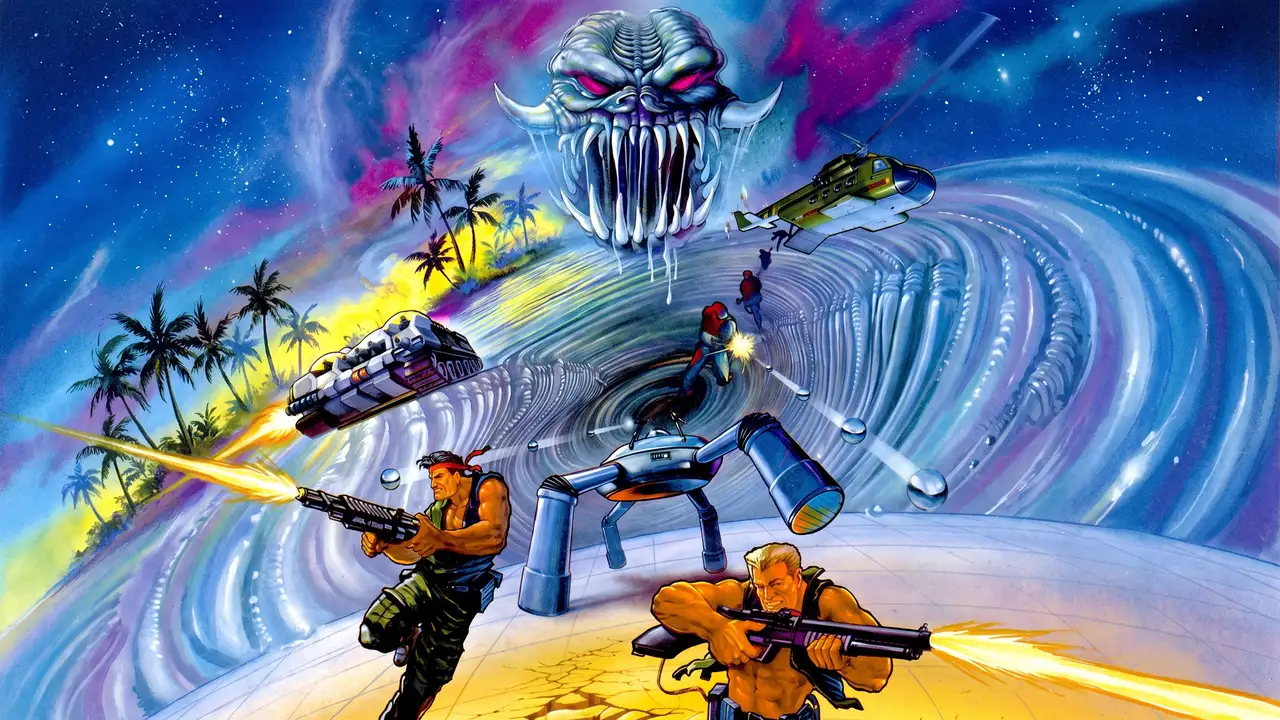
The Mode 7 top-down stages are the showpiece. Rotating pseudo-3D battlegrounds play like nothing else on the console, a perspective shift so dramatic it recalls contemporary role-playing presentations while staying wedded to gunfire. Varied stage types keep the campaign off-balance in the best way: on-foot gauntlets, a bike stage, a chopper stage and a missile platform each impose their own rules. No two consecutive levels play alike.
The missile-jumping platform sequence late in the campaign is the hardest stretch by far. Platforms, projectiles and falling hazards arrive simultaneously, demanding a juggling act of positioning while the screen fills with hostile fire. It asks more of the D-pad than anything else in the cartridge, and one-hit deaths send progress back to checkpoints. Memorisation-heavy patterns reward repetition, and the chaos resolves only through learning.
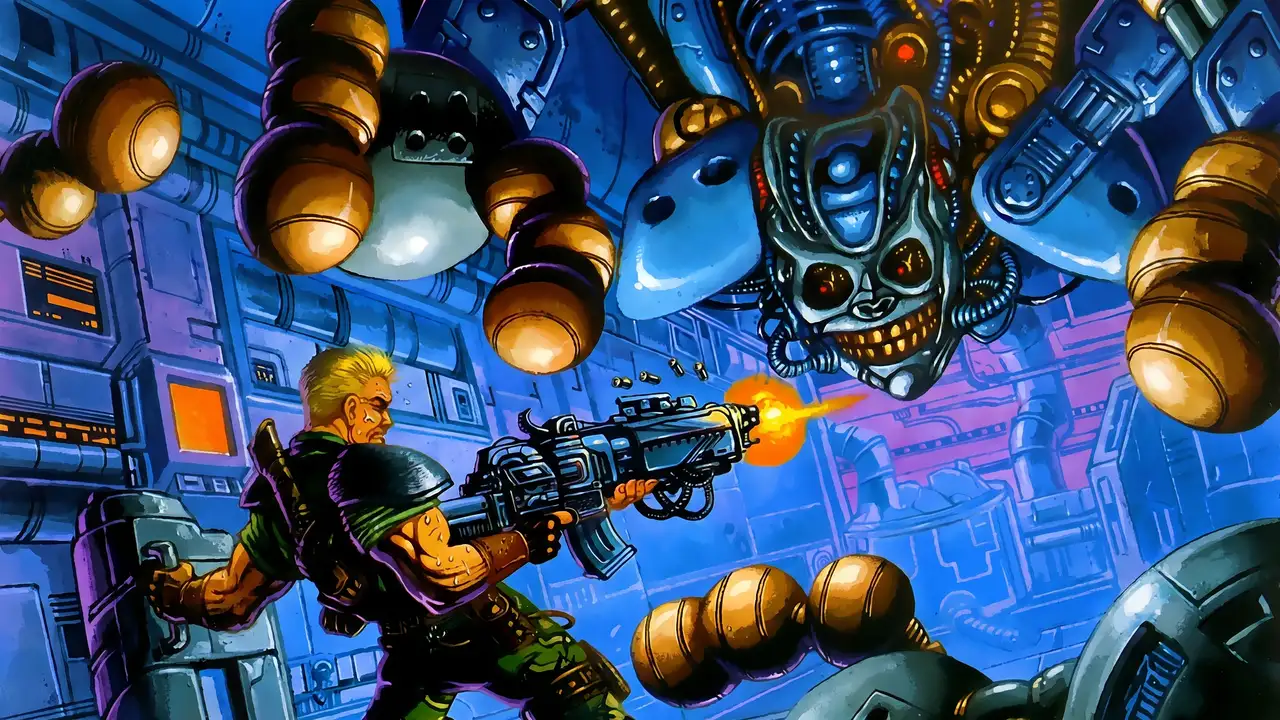
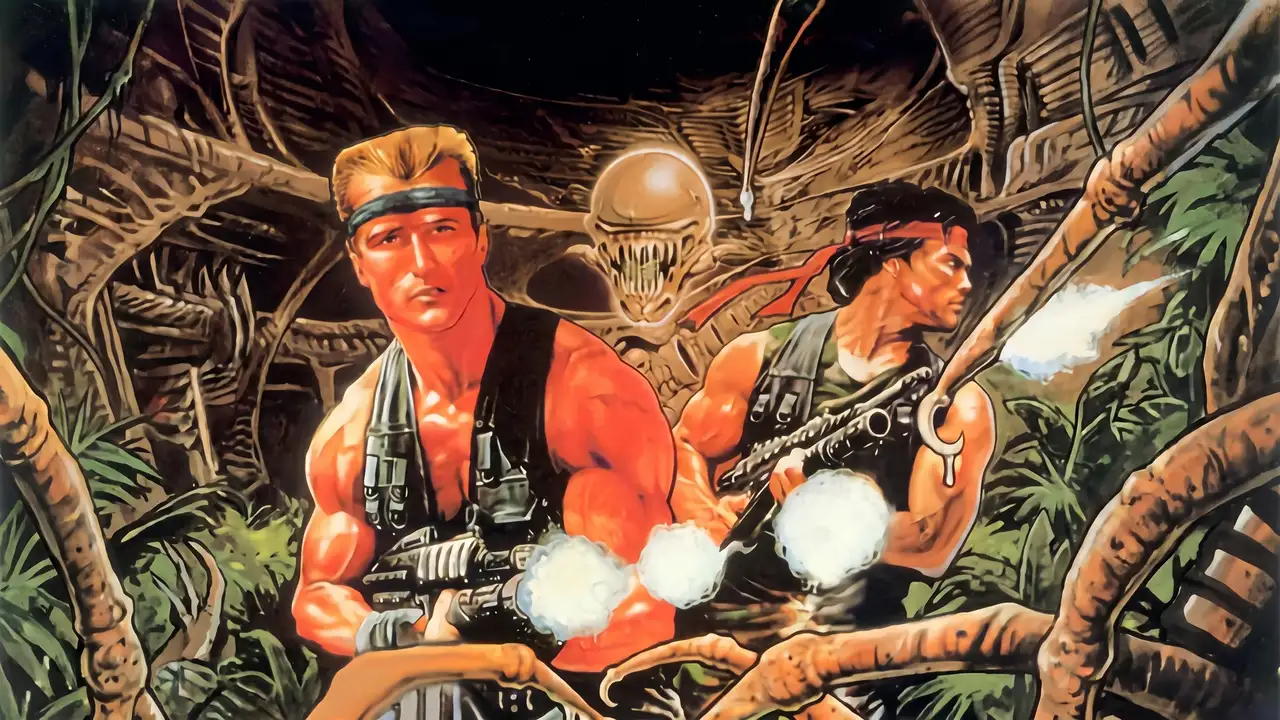
The Giger-esque alien aesthetic of the later levels transforms the tone entirely. Organic corridors replace burning cities, and the art direction commits fully to biomechanical dread without losing clarity. The multi-boss finale stacks encounters end to end, each demanding a different weapon choice. Escalation feels architectural rather than arbitrary: every stage raises the ceiling set by the last, and the boss gauntlet paces itself so each fight introduces a twist the previous encounter never prepared. Sound design tracks the visual shift, with industrial percussion giving way to organic, echoing tones deep in the hive. Presentation and difficulty climb the same curve.
Bullet-hell density cuts both ways. The sheer volume of projectiles is the game’s thrill and its chief friction at once, catching even experienced hands off guard when patterns compress. Mandatory D-pad precision adds another layer, since analogue-stick habits translate poorly to directional input this exacting. One-hit deaths make the density unforgiving. The difficulty is honest, but it never relents.
The true ending locked behind the hardest difficulty follows a Konami tradition of the era, giving mastery a concrete goal. Structurally the campaign is built to be replayed: six stages, each learnable to a point where cheats become unnecessary. That design choice converts brevity into depth, with repeated attempts revealing patterns rather than exhausting content. Few arcade conversions rewarded practice this deliberately.
Overall, the mechanical refinements, Mode 7 showmanship and relentless pacing validate the game’s standing as a series high point and one of the SNES’s defining action titles. Dense projectiles and exacting input demands gate the enjoyment behind genuine skill. Mastery is the point, and the ride to it stays spectacular from the first burning city to the final hive. As a statement of what the console could do at full throttle, it remains the benchmark its successors were measured against.