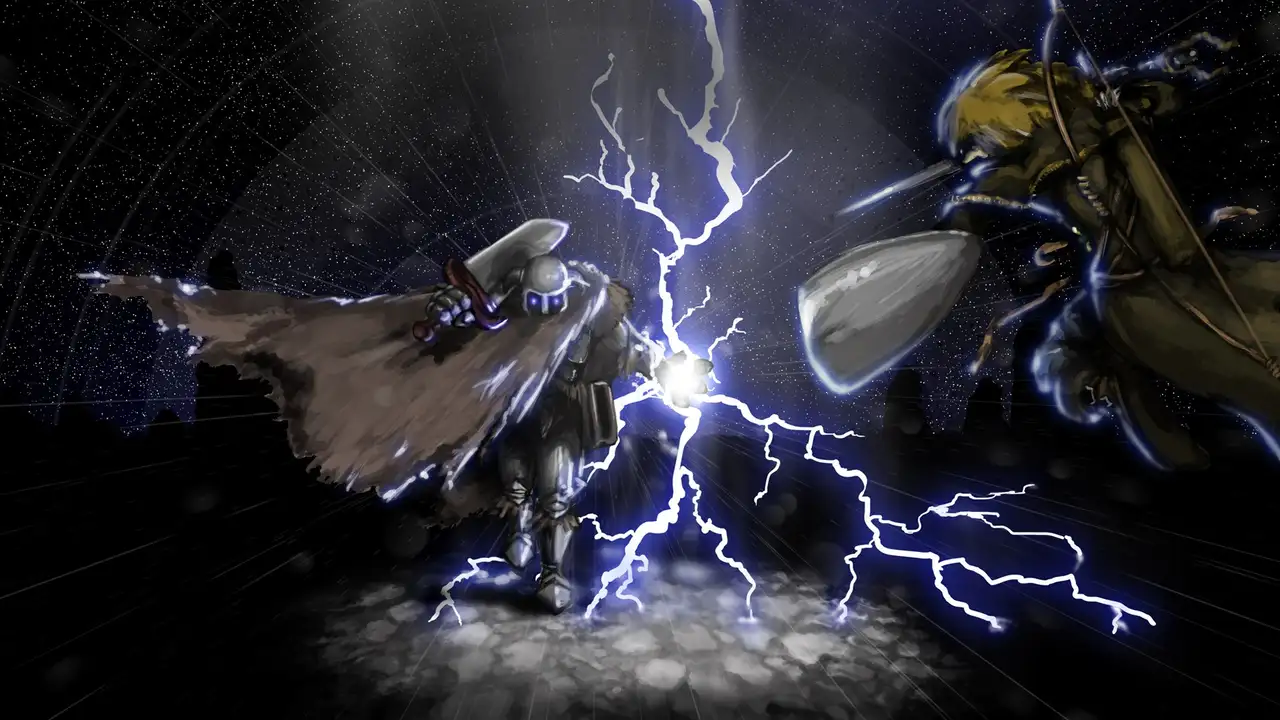
A shipwreck strands a sailor on a grim island of creeds and salt, and Salt and Sanctuary translates the soulslike structure into two dimensions with surprising faithfulness. Creature design runs genuinely unsettling, admired even while recoiling, the jester’s riddling dialogue earns specific praise, and the deliberate silence of certain areas breeds anxiety exactly as intended. The lore of creeds, a nameless god and a betrayed princess sits in the background, appreciated rather than dissected, and the closing choice between kneeling and escaping reads unmistakably dark. Bloodborne inspiration shows in the opening’s Cthulhu-flavoured opener. The atmosphere is the game’s first and lasting strength.
The interconnected world design is the standout achievement, with areas looping back into each other in ways that defy easy mapping, and no loading screens anywhere in the sprawling structure. The map rewards thoroughness with a bestiary worth filling, even to the point of desecrating a sanctuary purely for the completion entry. One continuous run carries from shipwreck to finale without a single load. Navigation never becomes a chore because the loops always justify themselves. As world design in the 2D space, this sits near the top.
The Kraeken Mower greatsword defines the build experience, discovered early in the Village of Smiles and ridden nearly the entire campaign for its incredible range and power, converting a balanced knight into an unkillable brute who one-shots most encounters. Shield abandonment follows naturally, since brute-forcing everything quickens the combat considerably. The class-one greatsword tier ranks among the best weapons available, and transmuting away from it only happens at the very end. Skill trees and salt-based levelling support the build without friction. Finding one weapon and committing is a legitimate strategy here.
Metroidvania brands gate movement tech (wall jump, air dash) behind bosses, with redshift barriers and obelisks structuring exploration, a refreshing change to the soulslike formula that changes the formula up. The platforming the brands enable, though, earns the phrase mega man on crack, with disappearing platforms and bottomless pits turning traversal into its own challenge. Traps knock players into pits with abandon. The movement tech is welcome; the platforming it demands sometimes is not. Both halves of the addition earn their mixed reception.
Boss balance runs wildly uneven. Most bosses fall in a couple of attempts, but the Kraken Worm and Third Lamb’s shockwaves grind, and the Witch of the Lake stands as the worst-designed encounter in the game: an instant-kill machine-gun attack, off-screen harassment, roughly fifty attempts of attrition. Elemental damage from bosses overwhelms regardless of defensive gear, a balancing failure the closing verdict names directly. Bosses that steal salt and the mysterious cleric’s ten-percent revival cut add recurring money-sink insult. One wall of fifty tries tests even committed players.
The backwards red-line UI for two-handed weapons confuses, signifying two-hand requirement where a prohibition line would communicate better, a small iconography stumble in an otherwise functional interface. The creed system, sanctuary offerings and transmutation add depth the base soulslike loop lacks. The paladin archetype and strength scaling carry a level-83 finish, low by soulslike standards yet sufficient. The bestiary completion and hundred-percent sweep fill roughly twelve in-game hours. Depth systems mostly work; the UI and balance wobble.
Overall, Salt and Sanctuary is a faithful 2D soulslike whose interconnected world, greatsword builds and metroidvania brands deliver a rewarding twelve-hour completion, held back by wildly uneven boss balance, an infamous instant-kill lake fight and backwards weapon iconography. The world and combat earn their praise, and the boss balance is the lone serious caveat. A 2D translation of the formula that stands on its own merits.