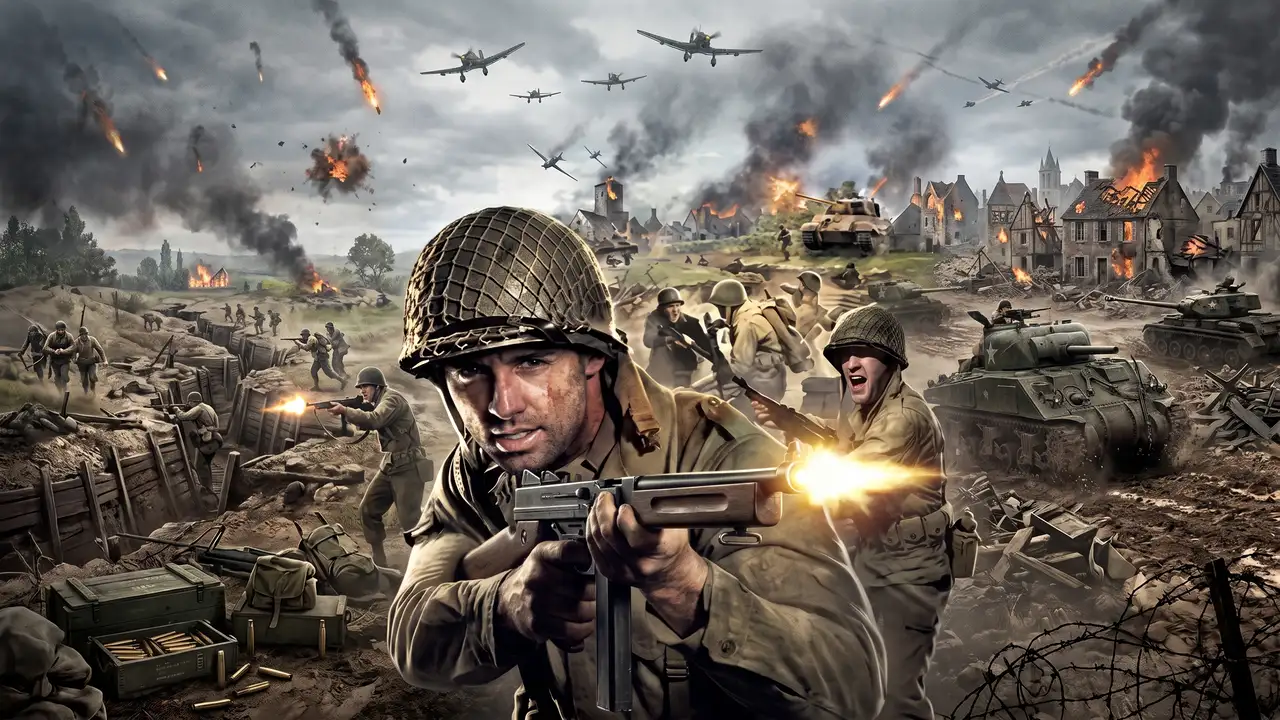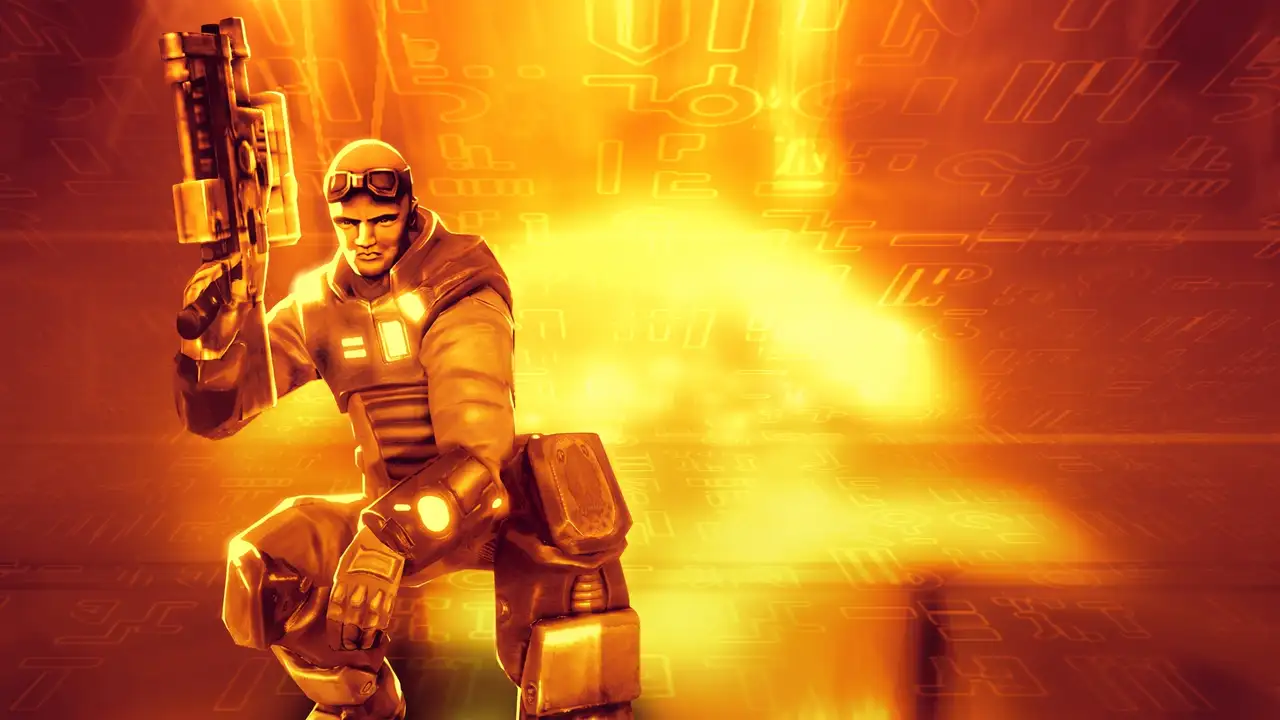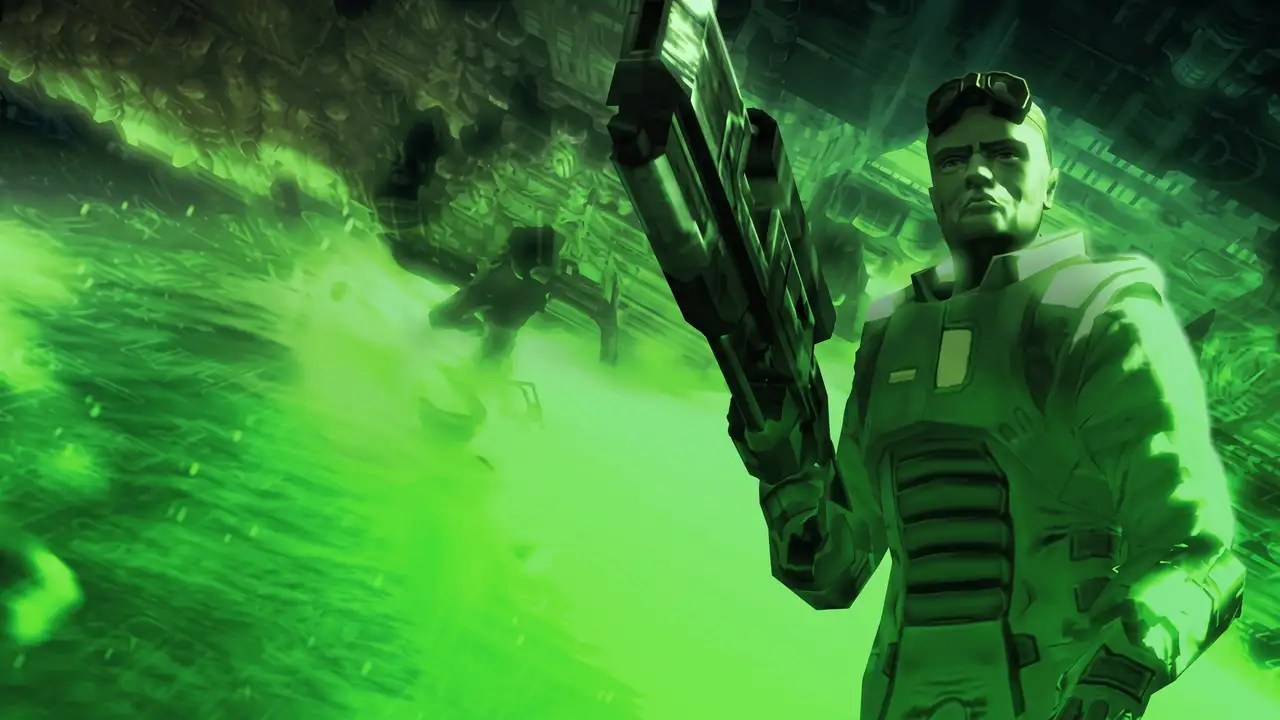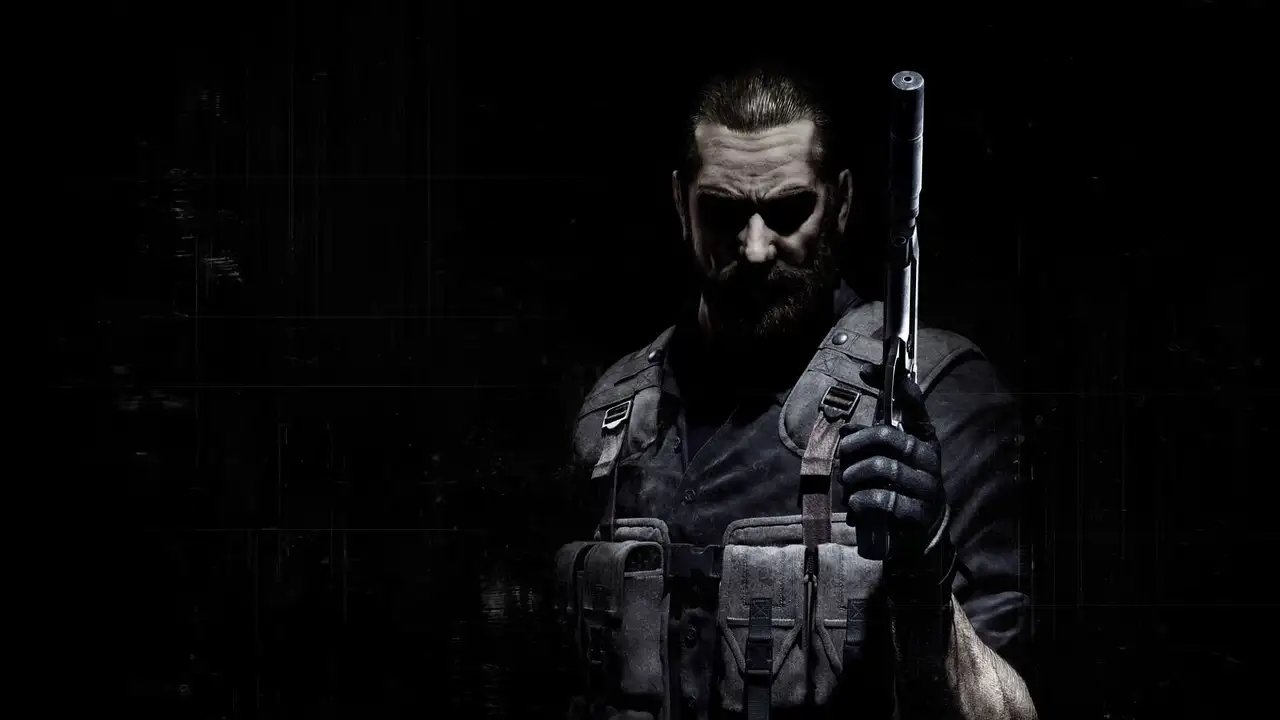
A gravel-voiced lone operator mutters anatomical monologues into his handler’s ear while chasing stolen missiles from North Korea to Soviet Russia, and everything around him wobbles like a set piece that missed rehearsal. This is a relic of the late-2000s military shooter boom, published at the tail end of an era that thought gruff profanity counted as characterisation. What separates it from the era’s competent dross is how comprehensively its systems fail, and how entertaining that failure proves. Enemy soldiers neither hear gunfire nor notice corpses, so every intended stealth operation collapses into farce within seconds. The campaign runs eight levels and finishes in roughly two hours, which is barely enough time to exhaust the absurdity. Nothing here works as designed, and that turns out to be the point.
Stealth deserves its own post-mortem because the design intent and the shipped reality are different games. Guards stand metres from a dropped body without reaction, continue facing away while an intruder sprints a full circle behind them, and never investigate a silenced shot fired into a crowd. Kill opportunities become free, repeatable and funny in a way no competent stealth system could be. The AI blindness converts a tacked-on mechanic into the campaign’s signature amusement, and the middle stretch, where one guard dies and his neighbour registers nothing, sustains that gag for hours. Opting into the easiest difficulty amplifies it further: enemies drop to a single bullet and cannot aim, so every encounter becomes a procession.
Silenced pistol in hand, the loop is simple and strangely magnetic. Ammo never runs out, so the suppressed headshot becomes the default verb, supplemented by sprinting melee kills, lobbed grenades and blind-fire around corners. The shooting itself is hollow, since opponents die too quickly to pose a threat, yet the loop of approaching an oblivious patrol and dismantling it never quite sours. Late levels swarm the screen with twenty-odd enemies at once, a design choice apparently calibrated for a difficulty mode where three bullets end everything; at the easiest setting the swarms read as confetti rather than opposition. The final stage leans on explosives, and a timed elevator sequence plus some ladder-climb jank supply the campaign’s genuine friction peaks.
Broken hitboxes undo much of the remaining goodwill. Aimed headshots land in the upper back with alarming frequency, and enemies visibly get dragged sideways into cover like filings to a magnet, an animation bug egregious enough to become the most memorable thing about the combat. Explosion-heavy encounters crater the framerate, and the whole production carries the fingerprints of a rushed schedule: a skeleton voice cast of roughly seven actors, minimal environmental detail, and visuals so dark that the game doubles as a colour-calibration torture test. An early launch freeze rounds out the stability story.
The writing is its own attraction, profanity deployed at a frequency that stops being edgy and becomes avant-garde. Crude monologues about anatomy, a repeated two-word phrase describing noise-discipline, and a handler relationship conducted entirely through barked insults give the campaign a voice unlike anything else of its era, even if that voice resembles a man losing a bet. The credits sequence escalates the absurdity by having the Hollywood lead rap over reused in-game lines, a creative decision so baffling it functions as a punchline the rest of the game spent eight levels setting up. Swearing as emotional shorthand wears thin within the first hour; as accidental self-parody it never does.
Contemporary aggregate scores placed this among the lowest-rated releases of its generation, and that number flatters nobody’s critical rigour. The campaign is playable, coherent and, crucially, amenable to being laughed at rather than endured. Judged as tactical shooting it collapses on every axis: the stealth does not exist, the AI is decorative, the hitboxes are unreliable. Judged as an interactive joke about the military shooter’s gruffest impulses, it lands more often than not, because the failure modes are consistent, frequent and visually legible.
Difficulty selection is the single most consequential decision available. At the easiest setting the game becomes a power fantasy with a comedy soundtrack, each encounter a demonstration of how little resistance the systems can mount. Higher difficulties expose the shallow enemy design immediately, since swarms of accurate enemies against one-bullet durability would convert the farce into a grind. The campaign’s two-hour shape means the joke never outstays its welcome, and the middle levels, where oblivious patrols cluster most densely, contain the best material.
Overall, this is a technically shambolic curiosity whose every defect doubles as entertainment, provided expectations are calibrated to average and nothing is taken seriously. The deaf AI, magnetised cover and profane writing deliver two hours of unintended comedy that a competent game could not have produced. The infamous reputation oversells the badness and undersells the laughs.