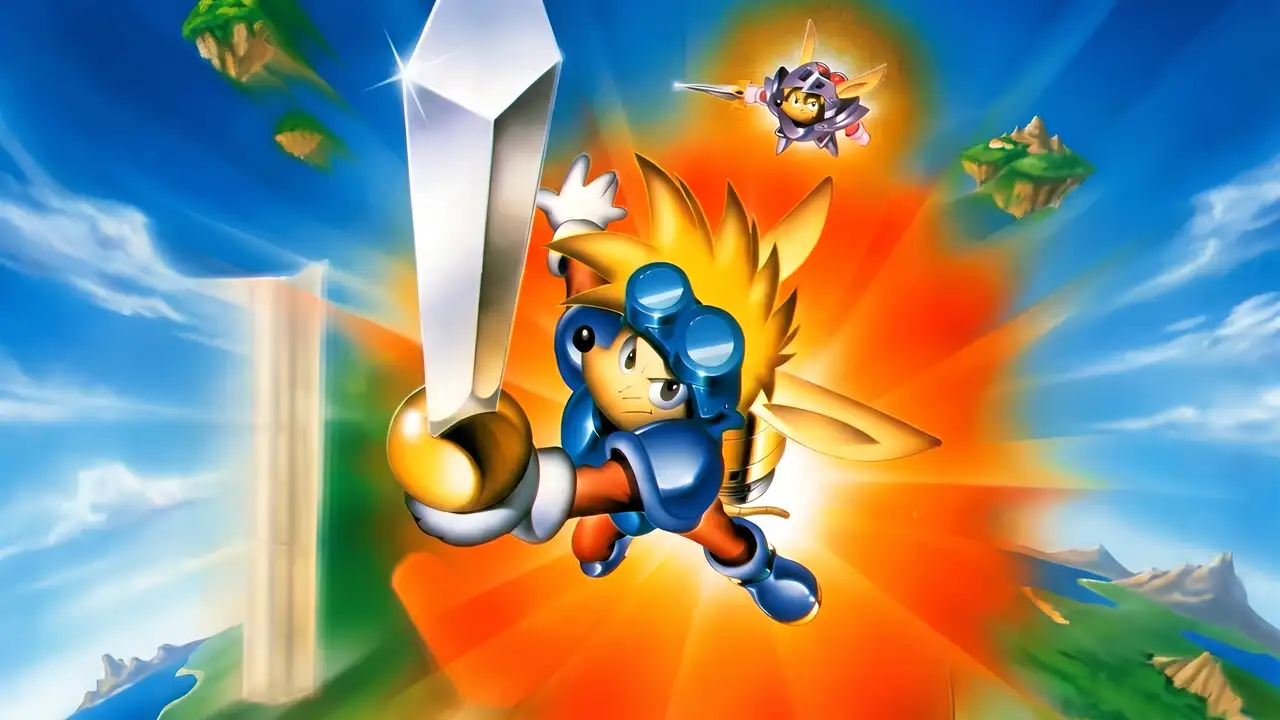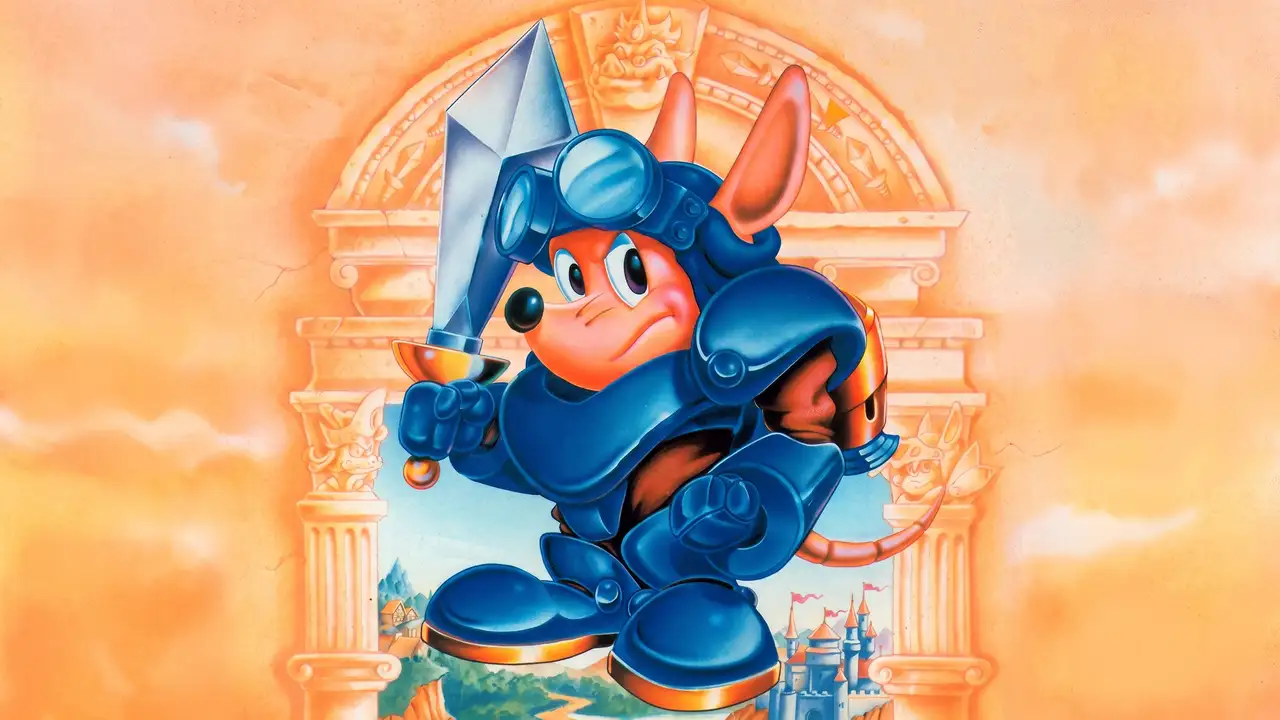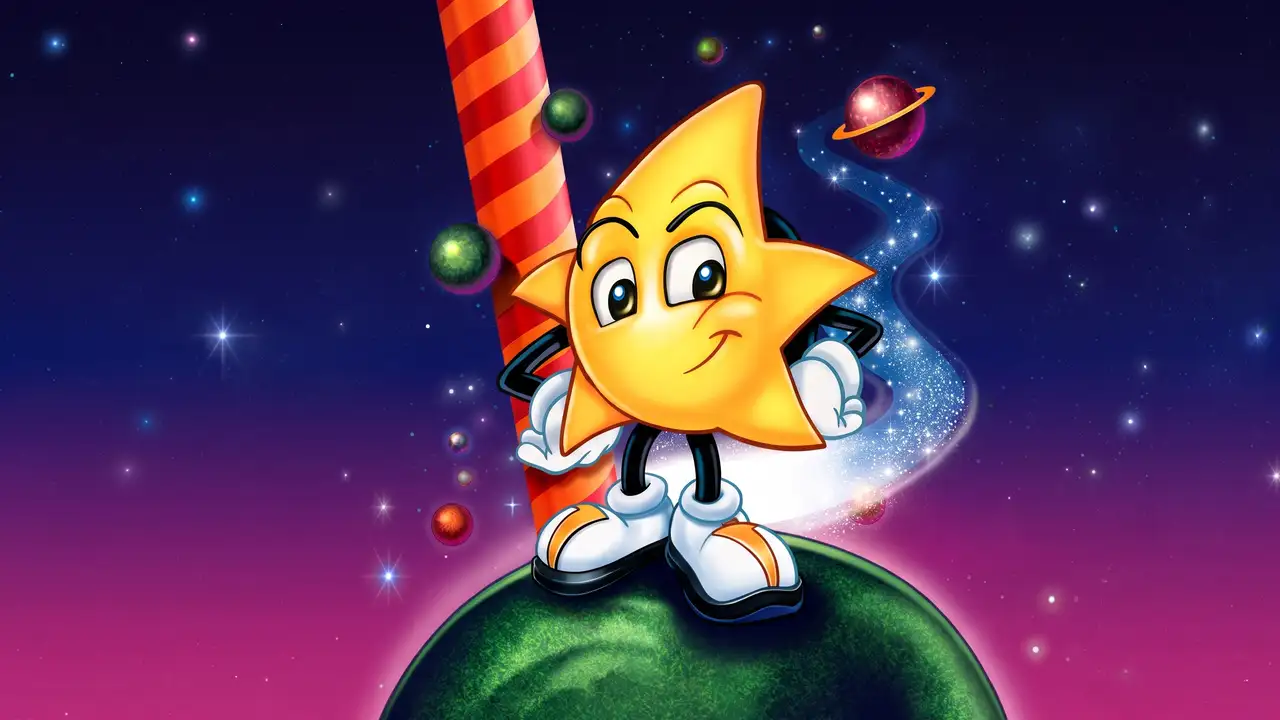
A cheerful space adventure anchors this Mega Drive deep cut: an evil tyrant corrupts the planet leaders and captures the legendary hero, whose son answers the distress call across six worlds. The plot is scaffolding, and the personality does the real work. Regional quirks give the hero a permanent scowl in Western releases while the Japanese version beams constantly, bosses sing their attacks, and the credits turn former enemies into friends. It is a game radiating Mega Drive-era charm from every sprite.
The grab mechanic defines everything. Every face button is catch: the stretchy arms yank enemies, swing from bars, smash walls, and retrieve objects, replacing the conventional jump-attack with an entire verb set built around hands. It remains a genuinely clever system whose puzzle applications (claw-retrieval, mirrored background rooms hiding swings on the far layer) still feel fresh, and it separates the game from its era’s jump-first contemporaries more than anything else about it.
The six planets (Flora, Undertow, Scorch, Sonata, Freon, Automaton) each carry a distinct gimmick. Metronome-carrying singing flowers, claw puzzles, mirrored rooms, and modest ice physics all appear, and the peak is a musical bird-concert stage on Planet Sonata whose design and soundtrack align into the campaign’s best stretch. Treasure hunting runs underneath it all, with secrets revealed through a true-sight password, and speculation persists that full-treasure runs unlock further rewards.
The soundtrack is the standout. Melodies hold up from mid-game onward, with Planet Sonata’s second stage as the peak, and the singing bosses and background flourishes give the audio personality beyond mere composition. The concert stage would not work half as well without the music carrying it. For a 1995 release the audio design remains remarkably complete.
The final boss is the campaign’s wall. A three-phase fight against the tyrant Greedy demands preparation through the boss-gauntlet password, and even practised attempts stumble on the lightning attack, which permits no clean counterplay and blocks running in one direction. The fight is not badly built so much as badly explained, and the first half alone resists simplification. Victory arrives as much through persistence as mastery.
Endgame rough edges cluster elsewhere too. An ice boss’s freeze breath has an escape mechanic the game never communicates, one boss forces waiting before any attack window, and Automaton’s wall-jump-to-spikes stretch punishes imprecise inputs harshly. Bosses can also land hits from surprisingly far away, and the four-hit health pool feels one hit short of fair. Sparse checkpoints compound the late-game friction.
Small oddities dot the experience: identical-looking gems with different values, ice physics that are tolerable rather than fun, and a health pool that invites one more hit than the design grants. None break the game, but the accumulated imprecision contrasts with the polish of the presentation and the grab system’s ingenuity. The game’s own personality (the scowling hero, the cheerful bosses, the friendly credits) compensates a good deal, and the treasure-hunting layer rewards revisits for anyone inclined to comb every planet.
Overall, this is a quietly impressive grab-based platformer whose soundtrack, gimmick variety, and hand-based verb set distinguish it within the Mega Drive library, even if it never quite reaches groundbreaking. The endgame’s unexplained mechanics, forced waiting, and spike-wall precision tests test patience more than skill. A solid deep cut worth a shorter run, with the final boss best approached pre-practised.