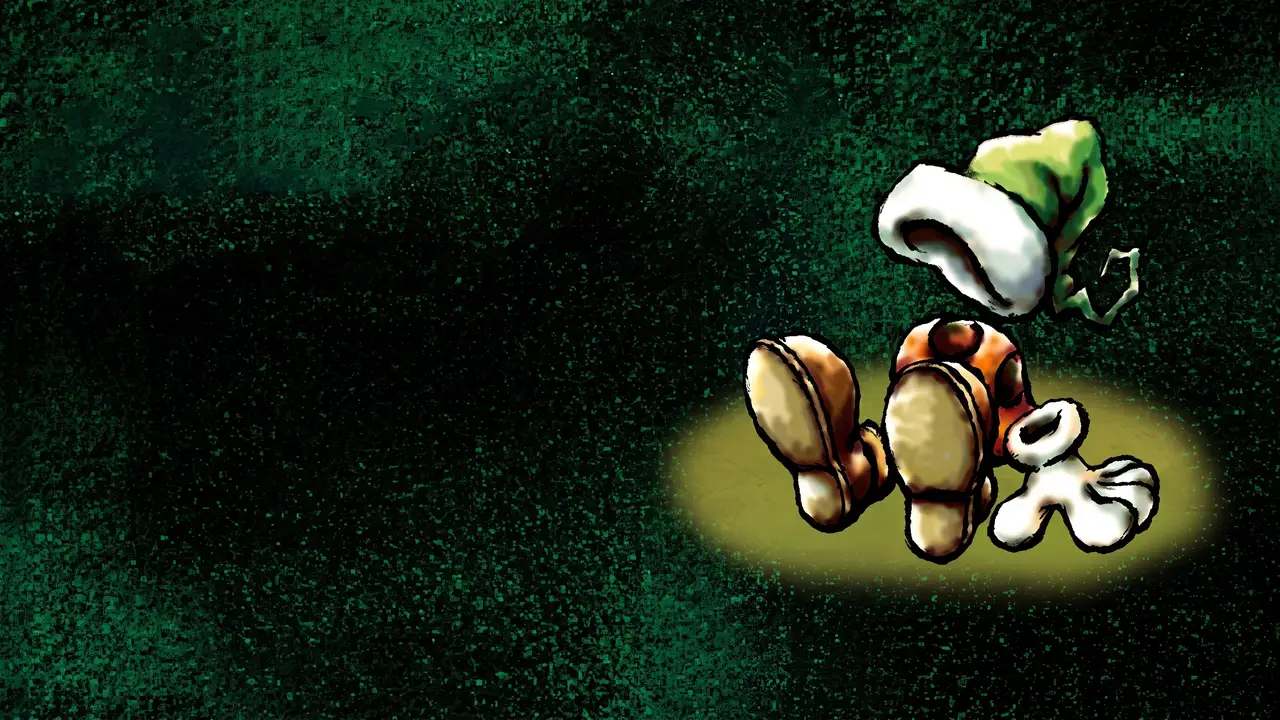
The hero of the fantasy is the villain of the ecosystem, and cleaning up after him is the whole game. Moon: Remix RPG Adventure flips RPG tropes on their head: while the armoured hero loots houses and slays wildlife for experience, the invisible boy follows behind, catching the souls of the animals he kills and gathering love from the townsfolk he wrongs. The fake-RPG prologue overloads with text by design, and its callbacks land as the ending’s highlight. A gentle, absurd, dryly funny world follows, full of talking signposts and scheduled townsfolk, and the warm mystery underneath asks what love actually is. The anti-RPG label is earned rather than decorative.
The core loop is deceptively simple. Find animal carcasses, decode their behavioural hints, and catch their souls before the action gauge empties; sleep to bank love and extend the daylight limit. Love levels literally determine how long each day lasts, a progression system measured in empathy rather than combat, and maxing it unlocks the true ending. All 51 animal souls, every character’s affection, the rocket parts and the full love meter constitute completion, tracked across more than a hundred in-game days. Sleeping as the save mechanic is a design choice that predates its imitators by decades.
The town runs on readable day and night schedules. Stuff happens constantly or very specifically, and checking who is where becomes effortless: a bar regular visits every other day, the café serves one customer per day, and the fishing contest occupies a particular weekday. The worldbuilding makes the town feel alive in a way few RPGs manage, and the day-of-week design turns exploration into a social calendar. One-way octopus fast travel knits the map together, though only in one direction, a limitation the endgame makes painfully obvious.
The collected-CD soundtrack is a genuine love of the design. Technically the soundtrack does not exist; every piece of music is a CD that can be found and collected for the in-game music player, and spending a session buying every MD is its own reward. The Flower Waltz loops for hours without wearing out, and the discovery of the music player itself comes embarrassingly late for anyone not paying attention. The fake-RPG prologue’s wall of information, unreadable without the camera, sets the tone before the real game begins.
Side-quest payoffs carry real emotional weight. An estranged father finally flies the paper plane for his son, jumping for joy in a way nobody sees him do otherwise, and the small cast rewards attention with moments like it. The midnight University lectures mark the narrative’s emotional peak, and the preordained ending ties the love theme together. The writing is deliberately overload-heavy early and warm thereafter, and the mystery resolves with callbacks that recontextualise the prologue.
The RNG-reliant minigames split hard. The bird-guessing passes on luck and shrugs itself off, but the fishing contest is pure randomness with no skill component, mandatory for max love, and it breaks the mood entirely. The missile-climb minigame proves the designers knew the difference, being skill-based and genuinely fun, which makes the fishing contest’s design choice look worse by comparison. The kakun-language mushrooms communicate entirely in untranslated speech, and the Roby lock-pattern puzzle moves too fast to parse at normal speed, solvable only by slowing playback to a quarter rate.
Endgame downtime grinds. The crawl-speed walk is the honest depiction of an armoured boy and a genuine traversal annoyance, the one-way fast travel doubles backtracking, and the final stretch devolves into sleeping weeks away because less and less remains to do. The port omits a love tracker, making it hard to know what affection has and has not been gathered, and one character alone never gives love, a dangling thread the modern release never addressed. The PS1 presentation survives the port intact, with optional filtering disabled at the credits.
Overall, this is a strange, gentle, hugely influential oddity that earns its reputation through an anti-RPG premise executed with real warmth, a CD-collecting soundtrack and a love system that predates its most famous descendant by nearly two decades. The fishing contest’s pure randomness, the one-way travel and the endgame’s waiting are real costs, but the scheduled townsfolk and the emotional payoffs make it a very fun game regardless.