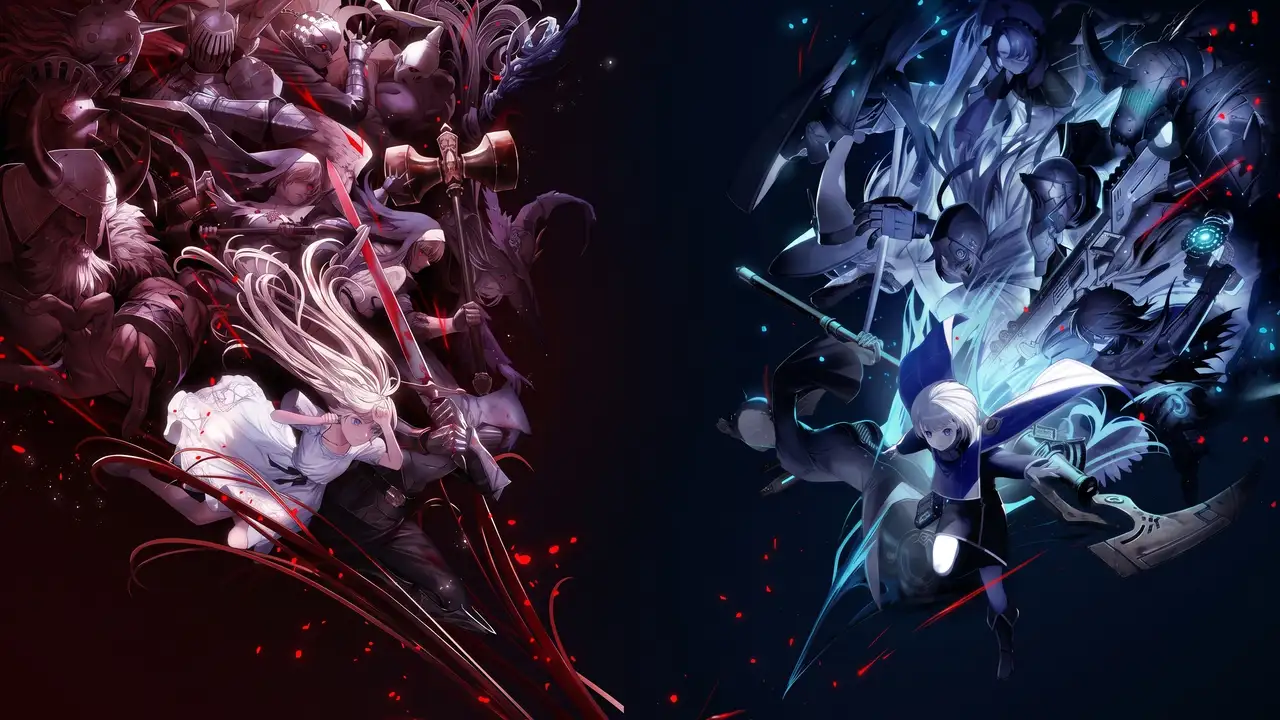
A priestess from the land of Lun arrives in the cursed kingdom of Karst to seek the Queen’s aid in sealing the curse of the dead, and the prequel premise sets centuries of distance between this chapter and the rest of the series. Karst City is the star: quiet, ominous, curse-ridden, its survivors hiding in galleries while nuns preach for a sinister Saint Esselin and a ghostly prisoner searches for a lost wife. The ambience is calculated and it works, unnerving exactly as intended. Almost every character encountered is female, a thread the series carries deliberately, and the gothic doomed-city register runs from first frame to credits.
Contact damage is the design’s loudest irritant. Brushing an enemy costs health even after a clean dodge through them, a rule that punishes the aggression the combat otherwise invites, and it applies to nearly every creature in the game. Poison compounds the problem relentlessly, appearing in the opening minutes and recurring through zones, traps and enemy hits with a frequency that turns the status bar into background noise. Instant-death spikes ambush the careless, and the difficulty overall is a clear step up from the series’ earlier entries, with bosses carrying attacks that can fell in a single blow.
The bosses escalate properly. Lubella opens, the Derelict Frida and Duchess Lupiah follow, Royal Huntress Magnolia raises the stakes, and the multi-phase Accursed Queen closes the ledger, alongside an optional secret boss hidden well enough to reward real exploration. Nearly every one carries a near-one-shot attack, which sharpens the tension and tips into repetition when each duel demands the same caution. The combat kit itself is lean: leaf melee, a progressively upgradeable bow with charge, poison and quick arrows, Bellflower heals, and charms that layer passive bonuses.
Traversal design is stingy by intent. Dash and double jump arrive slowly, ability gating withholds movement upgrades for most of the run, and the expected slide never comes at all: the twist replaces it with a cat transformation, a fun surprise that partly redeems the obsession even if the cat’s jump never fully convinces. Altars handle saving and warping once unlocked, Vitality fragments extend the health bar, and Ivory bugs collected for a florist’s reward give the secret-hunting a purpose. The tiny-white-pixel secrets and hidden walls deliver real highs and real frustration in equal measure, old-school in the most literal sense.
The two-ending structure rewards dedication. A special blessing gates the true ending, the bad ending must be experienced first, and the bad ending’s run terminates without offering a save, which raises the stakes on the choice more than any difficulty spike. Money farming is needed late for shop items, though castle-area enemies pay generously enough to soften the grind. The 4:3 aspect ratio catches the unprepared and demands a border rather than a stretched screen, and poor map orientation costs real time in the back half, wandering lost through zones the minimap explains poorly.
Completion is satisfying and achievable. Both endings, the dev room, the secret boss and a full 100% map fit comfortably within a single dedicated push, and the map-completion counter rewards the pixel hunters without demanding perfectionist excess. Death penalties sting (scripted deaths, poison, half-health hits) but respawn points are fair, and the game respects a completionist’s time in a way the difficulty never suggests. The compact scale means every system introduced gets used, and nothing overstays.
Overall, this is a genuinely good, deliberately punishing metroidvania that rewards persistence with both endings, a full map and one of the genre’s better atmospheric worlds, provided the ubiquitous contact damage and poison can be tolerated. The oppressive Karst City tone, the sharp boss escalation and the cat-transformation twist give it an identity the earlier series entries never found. Accept its irritations as design choices and the four-hour adventure earns its recommendation.