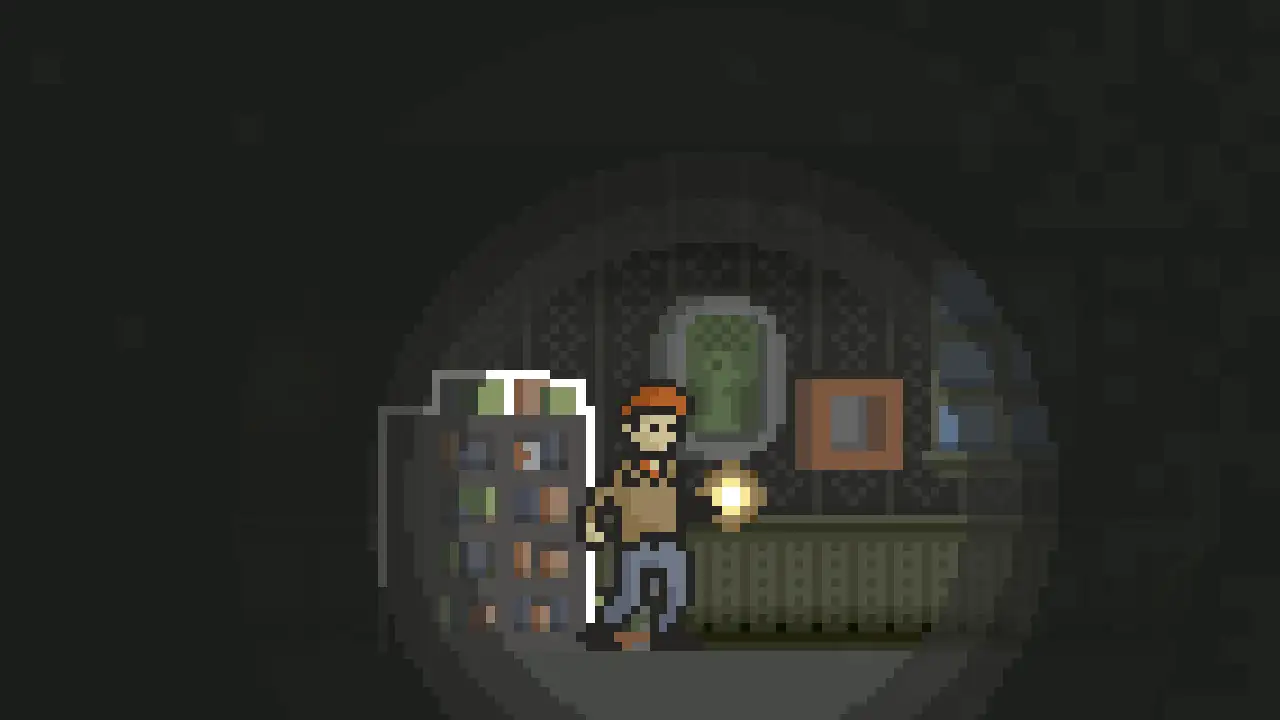
A stranded cat climbing into a mech suit to repair a failing research facility is the entire pitch, and the monochrome Game Boy presentation sells it from the first frame. The abandoned planet’s facility runs through a central Nexus hub with three malfunctioning zones, each gating the laboratory beyond, and the black-and-white aesthetic keeps every screen deliberately legible in the retro mould. Radio chatter with a stranded commander provides constant mission-control banter, while environmental logs hide a genuinely melancholy backstory about an isolated doctor and his dying dog beneath the comedy. Devolver Digital easter eggs and a collectible Tamagato cartridge round out the self-aware humour. The tone never takes itself seriously, right up until it earns the right to.
Upgrade progression arrives at a satisfying clip: rockets open new traversal, the spin jump unlocks exploration, phase dash slips through barriers, and the big shot and repeater reshape combat in turn. Each unlock visibly redraws the map’s possibilities, and the compulsion to revisit sealed routes stays constant throughout. Fourteen collectible cartridges add palette options and meow tricks, while ten health upgrades pad survivability. The pacing signals its length early, with six cartridges and four health upgrades falling within the first hour. A 100% completion run fits comfortably inside two and a half hours.
Hub-based structure lets each zone be finished far earlier than genre convention expects, which reads as strange at first and liberating shortly after. The aqueduct, heater core and ventilation areas each carry their own identity, and enemies stay mostly avoidable, with killing them rarely worth the trouble unless they block the path. Difficulty remains mild overall, with the ventilation gauntlet and a single cat-form boss as the true spikes. The zones-close-early design keeps momentum high and backtracking purposeful. As a compact genre entry, the structure serves the brevity well.
The ventilation area is the campaign’s low point, one-hit-death platforming without the mech’s protection that trades tension for frustration even with frequent saves softening the blow. The cat-form laser-dodge boss fares little better, its auto wall-stick movement sticking the feline protagonist to every surface and turning dodges into hindrances. Enemies and hazards reset on re-entering rooms, forcing repeat gauntlets during backtracking, and spawning occasionally places adversaries directly on top of the player. Awkward wall-jump exit inputs and one controller dropout add minor irritation. None of it dents the whole, but the seams show.
The writing deserves singling out, from petty mustachioed lava-brother bosses with their own death-origin grievances to banter that keeps the radio crackling with jokes. The palette collectibles, including a urine filter and a virtual-boy red, amuse briefly before the original black and white reasserts itself as the correct choice. Enemy visibility suffers mildly in monochrome, occasionally blurring the line between hazard and decoration. The twist in the finale recontextualises the adventure without cheapening it, and a multi-phase final sequence closes the campaign with real polish. The comedy earns its surprisingly earnest ending.
The dying-dog thread buried in the environmental logs deserves its own mention, a quiet melancholy undertow that the comedy never acknowledges and the ending pays off with genuine grace. Discovering those logs mid-run recontextualises the facility’s silence as grief rather than emptiness, a subtlety few games this deliberately silly attempt. The stranded commander’s constant chatter keeps the surface light while the logs deepen underneath, a two-layer tonal balancing act executed without a false note. It is the kind of understated storytelling that lingers long after the credits.
Overall, this is a short, charming and beautifully styled Metroidvania whose steady upgrades, sharp script and monochrome presentation outweigh its localized friction entirely. The ventilation gauntlet and wall-stick boss are genuine irritants, yet the whole remains an unreservedly fun two and a half hours with a finale that lands. As a palette-cleanser between larger games, it executes its compact vision almost flawlessly.