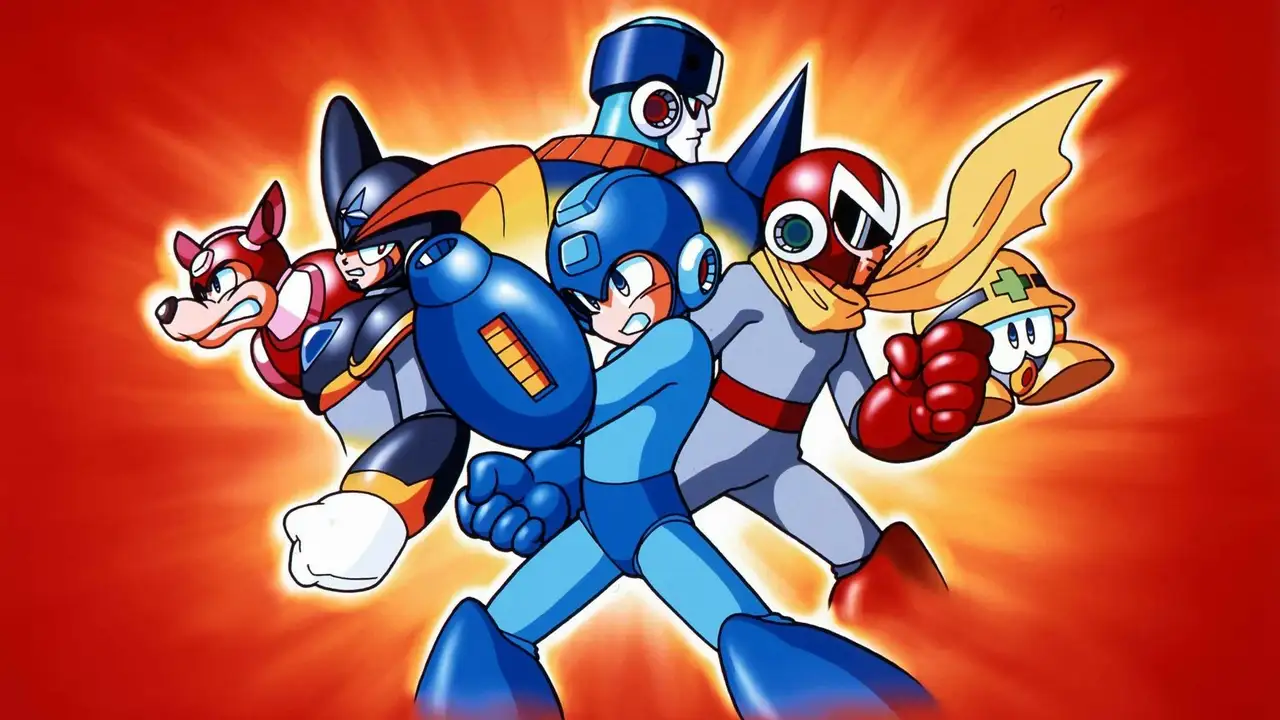
The series’ first full voice cast arrives, and the result is accidental comedy gold. Mega Man 8 marks the mainline’s chaotic 32-bit transition, 2D sprites over 3D set pieces with a plot involving a one-shot alien hero and a vaguely named evil energy. Stiff animation, mismatched line deliveries and a struggling scientist’s voice turn every cutscene into a highlight, and the odd pauses between lines suggest the recordings happened on separate days. The register is so-bad-it’s-good from prologue to credits, and the cutscenes deserve to be enjoyed rather than endured. The rivalry subplot with a dark counterpart adds genuine texture, and the credits roll with fan-submission Robot Master concept art worth pausing for.
The soundtrack is genuinely good across the whole game. The second batch of Robot Master stages, Sword Man, Astro Man and Search Man, stands out above the first four, but the quality holds from the intro montage to the fortress. Chiptune composition carries over into the 32-bit era with arrangements that rank among the series’ best. The intro montage alone makes the case for the entry’s production values, and the music never drops below solid.
Special weapons break the Buster-only habits of the NES era. Tornado Hold racks up multi-hit damage, Flash Bomb lights up crowds, and the Laser shot cuts through trouble that the Buster struggles to touch. Astro Crush arrives with a four-shot limit that quietly becomes the intended answer to one fortress boss. The toolkit is unusually useful outside its intended boss matchups, and the discovery changes how the whole campaign plays. Mega Ball introduces kick-angle physics, and ball-jumping skips open routes the level design never advertises, becoming the better way to traverse by the endgame.
The bolt-funded upgrade economy is deep and rewarding, but the game explains it terribly. Forty hidden bolts buy Rush parts and upgrades, and Rush Medic stands as the most overpowered Rush power in any game, yet descriptions of what purchased parts actually do are so vague that some purchases turn out to be traps. Auto Shoot is probably the worst upgrade available, discovered only after spending bolts that cannot be refunded. The collectible-driven exploration echoes the previous entry’s bolt-hunting and rewards thoroughness, but the information gap between spending and understanding sours the system’s edges.
The Wily Tower save system is broken by design. Saves are offered, but reloading restarts progress from the fortress’s first stage, making the option a lie. The opening climb stacks a “jump jump slide slide” platforming sequence under deliberate visual distraction, with clutter enemies spawning exactly where attention matters least. Difficulty front-loads into the fortress; the Robot Masters, the boss gauntlet and even the Yellow Devil are pushovers by comparison, the last so easy it barely registers as an encounter. The screen-clutter design philosophy floods every stage with distraction enemies, a period quirk that fights the core platforming rather than enhancing it.
Sprite-flicker strobing hits the fast-moving effects throughout, a PlayStation-era quirk that occasionally obscures the action. Lengthy unskippable cutscenes sit between stages, and while their comedy compensates on a first pass, the pacing drags on any repeat visit. The distraction-heavy enemy placement compounds both problems, filling screens with hazards that exist to annoy rather than challenge. None of it breaks the campaign, but all of it accumulates.
The core platforming remains solid beneath the noise. Rush’s upgrades open traversal options that reward the bolt hunt, energy regeneration on death softens the fortress grind, and the difficulty balance tilts forgivingly for anyone comfortable with the classic formula. The game asks for patience with its presentation and pays back with one of the series’ better soundtracks and a genuinely useful weapon arsenal.
Overall, this is a solid, underrated entry whose terrible voice acting should be enjoyed, not endured. The soundtrack, the special-weapon toolkit and the bolt economy carry the campaign through a broken save system and cluttered screen design. For all the criticism the 32-bit transition attracts, the game holds up as one of the more distinctive chapters in the classic run.