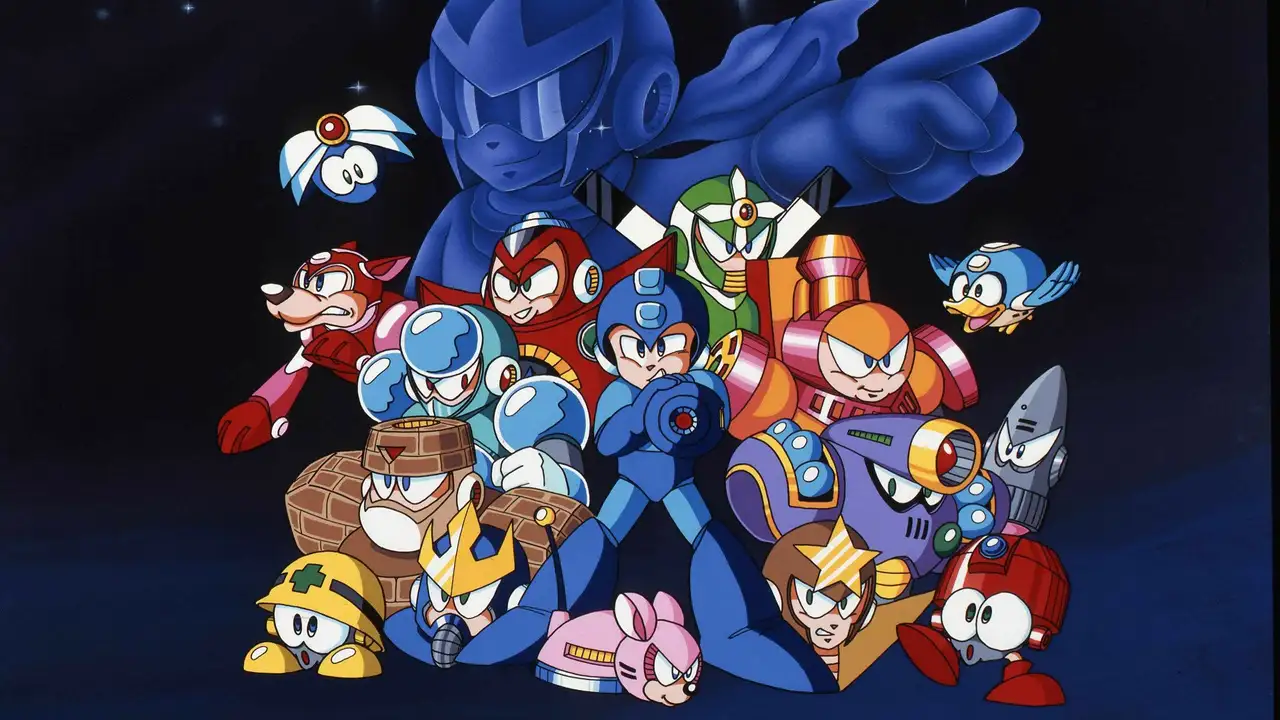
An ally is framed for destruction, and for the first time the classic series treats its plot as more than set dressing. Mega Man 5 opens with that hook and builds a distinct two-act structure around it: a full fake-villain fortress complete with a collapsing-map boss, then the real villain’s stages beyond. The framing earns genuine engagement rather than polite attention, and the reveal lands as the most narrative the NES entries attempt. Tone stays light throughout, from a weapon-naming tangent about period innocence to nostalgic commentary on NES sprite-flash limits, and the campaign reads as the era’s most feature-complete package.
The soundtrack is a surprise rehabilitation. The title sequence alone walks back any harshness aimed at the previous entry’s music, and the quality holds across all eight stages and both fortresses. Star Man’s stage runs on an ambient soundscape closer to mood than melody, and the rest of the roster keeps pace. The series’ soundtrack reputation holds firm here, and this entry’s score stands among the NES run’s best.
The letter-collection sidequest is the highlight loop. Each of the eight stages hides a letter, and gathering all eight unlocks a bird companion who rescues the hero from pits in the fortress. The payoff is direct and mechanical: falls that would end an attempt become recoverable, and late-game runs are genuinely saved by the investment. Committing to the hunt early changes how the whole endgame plays, and the loop of search-and-reward gives the stages a second layer beyond platforming and combat.
Crystal Eye becomes the unexpected favourite weapon, carried through the Wily stages for its splitting projectile behaviour. Gravity Hold’s aim-free design wins points for sheer convenience, and the Water Wave slide-attack surprises with its damage-to-energy ratio. The charged Mega Buster carries over from the previous entry and does most of the heavy lifting after Star Crash proves unreliable in the boss gauntlet. The roster leans functional over spectacular, with the Buster remaining the dependable default.
The Crystal Man stage opening is the campaign’s sore spot. Patternless falling hazards dominate the first stretch, knocking the hero into pits with no rhythm to learn, and the lack of any readable pattern turns the section into pure trial and error. The placement at the game’s start compounds the problem, hitting players before they have warmed up. Gravity Man’s ceiling-walking gimmick fares better as an idea than an execution: the gravity shifting is admired, but the inverted control scheme wrecks muscle memory, with slide inputs requiring up-up-and-jump sequences that fight instinct.
Health-drop stinginess is worse than its predecessor’s already-criticised economy. Enemies rarely drop anything useful precisely when needed, and the shortage forces conservative play through the fortress stretches. Power Stone is near-useless in the gauntlet, scattered rocks that rarely connect against Charge Man and force a retreat to the Buster. Charge Man’s erratic pattern defeats attempts repeatedly until the timing finally clicks, waiting for movement to jump over him. The difficulty curve is fair overall, but these specific friction points cluster awkwardly.
The two-act fortress is the structural signature. No other classic entry builds a fake mid-game fortress, and the collapsing-map boss plus the framed-ally reveal give the finale genuine narrative weight. The chase sequence carries the drama, and the bird companion’s pit rescues convert the sidequest investment into tangible endgame support. The balance of novelty and tradition holds from the first stage to the last.
Overall, this is the NES era’s most feature-complete entry, a fun and occasionally frustrating step up driven by a soundtrack that deserved earlier credit and a letter hunt that pays off mechanically. The Crystal Man pits and the stingy health drops sting, but the two-act fortress and the companion unlock make this the era’s most inventive chapter.