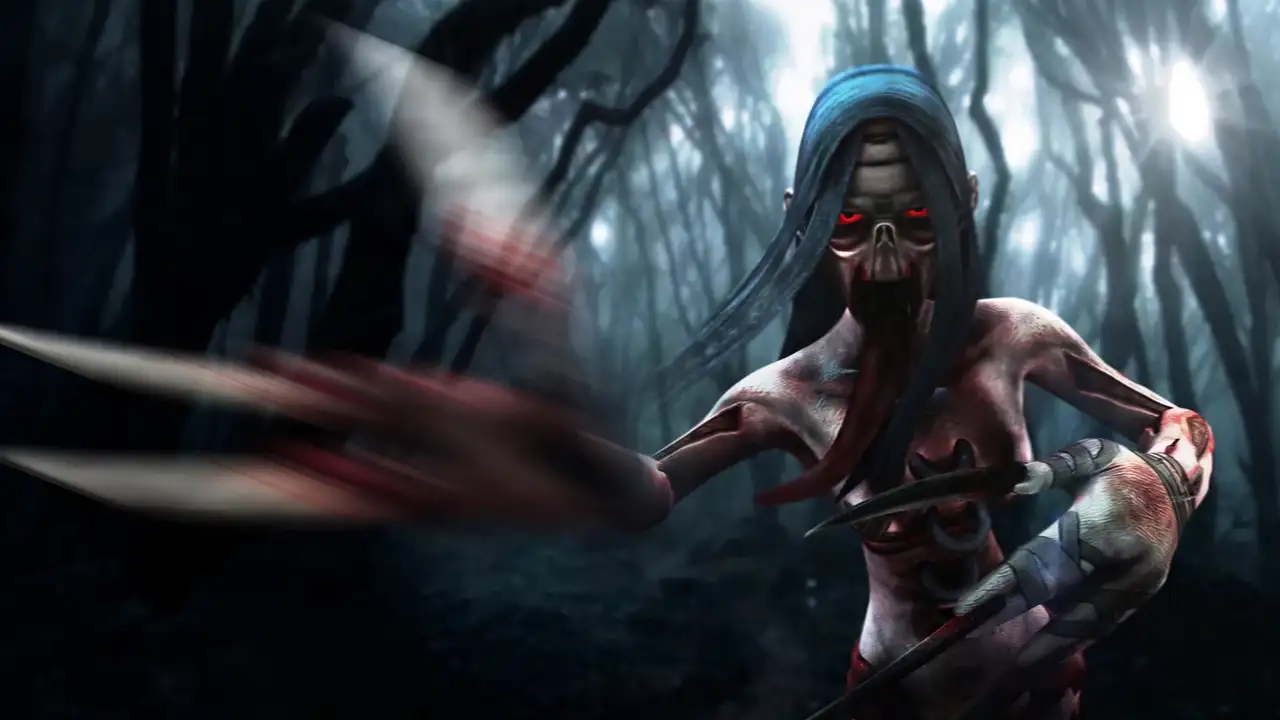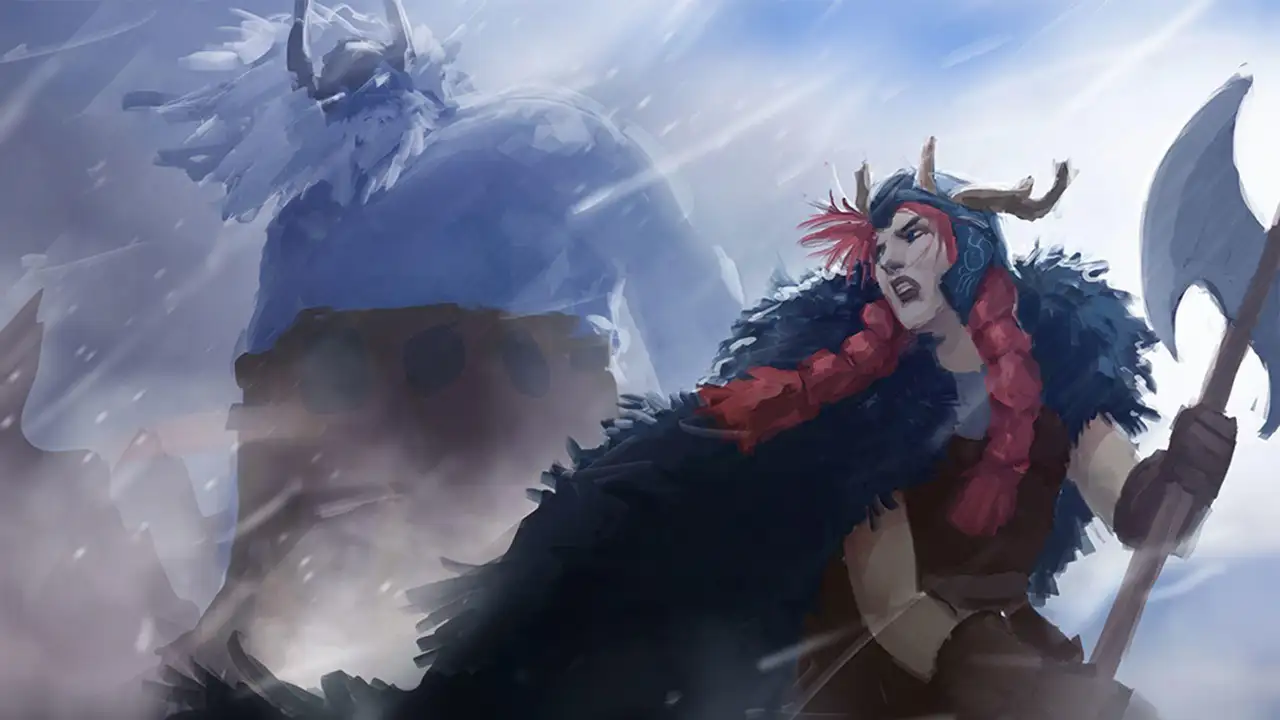
A Viking warrior denied entry to Valhalla must prove her worth to the gods by slaying the jotun, the giants of Norse myth, across five elemental realms. The premise is thin by design; the myth does the heavy lifting through Mimir’s lore fragments, constellation puzzles, and painted vignettes of Ratatoskr descending the world tree. Icelandic voice work anchors the setting in authenticity, and every screen looks painted rather than rendered. The structure borrows the boss-gauntlet shape of Titan Souls: explore a region, gather power, then face a giant that dwarfs the arena.
Presentation is the defining achievement. Everything is hand drawn frame by frame, from the roots of Yggdrasil to Brokkr’s forge to the frozen wastes and the fires of Muspelheim, and the animation quality makes even ordinary exploration screens feel like moving illustrations. Bosses occupy huge portions of the frame and animate with a weight that sells their scale. Few games of its vintage look this deliberate, and the art alone justifies the visit.
Combat stays simple: a light and heavy axe with charge attacks, supplemented by god powers earned through the campaign (healing, Heimdall’s shield, Freya’s decoy, Loki’s deception, haste, and ultimately Gungnir). Golden apples extend health, god shrines refill power mid-fight, and lore points flesh out the mythos, all highlighted on the map after completion. The kit is modest, but each boss forces it to be used well, and encounters escalate from the plant jotun Jera through the shadowy Fé, the ice giant, the clone-summoning thunder jotun Hagalaz, and a fire smith before the final confrontation with Odin.
The Odin fight closes the gauntlet with a flourish, summoning previously defeated jotun back into the arena for a final exam on everything learned. Beating it through pure aggression, without destroying a single spear, rewards mastery over caution. The thunder jotun deserves its reputation as the wall of the campaign, its clone-summoning phases punishing hesitation, though the fight teaches its patterns fairly once the panic subsides.
Exploration between fights is the weaker half. The map lacks a position indicator, leaving orientation to guesswork across visually similar zones, and the roots level in particular invites wandering. The design details reward attention once deciphered; lookout points mark vantage spots worth finding, and the zone layouts hide collectibles in sensible places. But the absence of any marker on the map turns route planning into trial and error more often than it should.
Ice sections compound the movement frustration. Crossing frozen ground slows the Viking to a crawl, and the ice jotun fight inherits the problem, turning a Giant encounter into a test of patience with the controls rather than the boss. The sluggishness reads as deliberate difficulty but lands as friction, and it is the one fight where the arena bothers more than the giant itself.
Length sits on the short side, with full completion achievable in roughly three hours, well under commonly cited estimates. The game respects its own scale; boss-gauntlet structures do not need padding, and the compact runtime keeps the escalation tight. Developer lineage is worth noting too, since the same studio went on to make Sundered, and the seeds of that game’s visual ambition are visible throughout.
Overall, this is a gorgeous, challenging Norse boss-rush whose frame-by-frame hand-drawn art and escalating giant fights reward patience and pattern learning. Disorienting maps without position markers and crawl-speed ice movement are the recurring irritants, and neither spoils the gauntlet. A short, striking climb toward the gods that ends exactly where it should.