Two years after a capital city’s sinking, the last remnants of humanity drift aboard a carrier awaiting a scientist’s rescue and a final confrontation with the enemy queen, and the trilogy closes with unusual deliberateness. The tone balances grim survival, ash-covered refugees and an infected town, against the series’ usual bombast, and the satire of a leadership that saved statues while the population starved gives the grimness a point. Greenery replaces the franchise’s trademark brown and grey, an ironic visual shift for the generation it defined, and the campaign carries its concluding weight with confidence rather than fatigue. Few blockbusters commit this hard to actually ending.
Set-piece variety is the campaign’s structural strength. A hometown supply run hands the controls to a secondary character for the first time in the series, a perspective shift so welcome it begs for more, and mech fights, gas barge hijacking, a full submarine escape and a sinking carrier keep the structure constantly refreshing itself. Riding the enemy’s own transports into battle remains a signature the series does better than anyone, and the Azora tower climb closes the escalation sensibly. Solo normal difficulty poses few walls, with deaths clustering on a berserker encounter and a couple of siege turrets rather than systemic challenge.
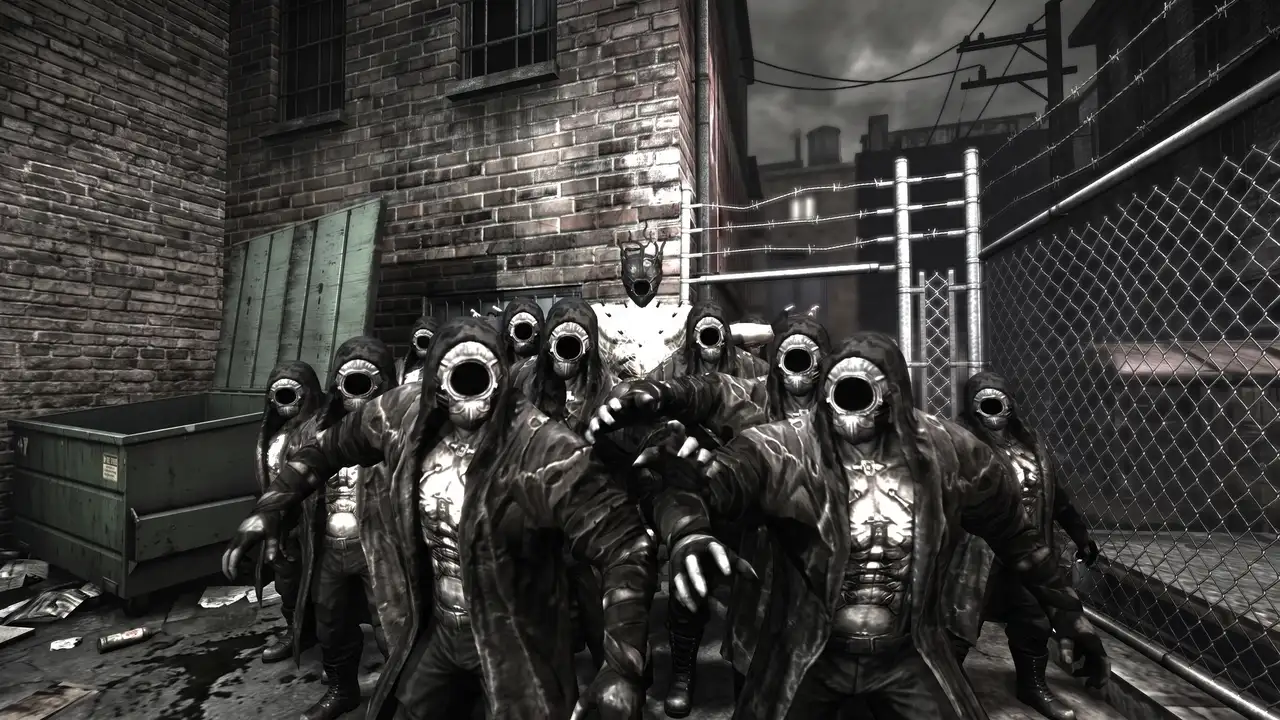
The horror beat lands harder than expected. An emulsion-infected human town turns the enemy from monster to tragedy, its fast-moving infected disturbing precisely because they remain so human, and the sequence escalates the stakes in a way pure bombast never manages. The retro Lancer’s bayonet charge is a satisfying new execution, powerful enough to regret that enemy AI so rarely fields it, and incendiary grenades, the Digger and the Mark-3 Lancer round out an arsenal that refreshes without disrupting. Weapon novelty is genuine rather than cosmetic.
Combat pacing shifts with the Lambent’s habit of exploding. Chain detonations are sometimes satisfying, clearing clusters in bright cascades, but the self-destruction is as often a hazard as a tool, punishing proximity in ways that discourage the aggression the cover system rewards. Reduced ammo caps on every weapon, the hammerburst’s capacity halved by any measure, force constant weapon-swapping that earlier entries never demanded, and the change reads as artificial difficulty rather than tactical depth. Enemy weapon variety thins correspondingly, with one rifle dominating every firefight.
Oddities accumulate at the margins. The Azora interiors are weirdly proportioned, doors and ceilings scaled for giants, and aiming from the submarine and barge mounts remains sluggish where the truck ride works. A hold-to-pick-up control change irritates against the older tap-to-swap scheme, and an endgame experience pop-up grants levels while awarding nothing for executions, a small system that arrives half-wired. None of these dent the campaign’s momentum, but all of them are noticed in a package this polished elsewhere.
The final act delivers the trilogy’s emotional payload. A founding character’s sacrifice at the infected town is staged with a restraint the series rarely attempts, and the scientist father’s final device closes both the war and its architect in a single gesture, giving the campaign a definitive close rather than a launch pad. The ending’s deliberateness raises the obvious question of what could follow, and it compares favourably to the era’s other definitive closers. Whatever came after would need to justify itself against an ending this complete.
Overall, this is a confident, varied and emotionally landing trilogy-closer whose set-piece rotation, perspective shift and genuine character sacrifices make it the series at its most deliberate. Reduced ammo caps, the Lambent’s explosive deaths and thin enemy weapon variety are real irritations, and the giant-scaled interiors distract more than they should. The whole still feels definitive, and the campaign ranks among the trilogy’s best.