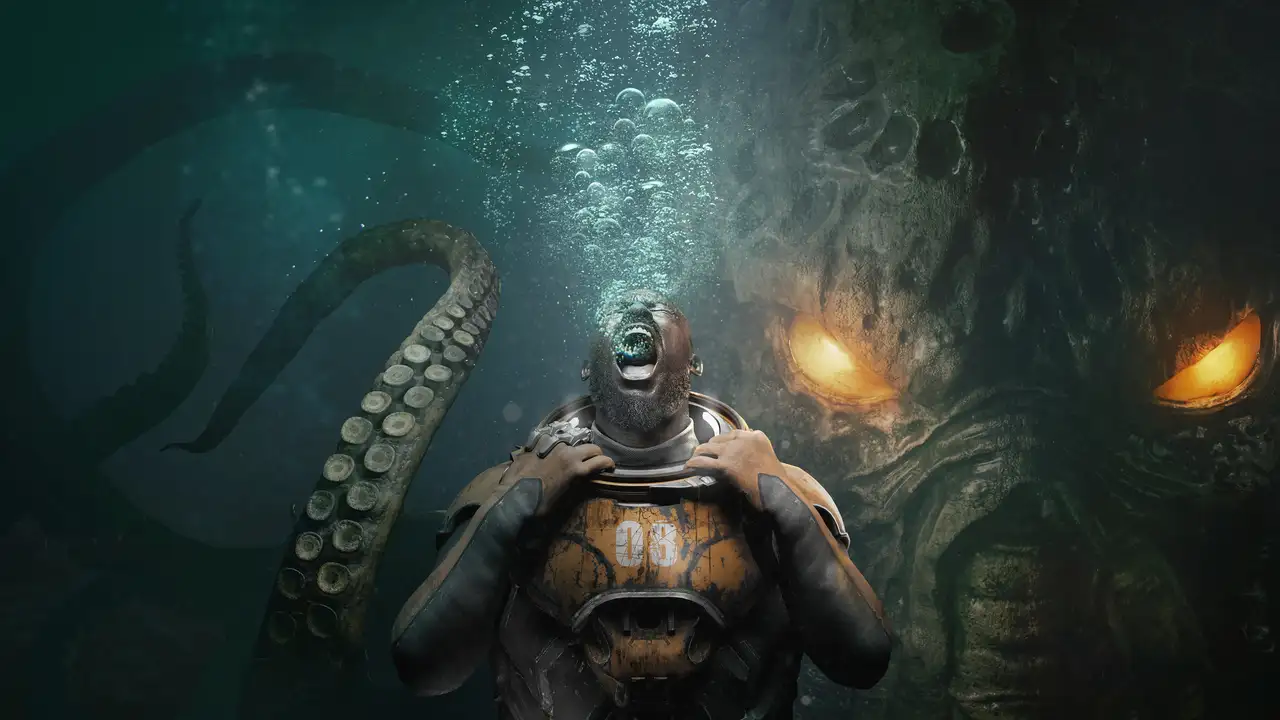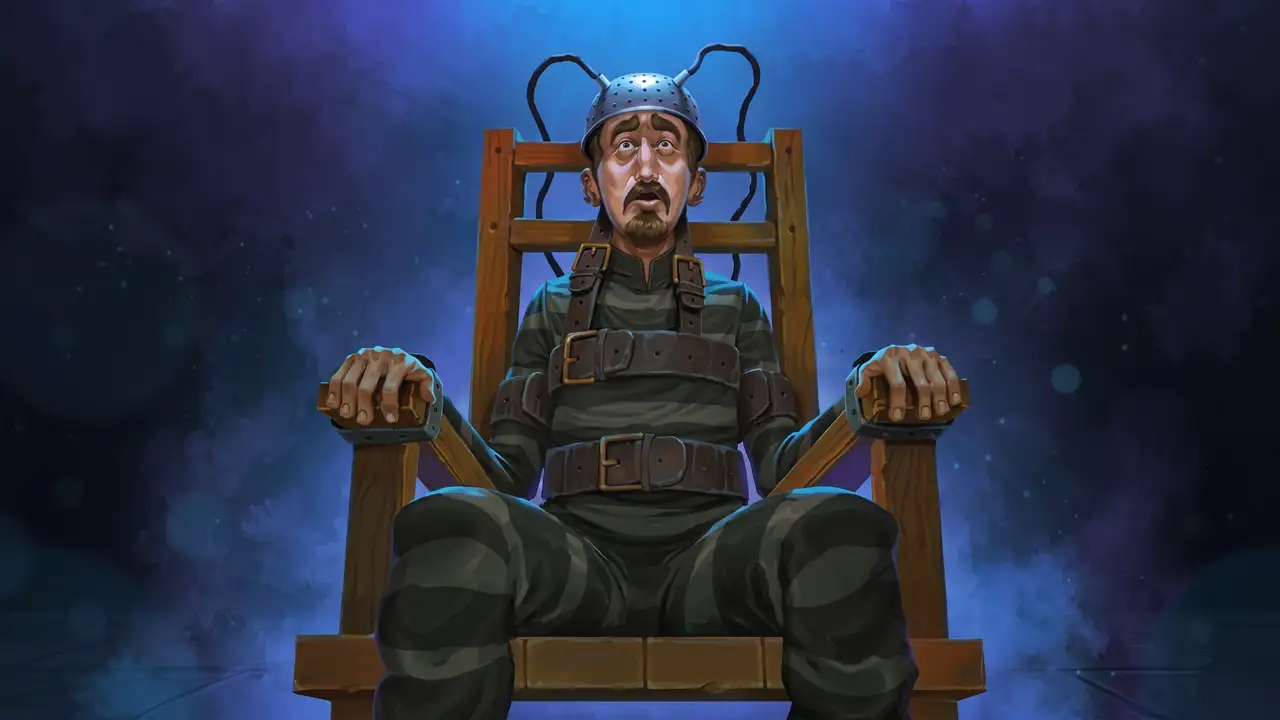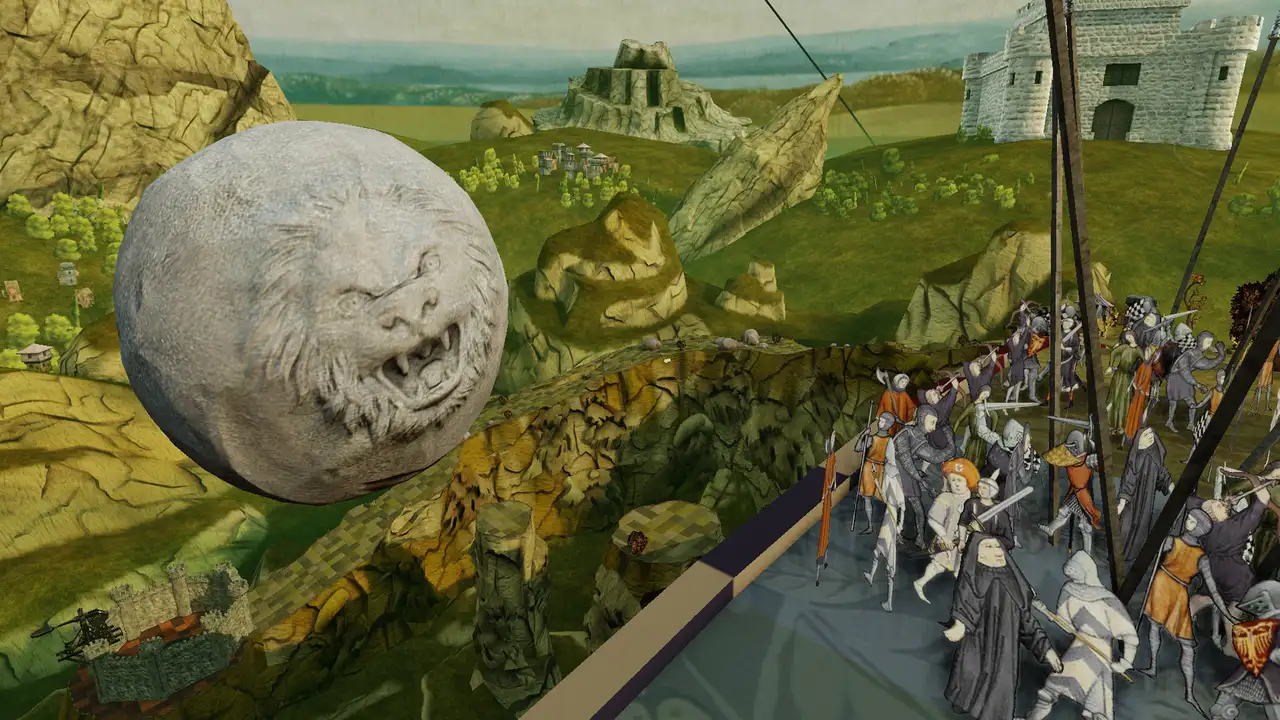
Twenty-five years after the burial of an old enemy, a new generation of outsiders raids a pristine authoritarian settlement whose spotless robot-built facades hide a far older horror, and the campaign is built as a generational handover in both cast and craft. The tonal whiplash between clinical COG architecture and the organic horror of the hive gives the story its texture, while the prologue’s trilogy flashback re-stages familiar beats before the robot-heist reveal subverts them. The narrative’s central reframe lands as the campaign’s boldest move, reaching back to vindicate long-held suspicions about how the trilogy actually ended. Inheritance and interrogation of the predecessor’s ending sit side by side, and both are committed to fully.
The presentation is the generational leap the handover demands. Character models, lighting and environments sit in a different tier entirely from the 360-era originals, and the jump is evident from the opening prologue onward. Just as important is the fix nobody asked for explicitly but everybody felt: the roadie-run camera no longer shakes like mad while sprinting, the single most welcome quality-of-life change in the series. Stable pursuit finally matches the aggression the cover system encourages, and the difference colours every firefight in the campaign.
Structure stays varied across the five acts. A stealth-lite settlement infiltration breaks up the shooting, the ore-transporter descent earns its nickname as an elevator to hell, and wind-flare environmental combat turns storms into a weapon, letting certain hazards be turned against the enemy rather than merely survived. The rail-gun-fortification wave defences, the fabricator hold and the radio-tower stand, are the mechanical highlight, with turrets and barriers rewarding genuine min-maxing and scratching the same itch as the series’ most arcade-leaning spin-off. Baird’s late-game mech arrival re-energises the finale with exactly the spectacle escalation the last act needs.
Enemy design is where the balance frays. Scions are tanky to a degree nothing in the trilogy approached, absorbing punishment that would have ended earlier elites, and drop-shot kills one-shot on direct hits where snipers do not. The Swarm’s rapid mid-act evolution, from skittering juvies to armoured drones, is novel but spikes difficulty unpredictably, and the new burst-fire hammer burst feels significantly worse than its trilogy counterpart while dominating enemy loadouts. Solo normal difficulty poses few walls overall, with deaths clustering almost entirely on the drop-shot elites rather than on systemic challenge.
A dam generator and breaker puzzle breaks outright and forces a full restart of the sequence, the campaign’s only true functional failure. Pre-rendered cut scenes bloat the install to roughly 120 gigabytes, an absurd footprint for a campaign of this length, and the weight lands entirely on the pre-rendered video files. Smaller irritations accumulate: boot-up advertising for the sequel and subtitles defaulted to off, each a small modern-game discourtesy. None of these are structural, but the dam bug in particular interrupts an otherwise well-paced back half.
The campaign’s length sits comfortably alongside the trilogy’s middle entry, and the pacing never sags across the five acts despite the wave-defence interludes. What holds it all together is the reframe of the old enemy’s fate, revealed inside the hive in a way that satisfies rather than retcons, and the sense that the series’ worst habits were actively studied and corrected. The handover succeeds because it respects what it inherits while quietly fixing what it inherits broken.
Overall, this is a confident, good-looking generational handover whose visual leap, stabilised camera and satisfying legacy reframe place it firmly within the series’ ranks. Over-tanky Scions, an unpredictable difficulty curve from the Swarm’s mid-act evolution and the pre-rendered install bloat are real costs, and the dam puzzle’s failure state is a genuine blemish. The craft underneath outweighs all of it.