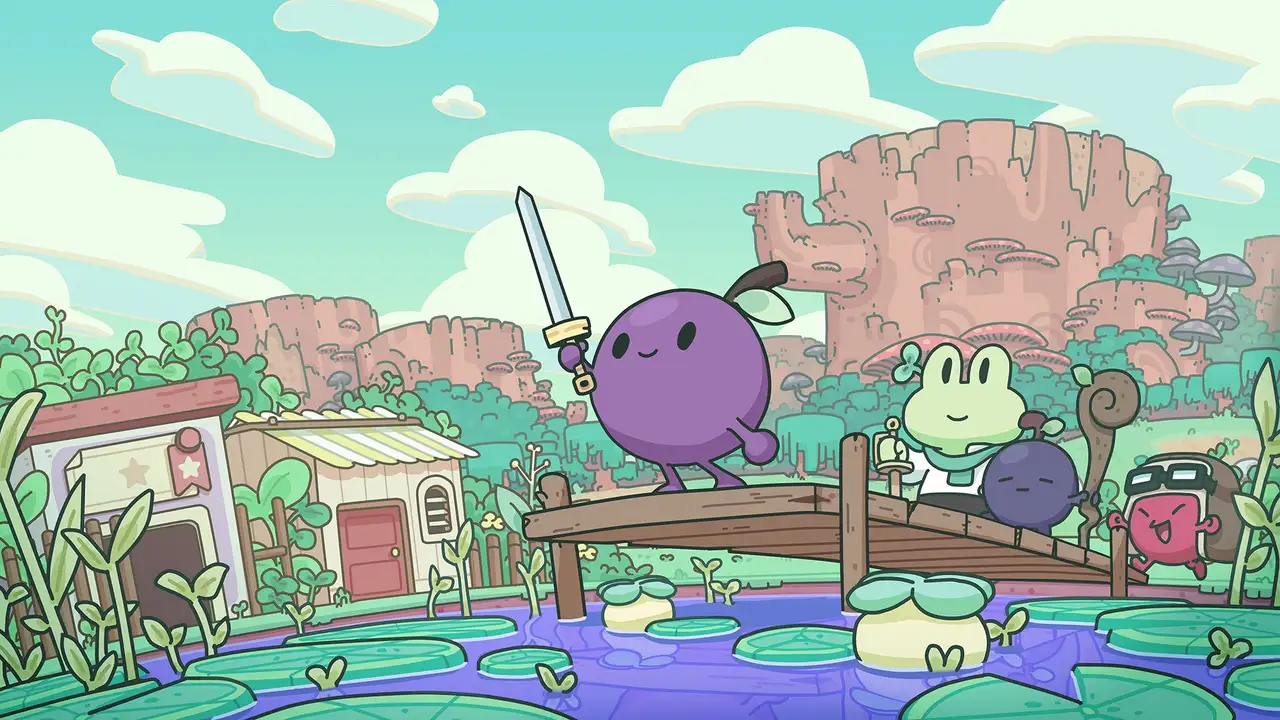
Concord, a grape serving as guardian to a grove of four seasonally themed towns, anchors one of the cosiest openings the village-tending genre has produced, and Garden Story’s warmth never once breaks across a full campaign. Spring Hamlet, Summer Bar, Autumn Town and Winter Glade each carry distinct villagers and personality, and the worldbuilding unfolds gradually rather than through exposition dumps. The tone stays relentlessly gentle, the art charms from the first frame, and the whole package radiates a chill that justifies every hour spent in its company. It is a relaxing game first and everything else second.
The core loop blends town upkeep with tool-driven dungeon exploration. Completing requests levels each town, town levels unlock upgrades for the sword, scythe, hammer, pick, shovel, dowsing rod and parasol, and the maxed builds eventually make dungeons trivially fast. Days run short at twenty to thirty minutes, a structure that suits pick-up-and-play sessions perfectly, and the rhythm of request, upgrade and explore settles into an agreeable routine. Resource RNG matters more than skill, with rare drops such as driftwood and Crimson shells gating the late upgrades, and an equipped luck-lowering memory quietly sabotages drop rates until the problem is spotted far too late.
The cosmetic system runs far deeper than expected. Outfits and backpacks visibly change in the world, the rucksack eventually becoming a boombox, and the shops exist to be cheerfully bankrupted. The music deserves equal praise, catchy enough to lodge in the head across multiple sessions and charming enough to carry the grind on its own. Together the presentation layer gives the game a personality that outlasts its mechanical simplicity.
Progression friction accumulates in specific places. The request XP calculation never explains itself, leaving the value of two-star requests mysterious even after every town reaches level five, and the final act’s pacing depends heavily on random request availability, with days spent sleeping away the calendar until a maintenance job finally appears. The request board item misleads outright, implying it shows other towns’ requests when it does nothing of the sort. Weather seems to influence drops, with rain yielding nothing but wood, and the game never confirms or explains the pattern.
Spring Hamlet hides the game’s most baffling quirk: its shops close at night, a bedtime that nowhere else in the game observes, and the isolated annoyance stings precisely because it is unique. Small bugs surface late as well, with NPC dialogue replaying and a complete-request message firing multiple times in a row, enough to raise doubts about whether progress counted. In-game time advances even while resting, blowing past months of the calendar in a single day. None of these derail the experience, but each chips at the polish.
The finale earns the journey. A genuinely novel final boss, built around the very tools upgraded across the whole campaign, arrives as a real surprise, and the heartfelt village send-off that follows lands with emotional weight that retroactively justifies the grind. The concluding story beats, including the grove’s true nature and a farewell that catches the chest, close the campaign on a high that many cosier games never attempt. The epic register of the ending against the gentleness of everything before it is the design’s smartest contrast.
Overall, Garden Story is a very chill, deeply charming village adventure whose catchy music, visible cosmetics and genuinely moving finale make the long grind worth every hour, provided the request-board RNG and unexplained systems are accepted as part of the rhythm. Some days will be slept away waiting for the right quest, and the farewell at the end pays for all of them.