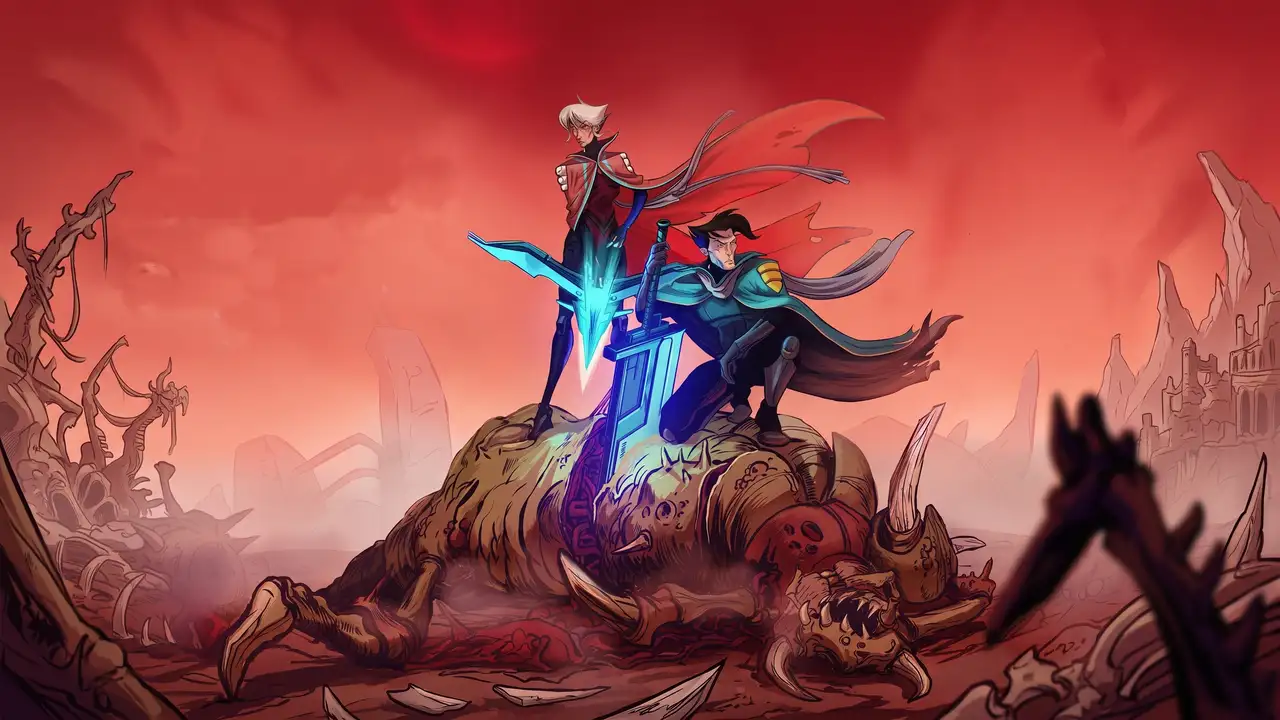
A priestess with no memory, an incorporeal knight guide and a kingdom consumed by an immortal blight set the stage for a metroidvania told almost entirely through itemised letters, diaries and boss-purification memories. The lore is mournful and genuinely affecting, with guardians grieving their priestess, lovers separated by the blight and small personal tragedies surfacing through every collectible, and the revelation that every white priestess is a clone of the first is deducable early yet still lands as satisfying. It is a story where every victory reads as a funeral, and the register holds throughout.
The soundtrack is the single most praised element, incredible from the opening village theme to the credits, repeatedly drawing comparison to NieR’s score, with individual area themes standing among the best in the genre. The spirit-collection combat underpins it: purified bosses become wieldable skills, with damage, speed, cooldowns and slot costs weighed against each other across a roster that grows to cover every enemy type. Skill enhancement, levelling and relic loadouts rest at respites, and fast, generous levelling keeps the power curve feeling great, one-shotting late-game enemies after a deliberately slow opening.
The map system deserves its own applause: blue for incomplete, gold for fully explored, the clearest completionist compass in the genre and the reason a 100% sweep feels like a pleasure rather than a chore. Quality-of-life design earns repeated praise throughout, with early fast travel, return-to-respite, remappable spirit sets and a hold-direction anti-auto-climb option added since launch. Movement abilities arrive at a generous clip, double jump, air dash, swim, parry, wall-cling, charge dash and hook swing, and early double jump in particular transforms exploration before it can grow tedious.
Contact damage is the defining flaw: enemies and bosses alike deal damage just by touching or backstepping into the player, undermining otherwise fair fights and colouring the whole verdict. Third phases of multi-phase bosses compound it, with strong first attempts routinely followed by panic-induced collapses on later runs. Wolves and spiders grate as the least-favourite enemies, and the poison-mandatory subterranean lab is the worst area by a distance, demanding damage simply to traverse while also forcing combat.
Hidden collectibles occasionally stump: a cave secret and the seven stone tablets send players to external guides, done grudgingly, and certain poison-mitigation relics reduce rather than negate damage, an odd design choice that leaves mandatory traversal costier than it needs to be. Underwater lifts read as pointless friction alongside. None of it breaks the interlinked map, but the poison lab in particular stands as the one area that feels genuinely badly made rather than merely demanding. The blight’s origin among the ancients threads the clone mystery into the kingdom’s wider tragedy, and the save system’s inability to back up mid-progress cost one earlier attempt entirely, a caveat worth knowing before starting. Relic and amulet-fragment hunting rewards backtracking that the map makes painless, and the respites themselves double as quiet story beats in a genre that usually treats them as furniture.
Roughly fourteen hours cover a full 100% sweep across five sessions, all findings, all maps, all tablets and three endings, with difficulty that is moderate rather than Souls-like, boss patterns learnable and the real friction coming from tedium rather than challenge. The true ending rewards the clone-thread deduction, and the final session flips the whole run fully positive.
Overall, a beautiful, generous metroidvania whose outstanding soundtrack, best-in-genre map system and purify-the-bosses combat outweigh constant contact damage, inconsistent third-phase design and one poison-mandatory zone. Fourteen hours pass without wanting it to end, the tragedy lands, and the genre’s best quality-of-life suite makes completion a joy.