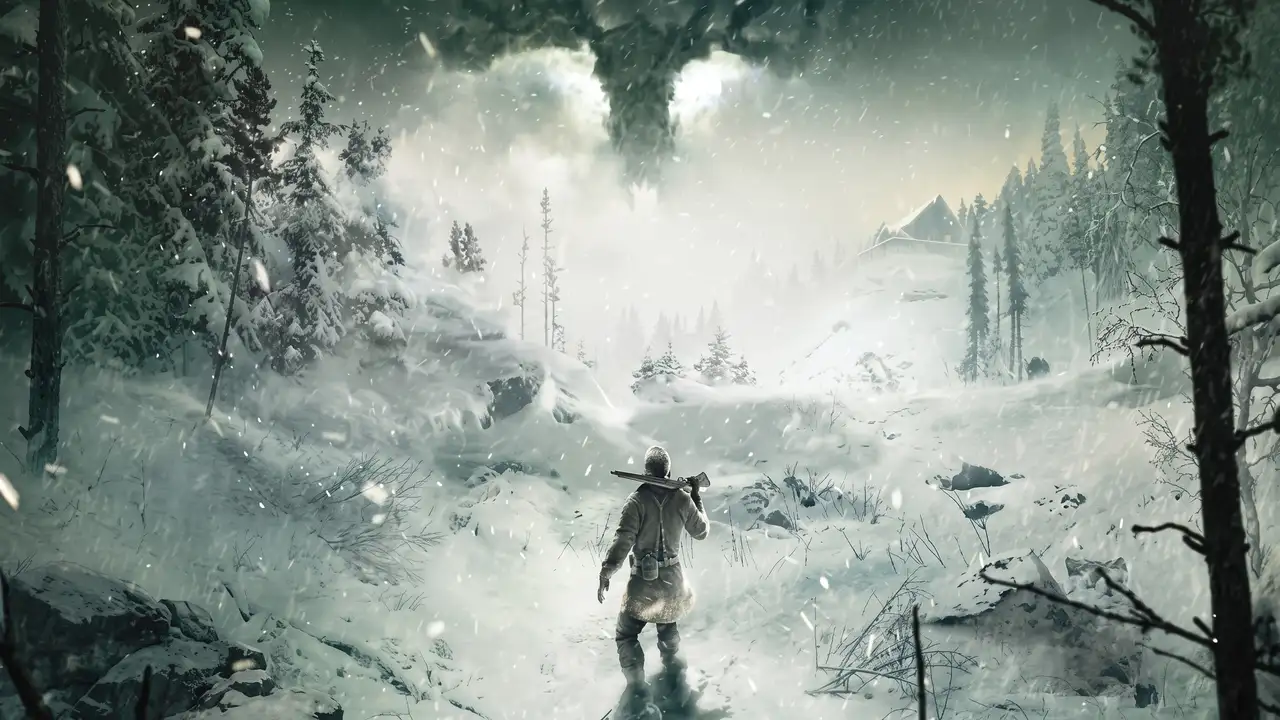
A 1923 American travels to the abandoned Norwegian fishing village of Gråvik with his excitable young companion Lissie to find his missing sister, only to find every soul gone, a child murdered and a village destroyed by a twenty-year feud and a self-made curse. The slow-burn mystery is genuinely gripping, following burnt notes, hanged men and Viking treasure with real investment. The atmosphere, mist, isolation, half-mast flags and fresh graves, does heavy lifting, and the six-day cadence gives the mystery room to breathe. A game does not need action-packed gameplay to be engaging as long as the story and writing are strong, and this is the argument’s best evidence. The village reads as a place built for ghosts.
The companion is the game. Lissie’s constant banter, teasing and pop-culture riffs make the empty village feel populated, and her eventual reveal as a coping mechanism recontextualises every joke. The 1923 period voice, with clams, darb, piffle and phonies, gives the dialogue a distinctive period texture, and the psychological-horror undercurrent beneath the cosy scenic stroll stands apart from other story-rich walkers. The voice performance behind Edward is recognisable from another acclaimed horror, and once spotted it cannot be unheard. The sibling-banter dynamic is fully convincing before the twist, which is exactly what the reveal requires.
The finale’s mine collapse and chase are the closest the game comes to tension, and the burial of the hanged man is the biggest emotional beat. The mannequin and the night sequence on day one signal early that the game will not stay cosy, and the fresh graves deepen the hook. Rest points exist purely to admire the scenery, and the map fills in as exploration proceeds. Letters and journals drive the investigation from farmhouse to store to church to mine. Nine drawing spots unlock journal pages, giving completionists a light collectible layer. The game is at its best when it trusts silence and view.
Technical jank is the honest cost: a screen-fuzzing glitch at the bottom edge whenever objects are examined, oppressive default darkness that fights gamma settings throughout, and looping drawing cutscenes. Lissie repeats identical dialogue lines, and dialogue choices seem to do nothing. Objects can only be examined when Lissie is nearby, and most one-off cutscenes cannot be skipped. The heavy-suitcase slow walk taxes patience early. None of it breaks the experience, and the story carries every quirk.
The brooch reveal is the twist’s centre, and it lands as genuine shock even for players who saw the shape of it coming. The psychological framing, that the companion and the village may not be what they seem, is signposted early enough to reward attentive players. The finale’s breakdown sequence reassembles the whole game, and the assembly is satisfying rather than manipulative. The reveal earns its melancholy. The village’s fate is tragic in a way the mystery’s clues prepared.
Simon Poole’s score is repeatedly worth stopping for, and the fjord setting looks like a painting throughout. Roughly three hours and ten minutes covers the campaign, at the advertised range’s floor. The walking-simulator structure will not convert anyone who needs systems, and the brevity leaves no replay incentive. As a single evening’s story, though, the package is complete. The journey is worth the price of admission.
Overall, a short, beautifully scored and superbly written walking simulator whose companion banter, layered village mystery and melancholy twist make it stand apart from its genre peers. Gamma-fighting darkness, an examine-screen glitch, repetitive dialogue lines and a three-hour runtime are honest costs, and the story earns every minute for anyone who values writing over mechanics.