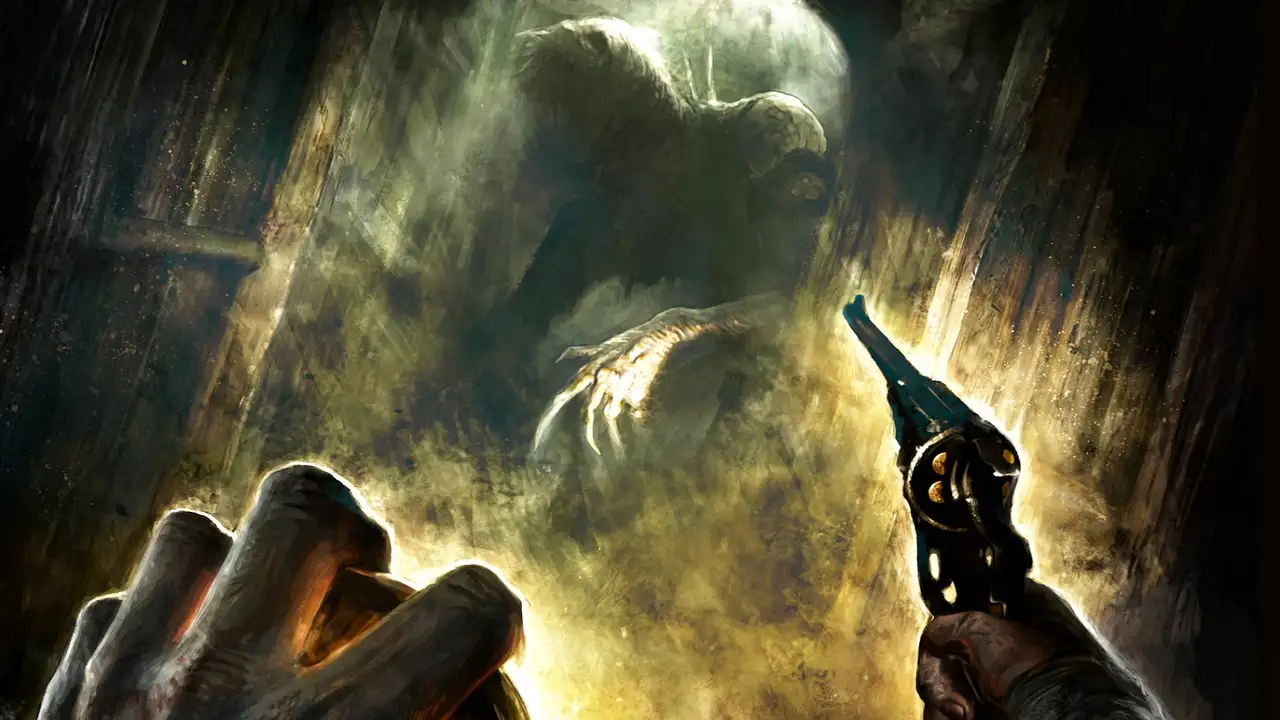
A young debt collector seizes an elderly widow’s home as his “first trial” toward partnership and is immediately haunted by the cost: hallucinations, a recurring elephant metaphor, visits from dead parents and encounters with the people displaced. The horror is the human price of “just doing my job”, and the antagonist is the protagonist’s own ambition rather than any monster. It is a horror built on corporate guilt, the structure closes the loop by ending where it began, and the eviction sequence that opens the story establishes the guilt engine before a single supernatural image appears.
The ending lands as the strongest beat by a distance: the loop closes on a reveal that recontextualises the opening scene’s corpse, delivered without fanfare and hitting hard precisely because the whole game has been quietly building toward it. Very few short-form horror stories close a circle this cleanly, and the payoff justifies every quiet stretch that precedes it, rewarding a second look at how much of the opening was already telling the truth.
Atmosphere is deliberately unsettling rather than terrifying. The art style signals its intent from the first frame, and escalating imagery keeps the dread ticking over: a bleeding vase, the elephant chase, hallucinated parents, blood-rain. Nothing leaps out of the dark, but everything hums with wrongness, and the tension is sustained across the whole short runtime without ever resorting to a loud noise.
The darkly comic corporate absurdism gives the horror a distinctive tone: chanting bosses, a forced dance trial, and an “one of us” partnership ritual play as surreal satire, bizarre in the best way. The tonal blend of dread and deadpan comedy is the game’s signature, and nothing else in the genre does quite this. The forest and dog chapter brings lighter pacing and a long setup for a tiny punchline that still earns its laugh, a welcome breather between the heavier apartment sequences.
Puzzles are inventory-based and mostly fair: an ice cube in the oven, book-sorting, a word-puzzle safe combination, tracking a dog by scent, and a slot-machine blues-band sequence. A couple of soft awkward spots (a flimsy bent key, a gravedigger gate plank) require trial and error, but the logic rarely insults. Pacing is brisk and linear, roughly two hours in a single sitting, ending in the office and elevator sequence that wraps the story with the partnership the protagonist chased now within reach, at exactly the wrong cost.
Scares sit more on the “on edge” register than full jump-scare horror, which may disappoint anyone arriving expecting outright terror, though the psychological framing is clearly the point and the genre label oversells it. Traversal is slow, with no run button and plenty of backtracking across the forest and apartment sequences, and the walk pace becomes a joke repeated often enough to wear thin. The saving system is opaque and largely unnecessary, given nothing actively threatens the player, and the save notification’s vague phrasing only adds to the confusion.
Overall, a short, unsettling, darkly comic story about the cost of ambition that earns its horror through writing rather than scares, with a loop-closing reveal that lands as one of the better twists in short-form horror. Slow traversal, an unnecessary save system and a genre label that promises more terror than it delivers are minor costs against a tightly-written two hours.