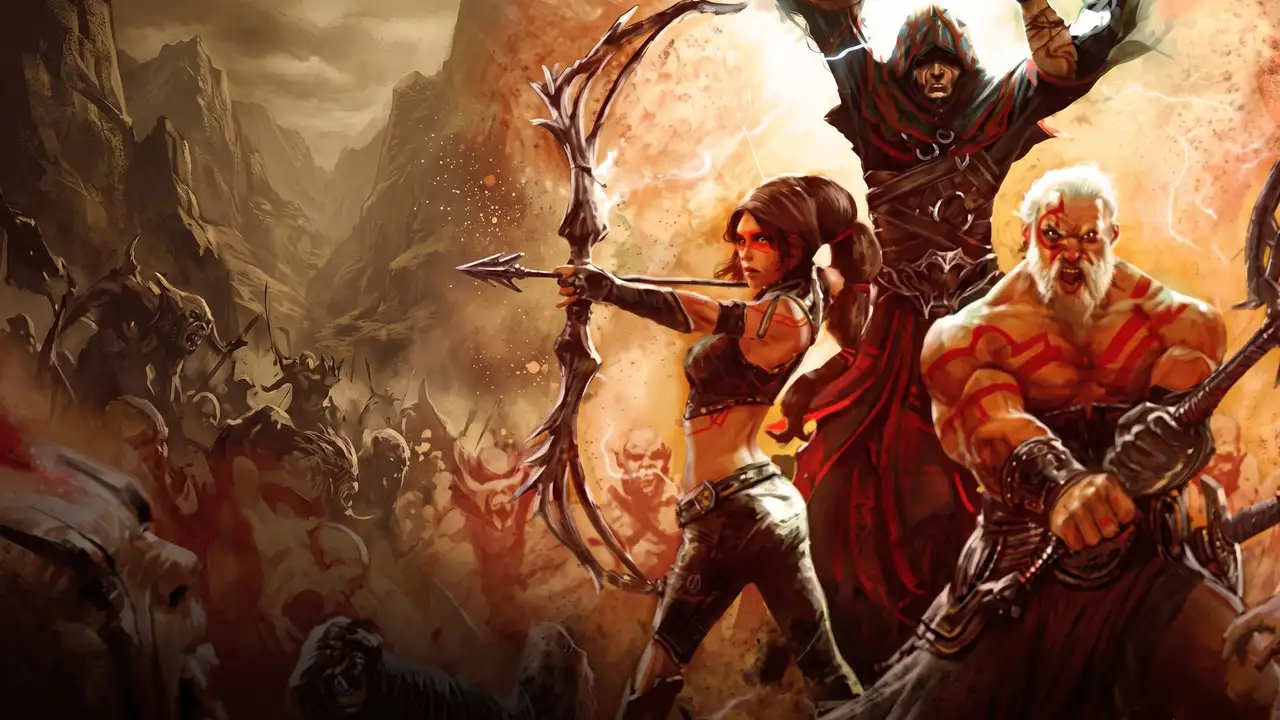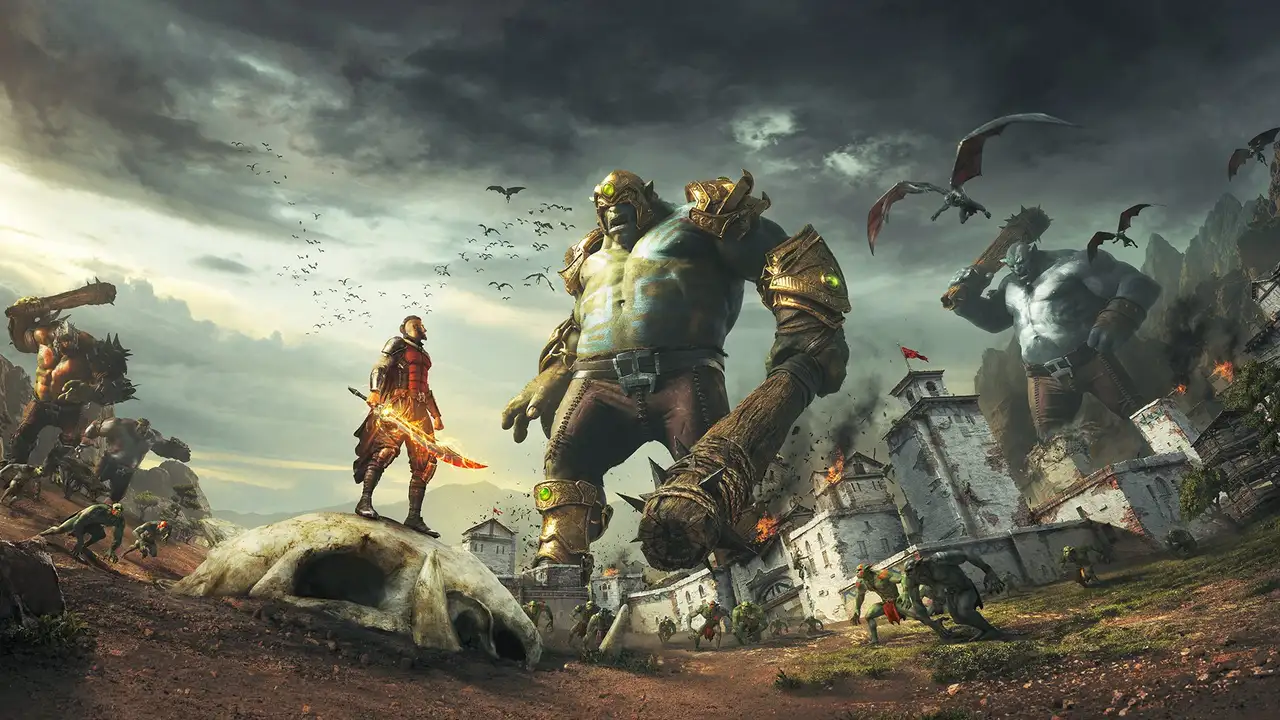
A five-act war across Sanctuary unfolds from the wreckage of New Tristram through the deserts of Caldeum, the siege at Bastion’s Keep, the Silver City and finally Westmarch under a reaper-led apocalypse. Pre-rendered cinematics punctuate each act with a dramatic weight the in-engine scenes cannot match, and the opening film of the expansion sets a grim, graphic tone the campaign sustains intermittently. Voiced journals deliver much of the world-building, including class-specific finds about the Crusader order itself, and the journal system rewards chasing every entry across all four corners of each map. It is a darker setting than the cartoonish art style advertises, and the contrast between grim lore and bright slaughter never fully resolves.
Shield Bash defines the Crusader experience from the first hour. Unlocked almost immediately, it charges across the battlefield scattering whole packs, and it remains worth using from Act 1 to the endgame despite a steady drip of later skills that never quite match it; the smite and hammer alternatives feel like downgrades from the very first unlock. Combined with a tanky kit that shrugs off elite packs, it turns the campaign into a power fantasy the series’ predecessors rarely permitted this early. Randomly generated events and side dungeons in every zone keep the loop varied, and treasure goblins provide a reliable chase-a-side-excursion mini-ritual.
On-the-fly skill swapping, initially jarring against the series’ build-commitment tradition, becomes the game’s best structural idea. Skills and runes can be exchanged between fights at no cost, which keeps encounters fresh and rewards experimentation with otherwise neglected abilities; after a few hours, the fixed-build model looks more like friction than depth. The modern pivot extends further: no stat points, predetermined skill unlocks, potion cooldowns and infinite town portals. Accessibility is the honest description, and the trade is explicit: character-building anxiety from the earlier games is gone, along with much of the reason to think hard between kills.
Normal difficulty never threatens. Every class is viable solo, potion cooldowns make consumables almost decorative, and an entire campaign can conclude without a single potion opened. The final showdown with Diablo lands as a pushover beside the series’ earlier takes, and the difficulty dials exist but demand deliberate use. The consequence is a game best described as mindless in the flattering sense: constant, frictionless slaughter that never asks for mastery, suited to controller play on a couch, and honestly pitched as comfort rather than challenge.
Blood Marsh sigil hunts in the fifth act recall the tomb-crawling of the second game’s deserts, in a good way, but the map design elsewhere leans bloated. Areas sprawl enormous, layouts regenerate between visits, and full-exploration habits are punished by progress that resets the moment a session ends. Act pacing swings wildly: a leisurely opening, a long desert middle, and a finale compressed to barely over an hour, a rushed structure the earlier series entries also indulged, so the lineage at least is consistent.
The audio mix buries its best material. Character voices, including a surprising roster of genre voice-acting alumni, drown under sound effects during combat, and audio logs carry no subtitles, so half the lore delivery is lost precisely when combat is loudest. Console frictions compound this: clunky menus, an un-pannable camera, an unexplained Paragon interface, and mobility skills such as Steed Charge lasting two or three seconds, far too brief to matter. The Enchantress follower’s chicken-transmutation, absurd on paper, proves genuinely useful for thinning crowds.
Overall, this is a shallower but far more accessible chapter in the series that trades build-commitment depth for constant experimentation and a Crusader kit whose earliest skill stays its best. The free skill swapping, voiced journals and junk-and-salvage crafting loop carry a complete campaign comfortably, even while regenerating maps, a toothless Normal difficulty and an audio mix at war with its own lore hold it back. Play it for the momentum, not the mastery, and it delivers.