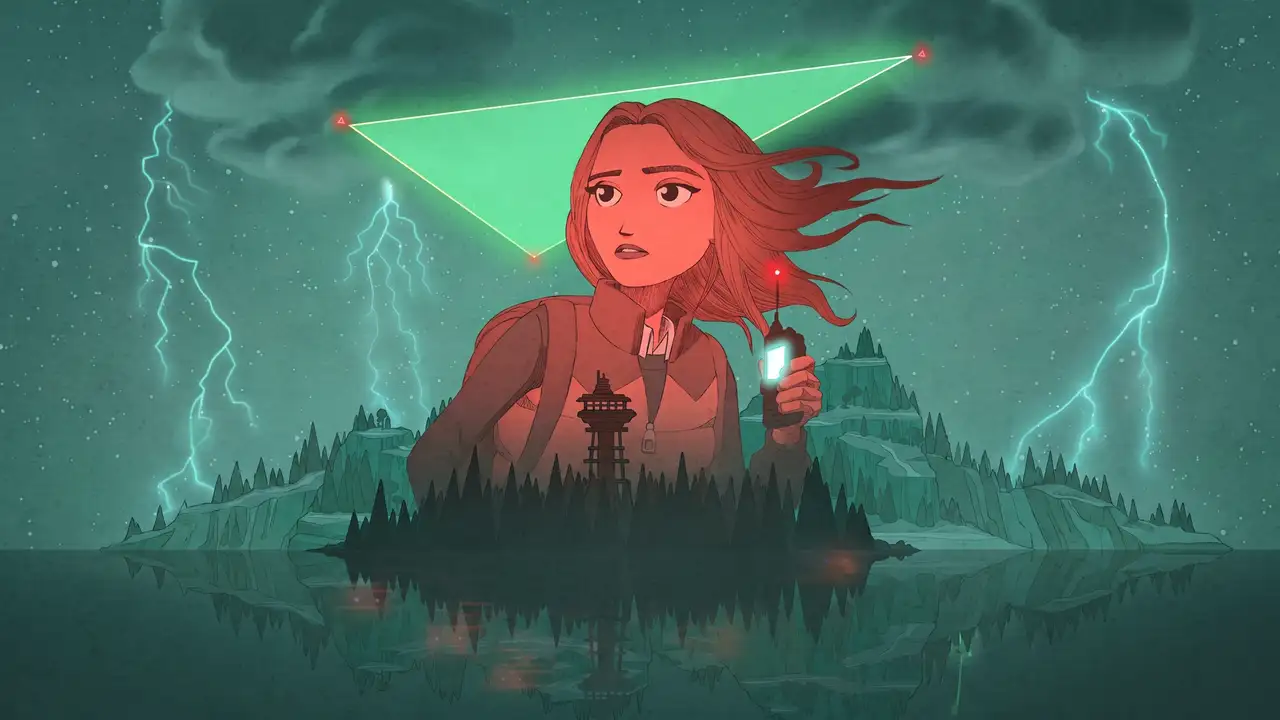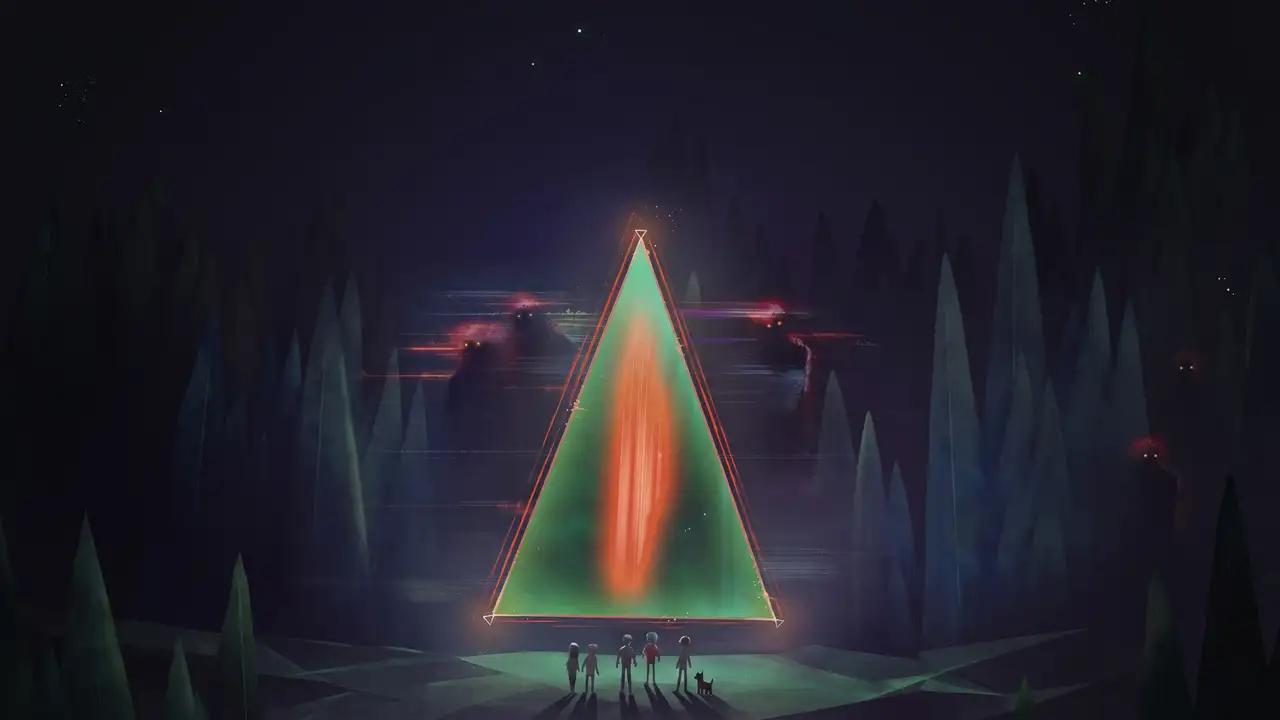
A dark fairytale about a twelve-year-old in a forest hamlet where people vanish when they break the rules: no shouting, no forest after dusk. The creeping dread is built with patience, as missing-person posters accumulate, a cat vanishes at dusk in a scene that genuinely unsettles, and a mid-game nightmare sequence lands hard enough to startle. The hand-drawn art direction is gorgeous but deliberately so, its storybook sweetness weaponised, with lullabies, hide-and-seek and sandwiches all bent toward unease, and the lifeless eyes of every character doing quiet, constant work.
The melody system is the signature mechanic and a genuinely novel one: Lucy notes every unusual sound in her diary, environmental sounds become musical notes, and completed melodies can be sung to characters to unlock new dialogue and memories. Music as investigation is an idea almost no other adventure game has tried, and it makes the soundtrack structural rather than decorative. The soundtrack itself is the game’s soul, calming throughout the town and integral to both the puzzles and the ending.
Puzzles range across path-rotating labyrinths, thread-sewing and spice-labelling, with quality uneven: the hopscotch labyrinth and the sewing puzzle are clever, while the spice-label jigsaw outstays its welcome with massive pieces that drag, a lesser version of a puzzle game the genre has already done better. One early minigame, threading a red thread through buttonholes, is obtuse to the point of frustration, though the rest of the inventory work, combining tights and a broken slingshot into a sling, is classic point-and-click craft.
The ending reframes the entire town, revealing the monsters as something else entirely and landing as the story’s best idea, with four endings branching on song choice at the climax. New Game Plus exists for the branches, and the meta-sting that the game’s animal species were all declared extinct during development is a quiet, devastating touch. The choice-based structure gives the short span real replay weight.
Friction concentrates in the collectibles: two missed stickers and one missed note lock out one of the four endings, a punishing cost for a gentle three-to-four-hour experience that rewards pixel-hunting thoroughness over story momentum. The spice jigsaw remains the low point of the puzzle design, and the slow-burn pacing, with no action of any kind, asks for patience the strong finale ultimately repays. Missing one song’s note is the difference between seeing the whole story and a shortened cut.
The storybook surface hides a genuinely dark centre, and the disguise is the design: the sweetness is not a tonal misstep but the trap. The town’s rules, the vanished, the songs the forest sings and the people cannot hear, all cohere into a mystery whose dread builds without ever breaking its own register. The finale converts every accumulated unease into admiration, and the recontextualisation is earned by everything that came before. Inventory crafting keeps the classic adventure texture alive alongside the melodies, errand-running for the Harvest Festival grounds the town in daily life, and the nightmare chapter proves the game can startle when it wants to rather than merely unsettle. The mirror sticker hunt adds a layer of visual humour that offsets the dread without breaking it.
Overall, a haunting, music-laced storybook mystery whose melody system, calming soundtrack and recontextualising finale far outweigh its uneven puzzles, obtuse early minigames and collectible lockouts. Three to four hours of slow-burn dread that plays fair, sings beautifully, and ends on the best idea it has.