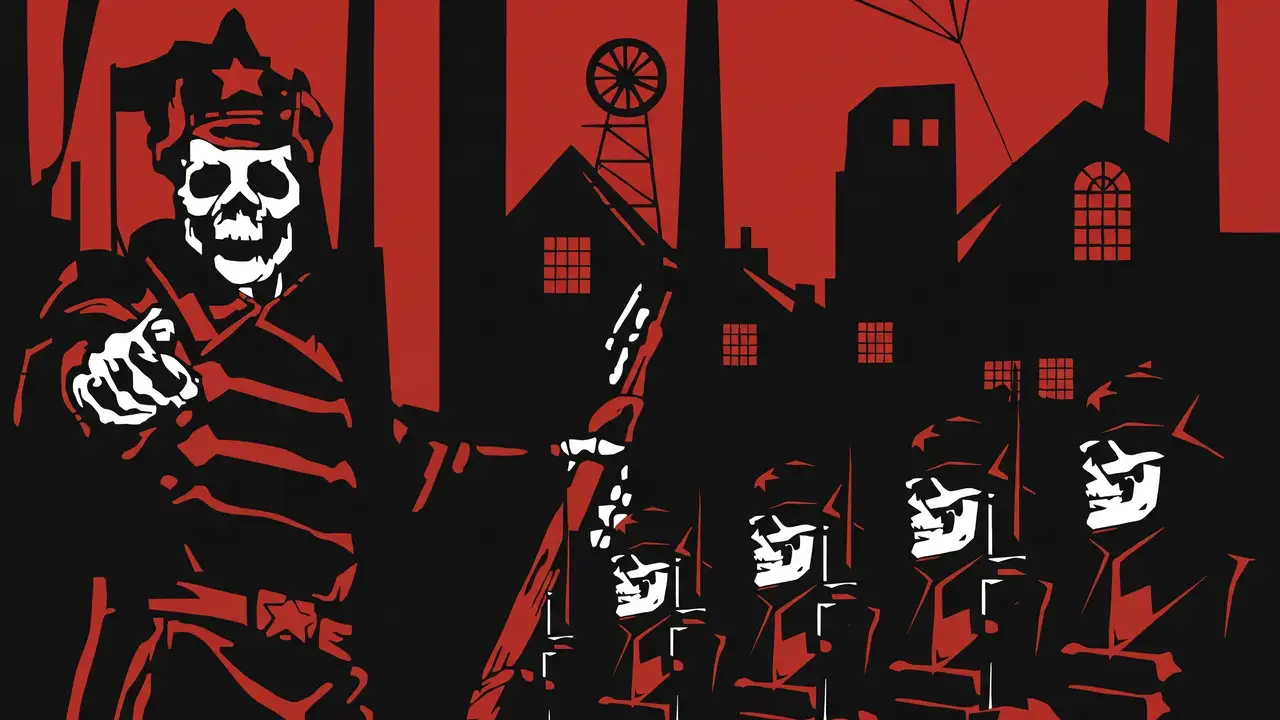
A Soviet-era facility experiment frames the campaign around a broadcast signal driving residents toward violence. Russian notes scattered through wards and corridors outline the programme in fragments, while a cinema film sequence visualises the transmission doctrine without resolving its mechanics. Late exposition concerning a new Soviet human reframes earlier incidents as trial stages rather than isolated accidents. Stark hospitals, metros, yards and grand halls provide the architectural spine, rendered with uncanny animation and comical ragdoll collapses rather than sustained dread. Curiosity about the signal sustains forward movement where translation gaps obscure motive.
Nurses, stickmen, pistol men, riflemen, shotgun men, dogs, rats, mutant chickens, frog men, spitters, flamethrower men and electric creatures rotate as the central attraction. Designs favour silhouette legibility, from lurching ward figures to squawking yard poultry and crackling conduit entities. Sound telegraphs nearly every contact, with growls, clucks, crackles and boot steps announcing direction before visibility confirms it. Small rats test tracking with low profiles and quick darts, while dogs close distance rapidly across open yards. Late volumes stack mixed groups in metros and grand halls, forcing target prioritisation under pressure.
Wrench, pistol, shotgun, PPSH, nail-gun-like gun, electro ray, scoped rifle, Molotovs and grenades compose the working arsenal. Keys gate ward doors and yard shutters, turntables activate cinema and hall machinery, and ladders connect metro Maintenance tiers to surface yards. Save-anywhere slots permit experimentation around sniper bursts and fall hazards without replaying cleared wings. Shotgun blasts handle close corridors, with a double-barrel alt-fire clearing grouped mutants at the cost of extended reloads. Scoped rifle fire answers distant riflemen and spitters across grand-hall sightlines, rewarding steady positioning.
Shotgun management defines mid-campaign pacing through ammunition conservation and alt-fire timing. PPSH spray covers charging dogs and frog men, though an aggressive muzzle flash whites out corridors during extended bursts. Nail-gun-like pins stagger flamethrower men before tanks ignite, while electro ray arcs punish clustered electric creatures near conduit rails. Molotovs seal stairwells and metro gates, and grenades clear entrenched shotgun men behind hall barricades. Fast accurate riflemen remain the sharpest threat, landing hits before shapes register and draining scarce heals between sniper bursts.
Floaty ice-like movement shapes traversal across tiled hospital floors and metro platforms. Momentum carries through turns, demanding early braking before ladder mounts and narrow ledges. Hold-only sprint complicates escapes, since sustained pressure competes with aiming during retreats from riflemen lines. Toggle aim-down-sights further slows close reactions, locking magnification until toggled off amid rat swarms. Y-interact versus X-prompt mismatch adds hesitation at doors and pickups, particularly under fire in yards and halls.
Linear shooting and exploration structure each wing around contact, search and advance rather than puzzle solving. Hospital wards introduce stickmen and pistol men beside Russian notes and supply cupboards. Metros layer riflemen, shotgun men and spitters across platforms, maintenance shafts and ladder climbs. Yards open sightlines for scoped exchanges against distant riflemen while dogs flank through debris. Grand halls stage the densest combinations, pairing flamethrower men with electric creatures under harsh lighting and stronger music emphasis.
Music lifts linear levels well beyond 2006 expectations, shifting from stark ward drones to propulsive metro and hall arrangements. Backflip ragdoll kills punctuate shotgun and grenade impacts with deliberate comedy against the grim setting. Inconsistent auto versus manual pickups interrupt flow, sometimes collecting ammunition on contact and sometimes requiring precise prompts. Re-release fixes remove AMD black textures across most wings, though one late area retains broken surfacing. Harsh fall damage punishes missed ladder grabs and yard drops, reinforcing careful routing over improvisation.
Overall, grotesque enemy variety, consistent audio telegraphing and surprisingly strong music sustain stark Soviet halls through control friction and translation gaps. Rapid riflemen, floaty movement and uneven pickups sharpen attrition without collapsing momentum, leaving the rescued shooter structurally sound to the closing choice between past and future.