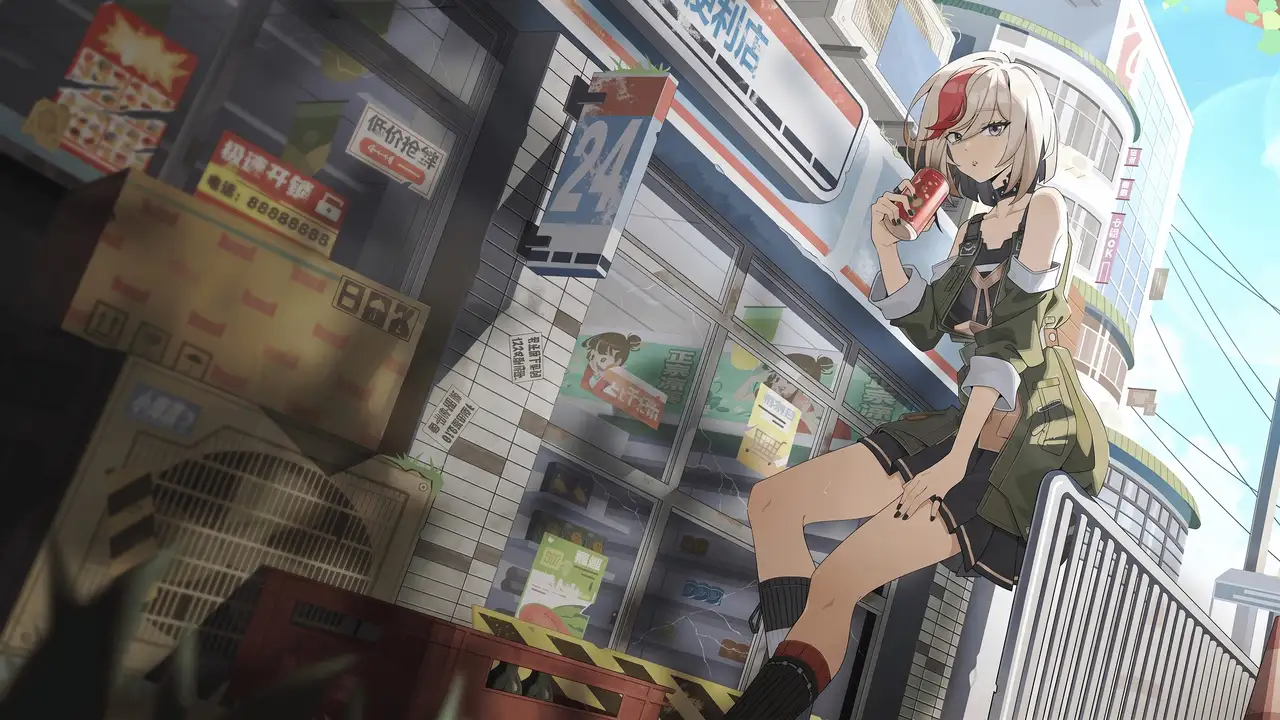
A backlog becomes a battlefield as a premise traps a catalogue veteran inside a 1,000th game and hurls the newcomer toward a mysterious tower. Robot invaders pour from the structure and carry residents away, while a robot-cat-toaster guide explains the rules of the descent. Sticker-derived personalities give mechanical foes flashes of comic identity, and a seven-strong roster frames the campaign in light anime banter. Surface-level storytelling keeps the focus on the next encounter rather than the next revelation. Route maps, reward icons and boss gates structure each climb with unusual clarity. The hook promises library-fuelled fantasy and delivers tower-fuelled attrition instead.
Combat revolves around rapid light attacks stitched into dodge counters, combo finishers and extra attacks. Parry windows stay generous enough to encourage deflection under pressure, while consecutive defensive actions chain into further parries and dodges against aggressive foes. Perfect evasion opens immediate counter pressure, and brief invincibility rewards well-timed extra attacks with shield damage. Enormous damage figures erupt across the screen as explosions, frost and projectiles overlap. Standard waves collapse quickly once builds mature, which keeps momentum high between bosses. Flash remains constant without obscuring the next incoming strike for long.
Ranged coverage defines the strongest roster option, with long-distance gunfire freezing entire packs before contact. Frost stacks accumulate into full freezes, and frozen targets invite heavier follow-ups from buff chains. Fireball volleys multiply across upgrades until normal attacks seed explosions on every hit. Melee alternatives demand close positioning around the same shield systems for less return. Range therefore controls pacing, spacing and risk across nearly every encounter type.
Shield-point stagger governs the boss game through breakable guard bars reduced by counters, finishers and special attacks. Time slow zones stretch those openings into extended punishment phases, while meteor strikes, judgement sword impacts and orbiting pinball projectiles pile bonus damage onto stationary targets. Shock applications raise incoming damage, poison outbreaks add damage over time, and frost rings spread stacks across clustered waves. Dark arrows, lightning drills and black holes contribute further area denial behind the main chains. Against single large targets the same tools concentrate into focused bursts rather than scattered spectacle. Guard management consequently matters more than raw attack frequency.
Buff-chain sequencing transforms defensive inputs into offensive engines by assigning complete effect strings to dodge counters and extra attacks. Concentrating resources on two chains outperforms spreading effects across every available slot. Random buffs, upgrades and character-exclusive effects allow sharp specialisation around frost, shock or explosion themes. Temporary passives expire with each run, which preserves build variety at the cost of long-term permanence. Route planning toward heal capsules, buff upgrades and apocalypse nodes becomes as important as execution.
Economy layers epoch coins, future tickets and bronze, silver and gold trophies over shop purchases, rerolls and equipment enhancement. Full equipment sets grant cumulative bonuses around themes such as energy storage, critical damage and buff amplification, with rising rarity adding further stat lines. Store rerolls chase specific orange-tier pieces at steep ticket prices, and duplicate sales fund the next upgrade tier. Weapon levels climb toward double digits while armour bonuses compound across head, back and accessory slots. Loadout saves eventually allow chosen buff configurations to open subsequent attempts directly.
Early hours stumble around an unclear lock-on indicator that blends into busy targets. Promotional emphasis on a personal game library settles into a fixed tower catalogue, which weakens the opening promise. One syringe-armed physician encounter resists readable patterns through rapid multi-hit strings that punish evasion spam. Luck swings between barren and overwhelming buff offerings decide entire climbs, and store prices enforce farming between attempts. Optional difficulty reduction exists for the final confrontation, though stronger time-slow setups reduce the need. Repetition stays structural rather than incidental, with incremental numbers smoothing each return journey.
Overall, spectacular chain-driven combat and escalating numerical feedback outweigh structural repetition and uneven encounter readability. Concentrated frost and explosion configurations reward planning, while economic grind and luck variance tax patience between peaks. The balance lands firmly in favour of the action.