An auditory detective solves crimes by ear alone. Recordings play out across a map of rooms, voices overlap, and the entire investigative toolkit consists of scrubbing through audio, jumping between locations and matching names to sound sources. No character ever appears on screen; deduction is the whole game, and the premise hooks within minutes of the first case. The design is genuinely novel, making audio spatialisation and voice-tracking do work that other detective games hand to documents and photographs, and the commitment to the conceit never wavers across a single hour of play.
Five self-contained cases span drug busts, art-world double-crosses, a police-station bombing, a theatre murder and an asylum siege, escalating in ambition as they go. The opening gallery case hides a twin-swap twist that lands early confidence, the theatre case layers ghost texts over its murder, and the hospital case builds a multi-fake-patients gambit around who is faking, who is a hitman and who hides behind a single alias. The tone stays noir-pulpy with flashes of absurd comedy, including a nervous prop-handler and a nervous stomach, without tipping into parody.
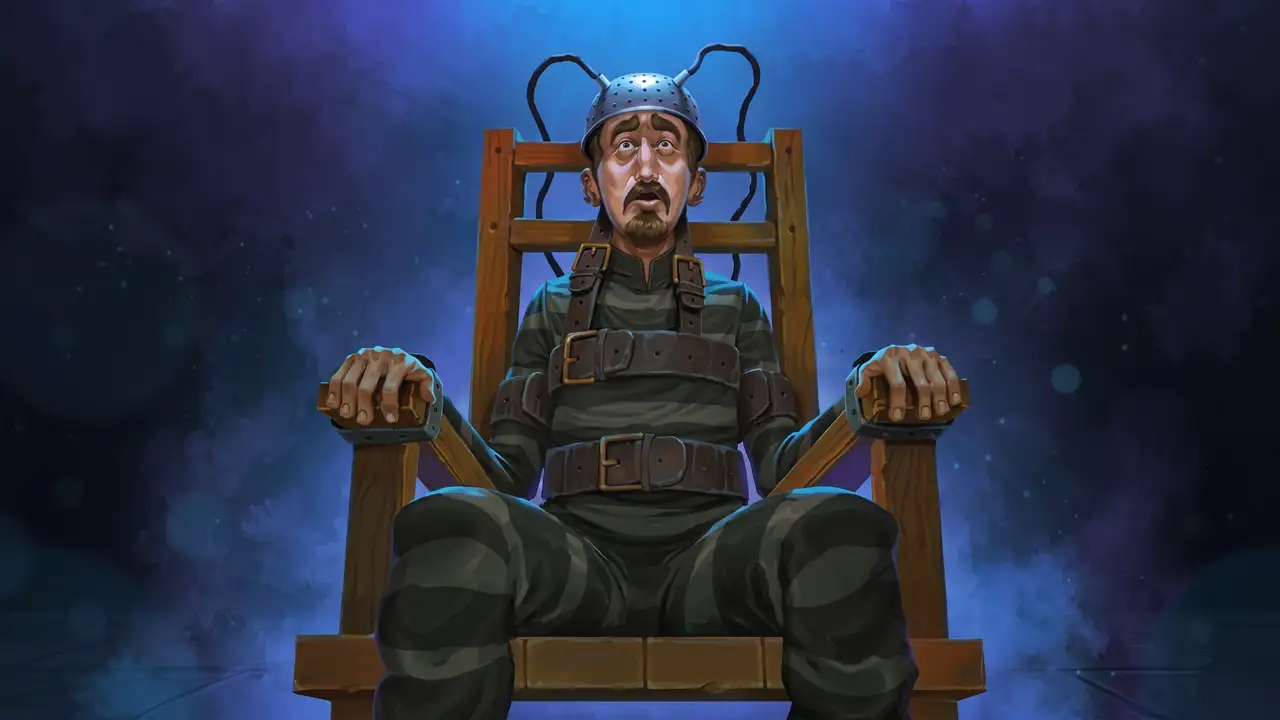
The structural payoff arrives in the final case, which ties every previous cast into one hospital. Earlier answers turn out to feed the asylum roster, the twins, the maestro and the theatre crew reappearing as patients and staff, and the satisfaction of recognising a familiar voice from three cases back justifies the whole overlapping design. A recurring acoustic-detective system frames the cases through a soft-spoken proctor who grows steadily more sinister, and the framing itself conceals the game’s true identity puzzle, a question posed early and answered only at the very end.
The voice work carries an entire game on its shoulders and does not buckle. Every character is distinguishable by timbre alone, accents and speech patterns are deployed as clues rather than decoration, and the audio mixing keeps overlapping conversations legible even when three rooms talk at once. Performances commit fully to the noir-pulpy register, with comedy beats delivered straight enough to land as surprises. Subtitles do the supporting work, but the ear remains the primary investigative organ, and the sound design respects that: no visual shortcut ever replaces listening. It is rare for a game’s entire cast to exist only as sound and still feel this present.
The downloadable Lethal Script case is the most ambitious and the most tangled. Actors, crooks and duplicated identities weave a web that thrills and confuses in equal measure, ballooning past the length of the main cases, and some of its deductions feel under-clued, with one real-gun sequence arriving at a conclusion that lacks the signposting to reach it honestly. Those leaps stand out precisely because most deductions in the main game feel earned.
Answer validation cuts both ways. Wrong answers cost progress, and selecting incorrectly at the framing twist forces a whole-case restart unless saved beforehand, a punishing asymmetry that catches anyone answering on instinct; the main cases each run a tight twenty to forty minutes, so losing one to a snap judgement stings proportionally. Conversely, the final answer screens tolerate brute-forcing, letting determined guesswork bypass careful deduction entirely. Neither extreme is fatal, but the design trusts its players unevenly. Fast-forward and rewind controls keep scrubbing efficient, though following every voice for the full recording duration is unnecessary padding, and two additional cases remain locked to Chinese audio only, closing off a chunk of content for English audiences.
Overall, the solve-crimes-by-ear hook delivers genuine deduction satisfaction across a compact, cleverly interlocking case web, and the final hospital convergence rewards attention paid from the first recording onward. Under-clued DLC leaps, a harsh restart penalty and brute-force shortcuts dent the edges without dimming one of the more original detective concepts in years.