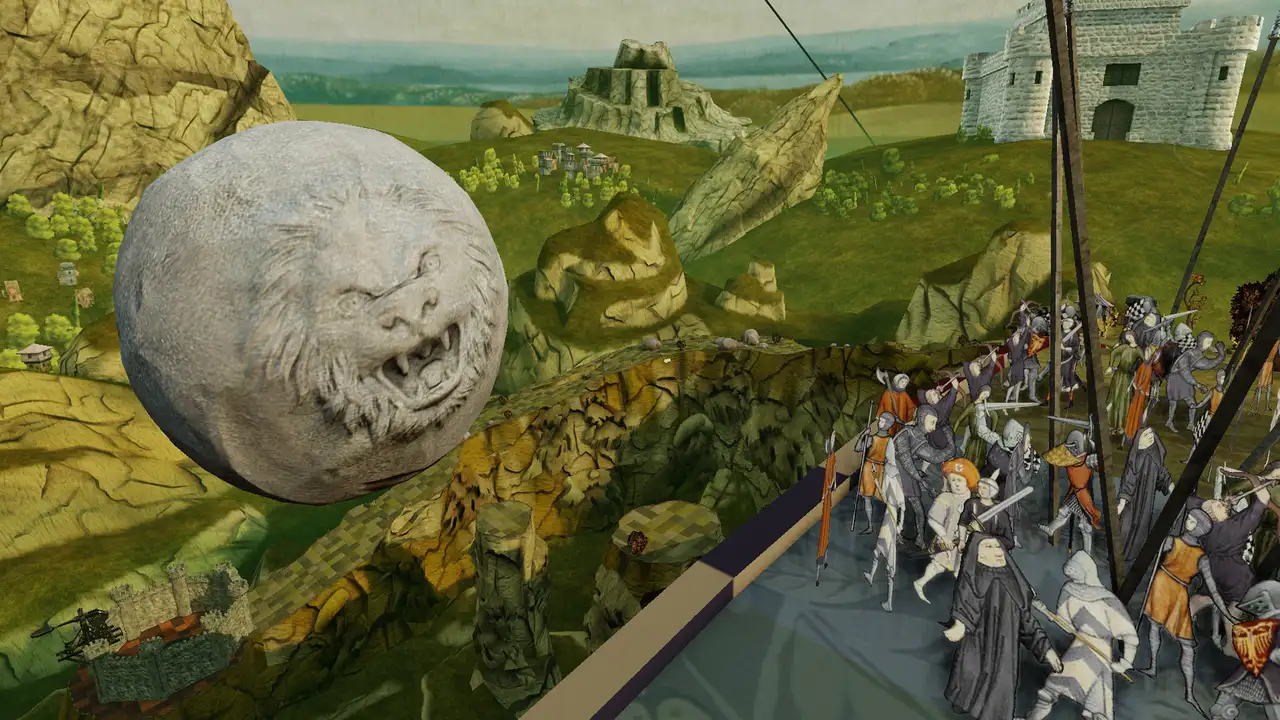
A mercenary drawn into a war between noble houses, an orc threat, a kidnapped sister and ancient gods pulling strings: the setup is pure mid-2000s fantasy, and the script treats it with a knowing, pulpy shrug. Two Worlds is the definitive budget Oblivion, an overstuffed open-world Action, RPG whose reputation as one of the worst games ever made was never deserved. The snarky mercenary protagonist and old-timey affectations (“mayhap”, calling people knaves) charm as often as they grate, and the voice performances frequently outclass the lines themselves. Dynamic weather, day/night cycles and a genuinely enormous Antaloor do the atmospheric heavy lifting. The narrative functions as scaffolding; the systems are the actual game.
Permanent stat-buff potions and equipment combining are the twin pillars, and nothing else in the genre has really copied them. Drink enough minerals and the attributes balloon from double digits into the thousands; combine duplicate weapons and armour and the numbers stack absurdly. Alchemy acts as the backbone of the whole build, since stat-boosting items gain further from a maxed skill, and saving every point until the skill caps pays off in stats that turn mid-combat freezes into a badge of honour. It scratches the same itch as Champions of Norrath: loot, combine, buff, repeat, with numbers going ever bigger. By the end a character can sit at level 72 with over 21,000 HP and defence past 6,000, an unstoppable force by design.
Exploration is its own reward across the giant map. Teleporter hunting (~93 of a likely 100) and cave delving fill the hours without any intention of completionism, since the caves announce themselves in random rock outcroppings and the teleporters dot the landscape generously. Faction reputation (House Skeleton, Clan Kaga, the Society, the Merchants Guild) gates prices and quests, and siding with one house locks out the other’s respect entirely. Side quests are abundant but mechanically trivial, fetch-this and kill-that errands whose real difficulty is travel distance rather than design. The main quest is the hardest content, and only because of how much ground it covers.
Ragdoll physics on kill are excessive in the best way, a recurring comic delight from the first cave to the last. Skeletons dominate those caves almost exclusively, though, and the game has a decent bestiary it simply refuses to draw from, making dungeon after dungeon feel like the same bone-rattling encounter. The trackadus tribe supplies the late-game humbling, mantis-like enemies capable of killing a horse and threatening even an absurdly overpowered build. Combat otherwise rides the progression curve, with the difficulty coming from cockiness rather than the enemies. When the numbers get big enough, the game freezes under its own damage output, which is its own kind of review.
Horse riding is the worst mechanical offender, a mount with force control that has a mind of its own, and long stretches abandon it entirely for foot travel. The writing remains the biggest genuine problem even for a sympathetic audience, with Renaissance-fair dialogue undercutting an otherwise functional plot. One-off bugs compound the jank: a chest that empties on hit, a character who refuses to talk until his brother is spoken to first, and the finale’s cutscenes failing outright under Proton, leaving the ending as abrupt dialogue-less sequences reconstructed from the media player. Credits roll without music. None of it is fatal, and all of it is typical of the eurojank pedigree.
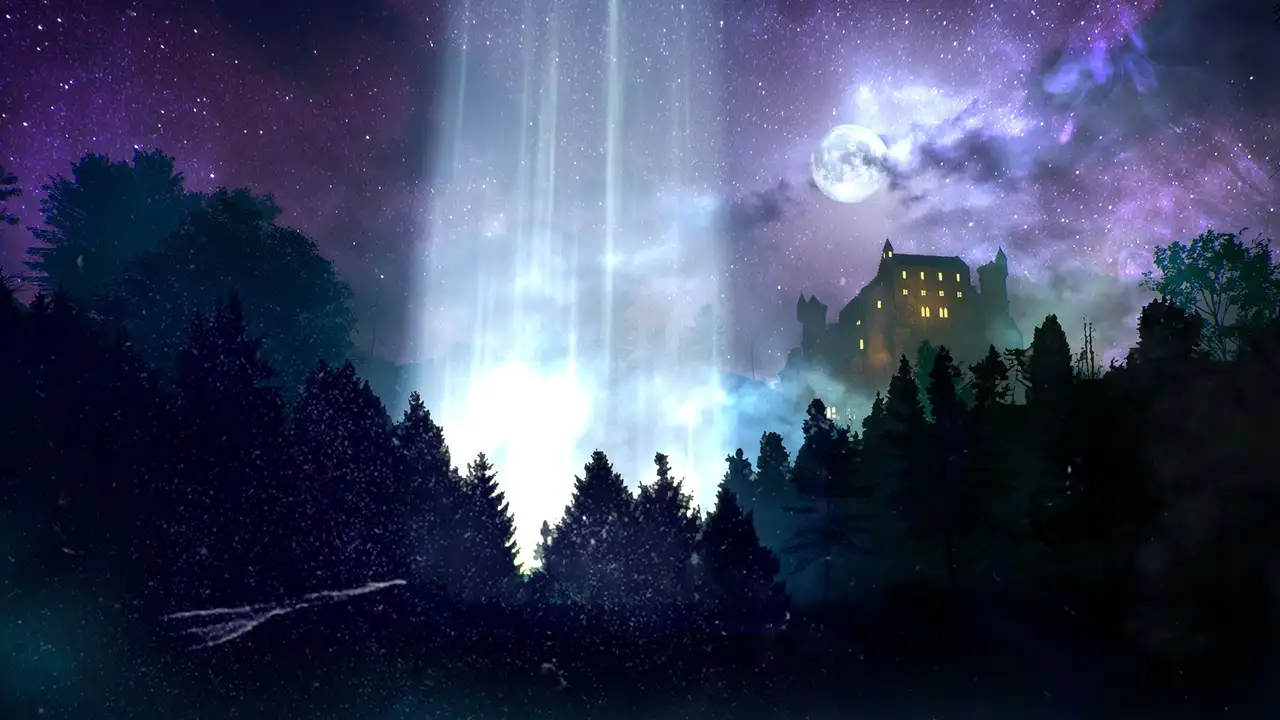
The ending at Gandohar’s castle offers a choose-your-allegiance dialogue and a paladin fight, a fitting mechanical close even in broken form. The full run lands just under 30 hours, matching the original Xbox 360 playthrough years earlier, and the game holds up as a cheap open world to sink that time into. Everything about it demands forgiveness in exchange for depth of systems, and it delivers on that bargain. The alchemy loop alone justifies the price of admission for anyone who enjoys stat inflation as a design philosophy.
Overall, a janky, systems-deep open-world Action, RPG whose permanent-potion alchemy and duplicate-combining gear progression remain genuinely unique, rewarding anyone who just wants the numbers to get bigger. The wild horse handling, skeleton-only caves and broken Proton cutscenes are real costs, but the depth of systems pays them back with interest.