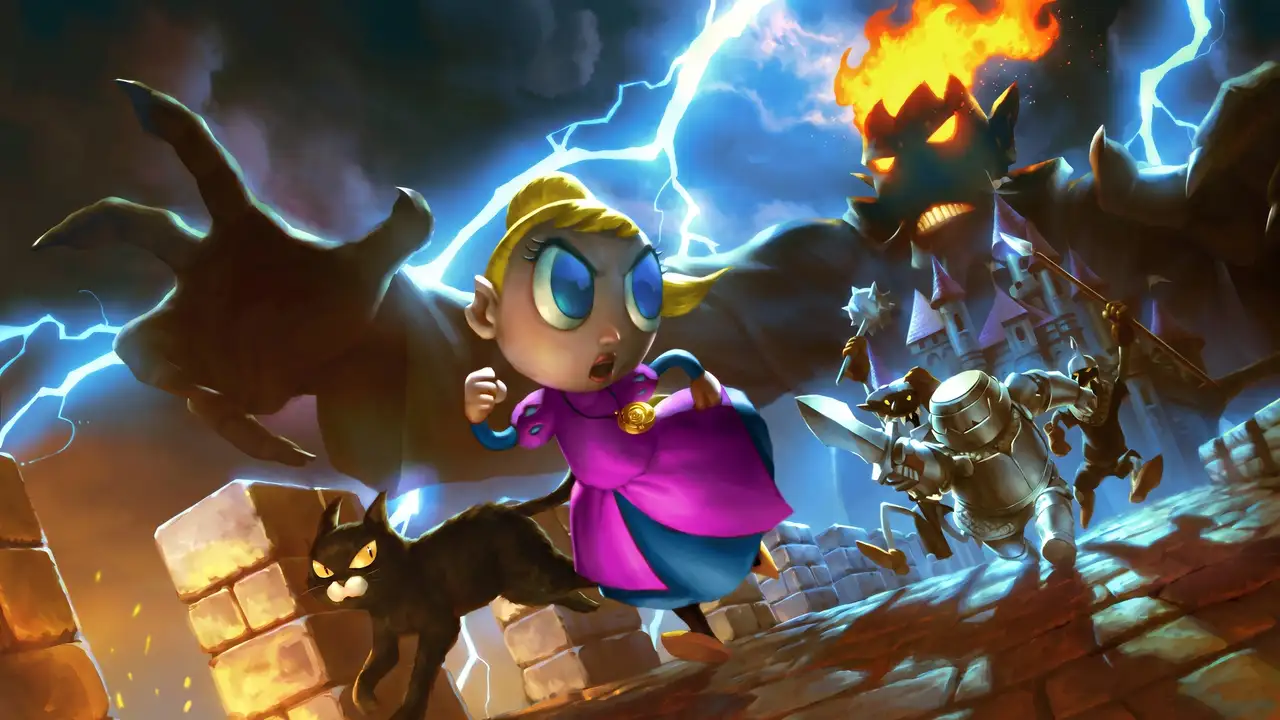
A princess locked in her castle by a usurping wizard, her mother away at war, and the whole tale told in rhyming verse: TSIOQUE wears its fairy-tale frame proudly, and its presentation is unlike almost anything else in the genre. Every scene is hand-drawn and hand-animated frame by frame, an extraordinarily labour-intensive approach for a modern 2D point-and-click. The art is not merely decorative, either: character animation carries the comedy, with the Princess perpetually furious in a way that reads as charming rather than one-note, especially on failure. The tone stays playful throughout, with pop-culture gags tucked into the scenery for those who look. From the first scene it is clear the visuals are the point.
The animation deserves every word of that praise. Expression, timing and gesture do the storytelling that dialogue alone could not, and the Princess’s angry scowl becomes a running delight precisely because the frame-by-frame work gives it endless small variations. Failure states are funnier than success states, which is a rare and welcome inversion. The hand-crafted approach shows in tiny details: cloth that ripples, hair that reacts, backgrounds that breathe. Very few modern adventures commit to this technique at all, let alone this thoroughly.
The rhyming verse narration charms early and wears slightly by the end, a comparison to Child of Light’s rhymed storytelling being apt for both approach and fatigue curve. Hidden comedy softens the drag: the mirror-as-television gag with its absurd channel selection lands as a genuine highlight, and the comedic beats keep the verse from ever becoming outright tiresome. The writing leans on rhythm for its fairy-tale texture, and for the most part the rhythm earns its keep. By the closing verses the device has worn thin, but the final poem lands with warmth regardless.
The crow-and-cat puzzle near the end is the game’s genuine low point, an unintuitive stumping block whose solution combines obscure logic with fiddly timing. Nothing in the surrounding puzzles prepares for its particular brand of unfairness, and it stands out precisely because the rest of the design is reasonably considerate. Elsewhere the mix of timed and untimed puzzles creates uneven rhythm: guard-dodging sequences and the sewing minigame’s finicky precision (holding the button through demanding stretches, in a nod to Trauma Center-style flash games) sit alongside untimed inventory puzzles that allow unlimited thought. One timed island in a sea of untimed puzzles is a structural wobble, and the elixir-brewing recipe, tea service and button-mashing stair chase fill out the minigame roster with mixed success.
Forgiving checkpointing divides opinion by design: a mistake rewinds to just before the error, which some will call too gentle but which keeps a short adventure moving without frustration. The disguise-building golden armour set and traditional inventory-item puzzles anchor the more conventional stretches, and the structure never outstays its welcome. Two hours is enough for this shape of story. The pacing benefits from the restraint, with no padding between beats.
The closing act reframes the whole adventure, revealing the fairy tale as a child’s imagined playtime over an ordinary family home, with the wizard recast as her preoccupied father. The reveal is readable in advance, telegraphed by environmental details long before the confirmation, which slightly blunts the impact but does not erase the warmth of the closing verse about game-development dreams and a daughter’s deflated smile. Even predictable, the tonal shift is handled with care. The ending earns its gentle landing.
Overall, TSIOQUE is a short, gorgeous, hand-crafted point-and-click whose animation, expressive comedy and rhymed fairy-tale framing carry it well past its flaws. The crow puzzle and a few finicky minigames are real irritations, and the twist arrives slightly telegraphed, but none of it dents the craft on display. Judge it on its presentation and warmth, and it is very well done indeed.